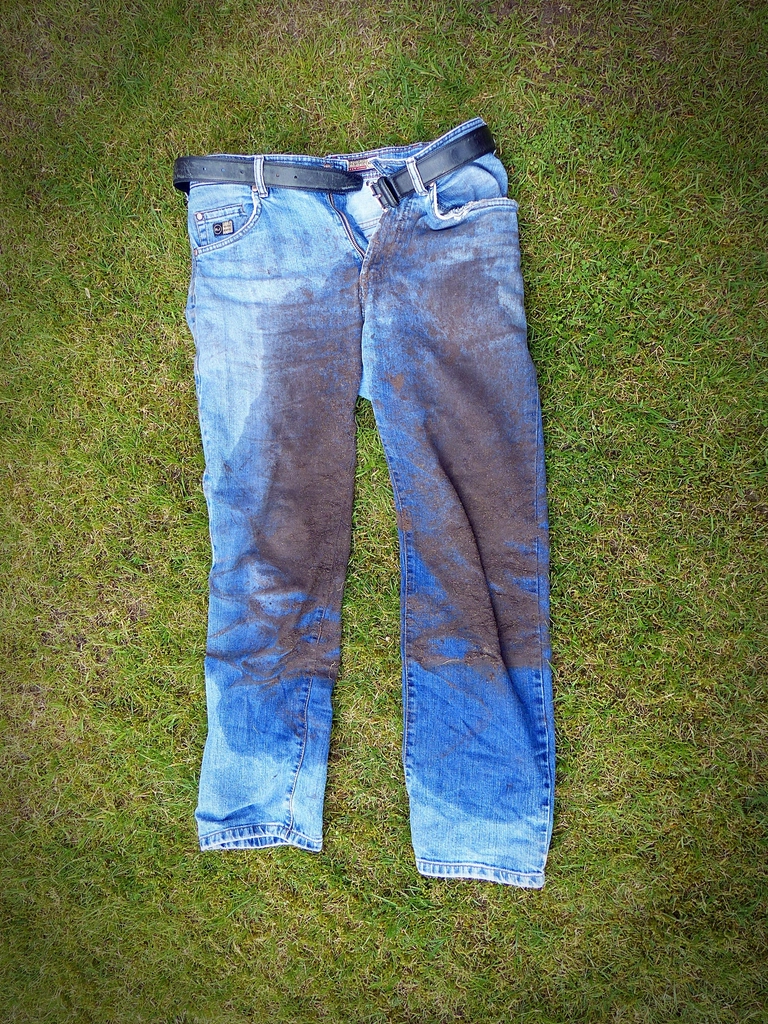
Let me set the scene. I am in the bathroom, getting ready to do what one does in the bathroom, and I go to pull down my pants. Except I don’t really pull them down. They just slide. Right off my hips, no effort required, like they were waiting for an excuse.
My first thought was that I had grabbed a pair that were too big. It happens. I lost a significant amount of weight a few years ago and had to size down, and some of my older pairs are still floating around in the rotation. But no. I checked. Same size as my newer pairs.
Which brings me to a question I have been asking for years: why can’t a size just be a size?
Here is the thing about my wardrobe
Most of my clothes come from the boys department.
My shirts and pants, mostly from Target. My underwear, from JCPenney. A few adult shirts here and there, but adult sizing tends to run big and boxy, or long in the body and the leg, and none of that works great when you spend your day in a wheelchair. Boys sizing fits my body better, and there are real reasons for that.
I am not especially tall, and I have a slim waist. My hips are another story: cerebral palsy has affected my hip joints over the years, and that has shaped my proportions in ways that make standard adult sizing a poor match. I also prefer shirts that hit just below the waist or near the hips, which makes dressing easier day to day. Adult cuts tend to be too long, too wide through the chest, or both. Boys sizing, more often than not, actually fits.
I want to be clear about something, because I know where some people’s minds go when they hear that. Shopping in the boys department does not make me childish. It does not make me immature. It means I found clothing that fits my body, which is the entire point of clothing.
Most of what I wear, you would never clock as coming from the boys section. A plain tee is a plain tee. A pair of jeans is a pair of jeans. Do I have a few shirts with something a little more fun on them? Sure. But the majority of my wardrobe could pass in either direction without anyone batting an eye.
I am just a person wearing clothes that fit. Novel concept.
So about that sizing problem
Here is where it gets frustrating. Boys sizing runs differently than adult sizing, and I have made my peace with navigating both. What I have not made my peace with is that boys sizing is not even consistent with itself.
A boys size 18 is a youth size, not an adult one. But that number does not mean the same thing from one brand to the next. I actually keep a reference chart just to keep track, not because I enjoy doing extra homework before buying a pair of pants, but because the numbers mean so little on their own that I genuinely need it. A boys size 18 at Target fits differently than a boys size 18 at JCPenney. Same number, two different brands, two different fits. And that is before you factor in that sizing can shift within the same brand from one year to the next.
The number on the tag is not a measurement. It is a suggestion. A rough estimate. A vibe.
If I buy a size, that number should reflect an actual measurement. The same measurement, every brand, every year. The fact that it does not is not just inconvenient. For a lot of people, it means clothes that do not fit, returns that are a hassle, and a shopping experience that already takes more effort than it should.
And it is not just pants
For a long time, shoes were their own separate nightmare.
I wore AFOs for years. AFOs, or ankle-foot orthoses, are rigid braces that support the foot and ankle and are commonly used by people with conditions like cerebral palsy. They slip inside your shoe, which means your shoe has to be big enough to accommodate both your foot and the brace. My true foot size is a men’s 8. But for most of the years I wore AFOs, I was buying a men’s size 10 just to make them work. The last pair that actually fit over my braces were a pair of Doc Martens at a size 10. They did the job, but finding them was not easy, and shoe shopping was never simple.
I stopped wearing AFOs a few years ago. That is when I found out what size my feet actually are.
There is another wrinkle worth mentioning. Because of my cerebral palsy and the fact that I do not bear weight the way most people do, unless I am in the middle of a transfer, my feet do not sit flat. That makes it difficult to get an accurate measurement in the first place, which adds yet another layer to an already complicated process.
Eventually I found Billy Footwear, and things got a lot better. Billy’s designs shoes that zip open fully around the sides, making them genuinely easier to put on for people with a wide range of mobility needs. For the first time, I was buying shoes in a size that actually reflected my feet, not my braces, not a workaround. I receive no compensation from Billy Footwear. I just think they are worth knowing about.
But the point is: I spent years buying shoes two sizes too big because the alternative was not having shoes that worked. That is not a sizing inconsistency problem in the same way pants are. That is a whole different failure of the system. And it is exhausting to navigate both at once.
For wheelchair users, the stakes are a little higher
Back to those pants sliding off my hips in the bathroom.
That moment was funny, in the way that a lot of disability moments are funny when you are not in the middle of a transfer. But it is also not nothing.
I cannot count the number of times I have been mid-transfer into my chair and had to stop and readjust because my pants had slid down. Transfers require focus and coordination. Having to pause and hike your pants back up in the middle of one is not just annoying. It is a real disruption, and depending on the situation, it can affect your safety and your dignity.
I could wear a belt every day. Sure. Except a belt is not just something I forgot to grab. It is time and energy, and when you are a wheelchair user who needs to get to the bathroom in a hurry, that time and energy is not always available. A belt between you and the bathroom can be the difference between making it and not making it. That is not a minor inconvenience. That is a real problem.
Here is the thing, though. Most of my pants, because they come from the boys department, are either pull-on or they fasten with snaps rather than the buttons and zippers you find on adult men’s pants. That actually works in my favor. Both Target and JCPenney carry adaptive clothing lines, and I have tried a few things from each. But for my needs, regular boys department basics do the job just as well, often with the same easy-access features that adaptive clothing is designed around, and without the premium price tag. The boys department accidentally solved a problem the adaptive clothing industry charges extra to address.
Which makes the sizing inconsistency even more frustrating. When you find a department that fits your body, fits your budget, and happens to have features that make your daily life easier, you want to be able to rely on it. A boys size 18 should mean the same thing every time. It does not. And that matters.
A size should be a size. Every brand. Every year. Every time. It is not a complicated request. It just, apparently, is not how the industry works.
And until it does, I will be in the boys department at Target, checking the tag on every pair of pants, and hoping for the best.
Does inconsistent clothing sizing affect how you shop? I would love to hear how other wheelchair users and disabled folks navigate this, whether it is keeping your own reference chart, finding brands that actually work, or something else entirely. Drop a comment below.
Leave a Reply