Tag: Reflective Writing

Personal essays, observations, and meditations on everyday life, identity, and experience.

  • What Do You Want Your Story to Say

    What Do You Want Your Story to Say

    Not too long ago, I learned that someone I went to high school with had suddenly passed away.

    We weren’t close. Growing up, they lived on the next street over from me. Both our families were into horses, so we spent time together as kids at horse shows and other horse related things.

    But the way it goes in small towns, we grew apart as we got older. By the time we were adults, we were little more than names in each other’s memories.

    And now they’re gone.

    The news hit differently than I expected. Something about the suddenness of it made me stop and wonder. If something happened to me tomorrow, what would my story say? Would the people who knew me, even a little, understand who I actually was?


    I’ve thought about death before. Living with a disability means you sometimes have a different relationship with your own mortality than other people do.

    You think about who will advocate for you if you can’t advocate for yourself. You think about legacy in ways that feel both practical and deeply personal.

    But I had never actually sat down and tried to put my story into words. Not like this.

    So I did. I wrote my own obituary.

    It felt strange at first. A little uncomfortable. But somewhere in the middle of it, it became something else entirely. It became clear.

    Writing it forced me to ask: what actually matters? Not what sounds good, not what looks impressive on paper, but what is true about who I am and what I’ve cared about.

    The answer wasn’t my job titles. It wasn’t my degrees. It was the people, the animals, the moments, and the work that filled the space in between.

    The first version came out long and traditional. The kind of obituary you’d find in a newspaper. But it felt like mine. Here’s a piece of it:

    Alyn spent their childhood surrounded by animals and found a particular kind of freedom on the back of a horse named Comanche. Those rides, Alyn often said, were the times they forgot their limitations entirely.

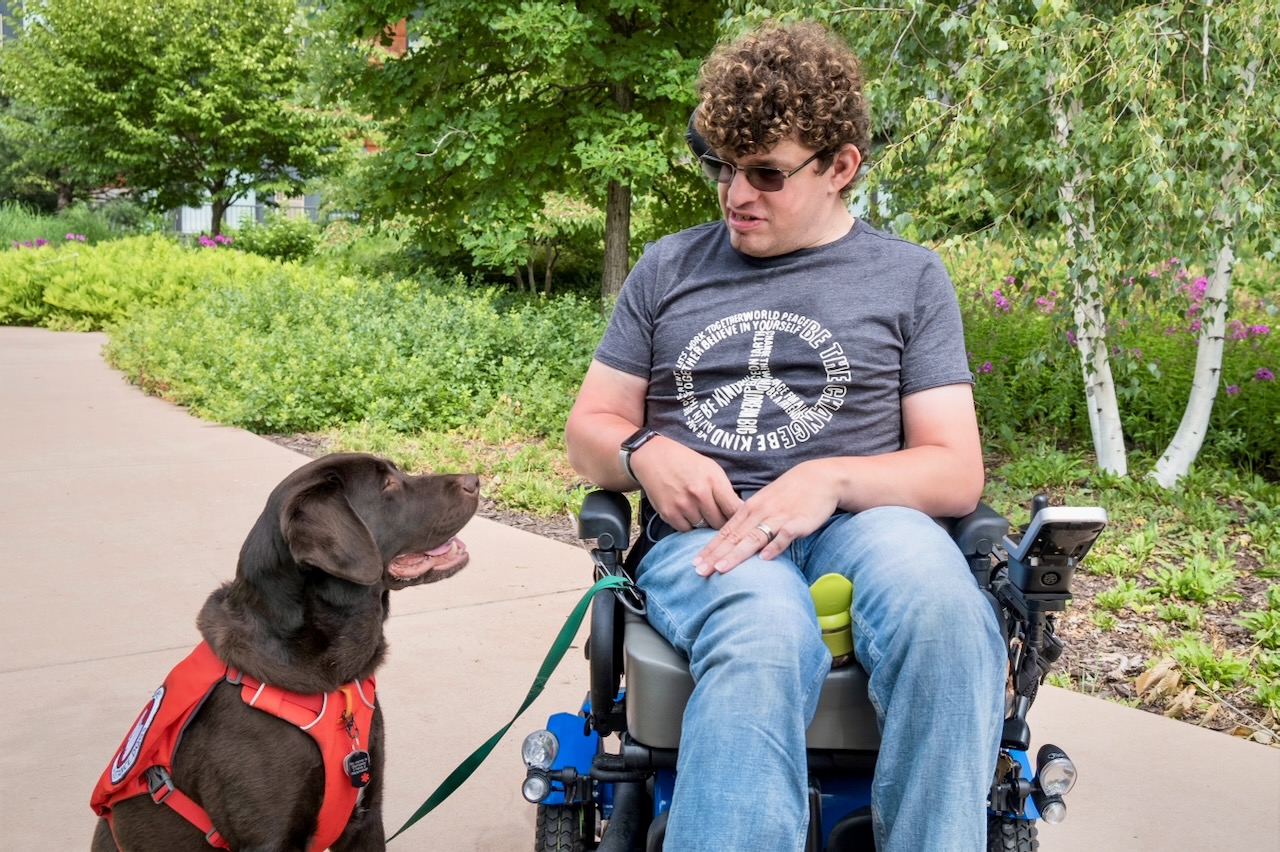
    Alyn was a service dog handler for much of their adult life. Their first partner, Dempsey, was a chocolate Lab who helped Alyn step into spaces that once felt overwhelming; less than three weeks after meeting, they rode an Amtrak train to Chicago together. After Dempsey passed in 2022, Alyn was matched with Surley, a yellow Labrador Retriever trained by Can Do Canines. Those who knew Alyn knew Surley too, a steady presence at the office, at Allianz Field, and at the campsite.

    Alyn believed in direct conversation, deep friendships, a good cup of Caribou Coffee, the joy of soccer, and time in the woods around a campfire with good people. They believed that accessibility is not a courtesy; it’s a right. And they spent their life proving that a person can come from a place that wasn’t built for them and still build something worth leaving behind.

    It was a good first attempt. But it still felt like a summary more than a story.


    That’s when I started thinking about a movie I saw many years ago when I was a kid called With Honors. Near the end, a character named Simon Wilder leaves behind an obituary he wrote himself. It’s short. It doesn’t list his accomplishments. It captures who he was in a handful of true sentences, and everyone named in the survived-by section gets a single defining characteristic instead of just a title or a relation.

    “He saw the world out of the porthole of a leaky freighter, was a collector of memories, and interrupted a lecture at Harvard.”

    Simon Wilder, With Honors (1994)

    That stuck with me.

    So I tried again. I tried to write something that felt less like a record and more like a truth.

    It’s harder than it sounds. You can go through a hundred versions and never feel fully satisfied. You second-guess every word. You wonder if you’re being too honest or not honest enough. You realize how strange it is to try to sum up a life while you’re still in the middle of living it.

    But here’s where I landed, at least for now:


    A person in a wheelchair wearing a red plaid shirt and sunglasses embraces a large yellow Labrador Retriever, who looks directly at the camera.

    In Loving Memory

    Levi “Alyn” Dokken

    Born: November 17, 1983     Death: ________

    Minneapolis, Minnesota


    Alyn Dokken came into this world small and fierce, and proceeded to prove everyone wrong for the rest of his life.

    He grew up on a farm in Benson, Minnesota, that wasn’t built for him, in a small town that didn’t always know what to do with him, with parents who loved him and were still figuring things out and a sister he fought with almost daily. He rode a horse named Comanche as if he had no limitations at all.

    Alyn knew Benson wasn’t the whole story, so he hit the road; first to Hutchinson, where he started to find his footing, then to Minneapolis, where he found his voice.

    In his travels, Alyn met people who saw him. He grew. He stopped asking permission and started just doing it: for himself, for his service dogs, for every disabled person who was told the table wasn’t theirs. He advocated for disabled people, visibly disabled and invisibly disabled, in rooms that were not always ready to hear it.

    Alyn co-founded AccessiLoons, the first accessibility-focused supporter group at Allianz Field.

    He started a blog he’d been thinking about for years because he wanted a place that was truly his and where he didn’t have to answer to anyone else.

    He spoke for Can Do Canines wherever he was: in front of crowds, in front of classrooms, in front of a three-year-old who just wanted to give his dog their ice cream cone. He explained what a service dog is and what a service dog isn’t — that under the vest is a living, breathing creature, silly and lovable, and nothing like a machine. He was lucky enough to know two of them. Lucky enough twice.

    He made choices he would make differently, and not one of them did he regret.

    Alyn is survived by his family: his partner, who has been a steady presence for over sixteen years; Dad and Mom, who lifted him into the truck and onto the back of horses never once letting it slow any of them down; his sister, who even though they had a rough childhood always had his back no matter what, and her husband, who married into the chaos willingly; C, G, and A, who still have the whole road of life ahead of them; many aunts and uncles who once said, “He will ride the elephant”; Jens, Kat and their boys T and D, who became family without ever being asked; and by Surley, who still has work to do.

    Alyn was preceded in death by his grandparents, who loved him unconditionally; Dempsey and Spaz, who were constants, one at his feet, one in his lap, and who taught him that the best companions don’t ask for much and give everything.

    Keep rolling, keep exploring, keep speaking your truth.


    Is it finished? Probably not. I’ll likely come back to it and change a word here, move a sentence there. That’s the thing about trying to tell your own story — there’s no final draft while you’re still writing the chapters.

    But the exercise itself was worth it. It reminded me of what I actually care about. It reminded me who I actually am. And it reminded me that the story I’m living right now is the one that will be told later.

    And I think that’s worth something.

  • You Only See a Snapshot: That’s Not Enough to Judge

    You Only See a Snapshot: That’s Not Enough to Judge

    Scroll through Facebook on any given day and you’ll find it: a parent sharing a moment with their child, and buried in the comments, a pile-on. Someone calling them lazy. Someone asking why they haven’t “fixed” it yet. Someone offering unsolicited advice wrapped in thinly veiled judgment.

    It happens constantly in disability parenting spaces. And it needs to stop.


    The People I Follow And Why This Matters to Me

    I want to be clear upfront: I follow a lot of autistic people and autism families on Facebook, and I do it because they’re genuinely worth following. The autistic people I know personally are cool, funny, thoughtful, and totally normal.

    They are just navigating a world that wasn’t really designed with them in mind. The families I follow online are doing the same: showing up every day for their kids, sharing the good moments and the hard ones, and being more honest about their lives than most people are willing to be.

    Some of those families have kids with severe autism. And some of those kids are in diapers or pull-ups. When I see that, I don’t see failure. I see a family that’s figured out what works.

    When strangers on the internet see it, sometimes the reaction is very different.

    What People Don’t Understand About Severe Autism and Potty Training

    Potty training isn’t just about learning a habit. It involves sensory awareness, the ability to recognize and interpret body signals, motor coordination, communication, and the executive function to stop what you’re doing and act on that signal in time. For kids with severe autism, any or all of those pieces may be genuinely, neurologically difficult, not because no one tried, but because the wiring works differently.

    For some kids, traditional potty training isn’t a realistic goal at least not on anyone else’s timeline, and maybe not ever in the conventional sense. Pull-ups and diapers in those cases aren’t a sign that parents gave up.

    They’re often the result of years of trying, working with therapists, adjusting approaches, and ultimately landing on what actually preserves the child’s dignity and the family’s ability to function.

    When someone fires off “have you even tried potty training them?” in the comments. They’re not helping. They’re showing how little they understand about what that family has already been through.

    Pull-ups and diapers aren’t a sign that parents gave up. They’re often the result of years of trying, working with therapists, and ultimately landing on what actually works.

    I Have Some Skin in This Game, Too

    I’m not writing this from the outside looking in. I have cerebral palsy. CP affects muscle coordination and spasticity throughout the body, and for me, that includes my bladder.

    What that looks like in real life: there’s sometimes no gradual warning. One moment everything is fine. The next, my bladder is spasming and I have a very short window, sometimes no window, to get to a bathroom. It’s not a matter of planning better or paying more attention.

    That’s just how spasticity works.

    So yes, I use pull-ups. It’s practical. It’s smart. I’ve made my peace with it and I truly don’t care what anyone thinks.

    I’m sharing this not to make the post about me, but because I want to be honest: I understand something about making practical choices around a body that doesn’t always cooperate. And I understand what it feels like to have those choices be nobody’s business but your own.

    You’re Only Seeing a Snapshot

    Social media gives you a moment. One frame from a film that’s been running for years.

    You don’t see the context. You don’t see what was tried before. You don’t see the appointments, the therapy sessions, the late-night research, the hard conversations, the small victories that don’t look like anything to the outside world but meant everything to that family. You don’t see the grief, or the resilience, or the way a parent has quietly rewritten their definition of progress a hundred times over.

    What you see is one post. One photo. One moment.

    And yet that’s enough for some people to render a verdict.

    What to Do Instead

    This isn’t complicated. It just takes some intentional effort:

    • Pause before commenting. Ask yourself: does this person need my input, or did they just share something from their life?
    • Ask instead of assuming. If you genuinely don’t understand something, curiosity is more useful than criticism.
    • Believe people when they say something is hard. You don’t have to fully understand a situation to respect that someone is doing their best in it.
    • Amplify instead of critique. If you see a disability parent or a disabled person sharing their reality honestly, share it. Normalize it. Help build a space where people feel safe being real.

    The World Could Use More of This

    My original thought was simple: if there were more people willing to support instead of judge, the internet — and honestly, the world — would be a better place.

    I still believe that. Disability doesn’t come with a handbook, and every family’s path — every person’s path — looks different. The least we can do is show up with some grace for the moments we don’t fully understand.

    You only see a snapshot. Make sure the story you’re telling yourself about it is worth telling.


    Written by someone who knows this isn’t theoretical. 💙

  • That First Sip

    That First Sip

    It’s Saturday morning. I’m sitting in the early sunrise, coffee in hand, watching the light come up. I added a splash of Irish cream, and the second it hit the cup — that smell. Warm. Sweet. Fragrant. That first sip was divine. Smooth. Relaxing.

    And then, not long after, it went to my head.

    That’s when the realization hit me.

    I don’t like this feeling.

    Don’t get me wrong I love the smell. I love the taste of Irish cream, of a cold beer, of a good glass of wine. I genuinely enjoy those things. What I don’t love is what alcohol does to me after. The unpredictability. The way I lose the thread of control I work so hard to hold onto.


    I’ve talked before about my struggles with alcohol. For a long time, it was a crutch — a way to cope with hard situations and even harder feelings. Press the pain down. Don’t sit with it. Don’t feel it. And there’s this social current that pulls at you too. You’re at a party and drinking is just… what you do. Non-alcoholic options are rare. If they exist, they are usually an afterthought. They sit in the corner next to the ice bucket.

    The problem is, once I start, sometimes I can’t stop. One becomes two. Two becomes three.

    I remember one New Year’s Eve. I was hanging out with my best friend, and a mutual friend was there earlier in the evening. He started drinking, so I started drinking, because that’s how it goes, right?

    You keep up. You match the energy. By the time the actual party started, I was already drunk. I don’t remember making it to midnight. I don’t remember the countdown, the cheers, any of it.

    What I do remember is waking up sometime after midnight on my best friend’s couch, disoriented, and getting sick. I threw up all over the blanket they’d so kindly tucked around me while I was passed out. I remember stumbling to their bedroom in the dark, waking them up, letting them know what had happened.

    They got up and helped me clean everything up — no complaint, no judgment, just quiet kindness. That’s what a best friend does.

    The next morning I went back to my aunt’s house, where I was staying at the time. She asked how I was feeling. I told her I was sick.

    That was a lie. I was hungover.

    I don’t tell that story to be dramatic. I tell it because it’s real. I think some of you reading this know exactly what that night feels like. There is the shame and the confusion. Then comes the cleanup and the lie you tell the next morning. It’s easier than the truth.


    Here’s the complicated part though: I don’t actually want to give up the experience of drinking.

    I want to come home after seven-plus hours of staring at a computer screen. Then, I want to crack open a cold beer. I want to just taste it — the cool, the flavor. It’s that exhale of a hard day finally being done. I want a glass of red wine and that first hit of aroma before it even touches my lips. I love those things. I genuinely do.

    That’s a big part of why I’ve been leaning into non-alcoholic beers. Some of them are genuinely terrible — I’m not going to sugarcoat that. But I’ve found a few brands I actually like, and honestly? They give me exactly what I’m after. The ritual. The taste. The reward at the end of a long day. Without the part where I lose myself.

    For the times I do drink alcohol, I’ve had to set my own rules. Weekends only, when I have no commitments, nowhere to be, nothing that requires me to be fully sharp.

    During the week, almost never. Maybe a small pour of Irish cream with an evening snack. Maybe a single glass of wine for a birthday or a work event. Small. Intentional. Bounded.

    Because I’ve learned I have to be intentional about it. The alternative is not pretty — and I’ve lived the alternative.


    As I’m writing this, I’m already on my second coffee with Irish cream. Did I want it? Yes. Did my brain tell me to go pour another? Absolutely. Did I listen when I probably shouldn’t have? …Also yes.

    Self-control is something I’ve wrestled with for a long time — and it goes way beyond alcohol. If there are cookies in the house, I hear them calling from the kitchen. Chips, candy, M&Ms — I must portion things into a bowl physically. I tell myself out loud: this is what you get. Because I know what happens if I don’t. I’ve eaten an entire sleeve of Thin Mints in one sitting without a second thought. No hesitation. No regret — until later.

    I don’t totally know where this post was supposed to go, honestly. It started as a 6 AM realization over a cup of coffee on a quiet Saturday morning. I just knew I had to get it out. I needed to release it into the universe, into words, somewhere outside of my own head. Maybe something here clicks for you. Maybe it’s just me talking to myself in public, which, let’s be honest, is what blogging is anyway.

    But I’ll leave you with this: what do you struggle with? Is it alcohol? Sugar? Gambling? Something else entirely? How do you cope with it? How do you draw your lines and actually hold them?

    I’d genuinely love to hear.

  • Dempsey: Where It All Began

    Dempsey: Where It All Began

    Wow, it’s been eight years since I met you.

    Some days it only feels like yesterday. It’s strange how certain moments stay so sharp in your mind. Moments you won’t ever forget. Even if you forget the exact date once in a while, you never forget the feeling of it.

    Meeting you was that moment for me.

    I was nervous. I was excited. I was scared. I didn’t know what the hell I was doing. I didn’t know what I didn’t know. You knew a lot more than I did. You already came pre-programmed. I had to learn what you knew. I had to unlearn what I thought I understood about dog behavior.

    Before you, dogs were companions. Pets. Family. But you were something different. You were a partner. You had a job. And stepping into life with you meant stepping into something much bigger than I had imagined.

    Dempsey was a silly chocolate lab with boundless energy. The kind of energy that filled a room before he even fully walked into it. He was mischievous in that clever, always-thinking kind of way. When he played, he played loud. Vocal. Dramatic. Fully committed. There was no halfway with you. Everything was big.

    But when it came time to work, you were ready.

    When you first came to live with me, I remember sitting down. I read through the notes from your trainers, your foster family, and even the prison inmates who helped train you. I wanted to know everything about the dog standing in my living room. Who you were before you were mine.

    One comment has stayed with me all these years. An inmate wrote that you were eager to work. That you were ready. That you found repetition boring. You didn’t want to keep practicing the job. You wanted to go out and do the job you were meant to do.

    That didn’t surprise me.

    You were never content just going through the motions. You wanted real life. Real challenges. You faced challenges while working at the largest mall in America. There were lights, crowds, and noise everywhere.

    Or you traveled on an Amtrak train eight hours to Chicago. This was less than three weeks after moving into my home. Three weeks. Most dogs are still figuring out where the water bowl is. And there you were, settling at my feet on a moving train like it was exactly where you belonged.

    Meanwhile, I was still figuring out how to hold your leash without feeling like the entire world was watching me.

    You understood your job. I was still trying to understand mine.

    I had to learn how to trust you. Really trust you. I had to learn how to advocate for you. I had to learn how to take up space in public without apologizing for it. Trusting you meant admitting I needed help. And that was something I hadn’t fully made peace with yet.

    You pushed me ahead simply by being ready. When I would have stayed home, you were eager to go. When I doubted whether I could handle something, you stood steady beside me like you already knew we could. Your energy didn’t just make you a good service dog—it made me braver.

    You weren’t perfect. You were goofy. You got into things. You made me laugh at the worst possible times. But that was part of your magic. You reminded me that partnership didn’t have to be heavy all the time. There was room for joy. Room for chaos. Room for silliness—even in a life that required so much seriousness.

    That first meeting in 2018 didn’t just introduce me to my first service dog. It reshaped the direction of my life. It changed how I see disability. It changed how I move through the world. It changed what I believe I’m capable of.

    Maybe one of the greatest gifts you gave me wasn’t fully understood until after you were gone. It became clear to me later.

    Can Do Canines often says, “Our dogs fetch amazing things.” After everything we experienced together, that line felt deeper. It made me think about the places we went, the fears we faced, the things I once thought were impossible.

    So I had these words tattooed on my arm along with your paw print after you passed:

    Together we did amazing things.

    And we did.

    We did things I never thought I could do.
    We did things I was scared to do.
    We stepped into spaces that once felt overwhelming and made them ours.
    But we did it together.

    You were always on my right side.
    And in many ways, you still are.
    Working with you made me a better dog dad.

    Not just to you—but now to Surley.

    You two could not be more different. You were a chocolate lab—energetic, chaotic, vocal when playing. Big personality. Big presence.

    Surley is a yellow lab with a completely different rhythm. He’s calmer. Quieter. A little more sensitive. Where you barreled ahead, he reads the room. Where you demanded engagement, he offers steady presence.

    At first, that difference took adjustment.

    After years of your intensity and eagerness, learning Surley’s softer cues meant slowing down. Paying closer attention. Meeting him where he is instead of expecting what I was used to.

    But I wasn’t starting from scratch this time.

    You had already taught me how to listen. How to watch. How to respect that every working dog is still an individual first. You showed me that partnership isn’t about molding a dog into a standard. It’s about understanding who they already are. From there, you build trust.

    Because of you, I advocate better. I communicate better. I balance structure with play. I know that behind the red cape is still a dog. This dog needs joy, decompression, and room to just be themselves.

    Surley benefits from the lessons you taught me.

    And in that way, your impact didn’t end three years ago. It’s still here. It’s shaping how I lead and shaping how I love. It’s still walking beside me just in a different form.

    Eight years ago, you were ready to do the job you were meant to do.

    You helped me become ready, too.

    And for that, for you, I will always be grateful.


    Levi wearing a gray Minnesota United FC hat and yellow shirt, hugging his chocolate Labrador service dog, Dempsey, outdoors with a green background.
    Levi and his service dog, Dempsey, sharing a happy moment outdoors.

    In memory of Dempsey — my first partner, my brave beginning.

  • When Social Media Was Different

    When Social Media Was Different

    Social media has changed, and not for the better.

    With everything going on in the world right now, I have been thinking a lot about social media. I have been reflecting on what it was meant to be and what it has become..

    What It Was

    I joined Facebook in 2005. Back then, it served a clear purpose. It helped people stay connected as life pulled them in different directions. You shared photos, updates, and small moments without turning every post into a declaration or a fight.

    As more people I knew joined, it worked even better. Friends, family, coworkers. It did what it promised.

    When pages were introduced, it felt like real progress. People shared lived experiences and built community. I follow pages related to autism, type one diabetes, and hearing loss. I have learned about conditions like Sanfilippo syndrome from families living it every day.

    That kind of sharing still matters. It educates, builds awareness, and creates connection. It is one of the few reasons I have not walked away entirely.

    When Thoughtfulness Slipped

    Somewhere along the way, thoughtfulness started to fade.

    Social media began rewarding quick reactions instead of reflection. If you feel something, you post it. If you disagree, you respond immediately, often without pause.

    Context is lost. Curiosity disappears.

    I am not immune to this. I have reacted in the moment and regretted it later. Words still have consequences, even online.

    Or at least, they should.

    Too often now, restraint is missing. The screen creates distance, and with it, a loss of basic courtesy. In a world already tense and divided, that lack of care only deepens the divide.

    Outrage moves faster than understanding. Certainty is amplified. Nuance struggles to survive.

    Choosing Silence Intentionally

    I have learned to keep many of my thoughts to myself, especially around current events or politics. When I do post, it is usually to highlight something meaningful within the disability community.

    I stay quiet not because I lack opinions, but because thoughtful positions rarely translate well online. Context gets flattened. Intent gets misread. Careful words are easily twisted.

    The people who know me understand this. Online, that understanding is often absent.

    And that choice comes with trade-offs.

    What I Miss

    I still enjoy seeing what friends, family, and community members are doing. I value sharing my own experiences, both big and small.

    I care about talking honestly about life with a disability, navigating a city, and living with a service dog. I believe education and visibility matter.

    It has simply become harder to show up thoughtfully in spaces that prioritize speed over substance and reaction over care.

    The Silo Problem

    More and more, people are retreating into smaller circles. They unfriend. They block. They remove anyone who does not align perfectly with their views.

    I understand the impulse. No one wants to be attacked or misunderstood. But when self-protection turns into isolation, something important is lost.

    Removing all disagreement does not build community. It creates an echo chamber.

    This Was Not the Promise

    Social media was meant to bring people together. It was supposed to help us stay connected across distance, difference, and time.

    Instead, it often encourages labeling and dismissal. Disagreement is treated as hostility. Curiosity is mistaken for weakness.

    Moving Forward

    Lately, I have been seriously reconsidering my place on social media.

    I will keep my accounts active for practical reasons. Messaging still has value. I will continue posting occasionally in specific spaces. Beyond that, I am becoming more selective.

    Social media can still connect and educate. You must be willing to sift through noise, anger, and impulse. This is how you find what truly matters.

    I mute freely. I unfollow without guilt. I post less, not because I have less to say, but because careful words deserve better conditions than this.

    I once believed social media would bring us closer together. Watching it push people further apart has clarified something for me.

    For now, stepping back feels less like giving up and more like choosing a healthier distance.

  • A Thanksgiving Day’s Journey

    A Thanksgiving Day’s Journey

    The Thanksgiving day is winding down. The last traces of warmth linger in my home. I find myself reflecting on everything today held. There’s a special kind of quiet at the end of a holiday. It is the soft exhale after the cooking, the conversations, the memories, and the moments of stillness. And in that quiet, gratitude has a way of rising to the surface.

    Today felt like another stretch of my journey. It was another few miles traveled down a road. I’m still learning to appreciate its twists and turns. I’ve always believed that life is a path we walk or, in my case, wheel down without a perfect map. We discover the route only as we go. Sometimes we glide forward with ease, and other times, the road tests us. Detours appear when we least expect them—some difficult, some joyful, all of them meaningful.

    And today, as I look back, I’m reminded of just how much I have to be grateful for. This journey has been winding and unpredictable.

    This morning began with Jason, whose presence is one of my greatest blessings. His support and companionship anchor me, especially on the days when the road feels uneven. I’m thankful for him every single day, but today I felt that gratitude a little deeper.

    Surley, my incredible service dog, was by my side as always—calm, loyal, and wonderfully intuitive. He doesn’t just help me navigate the world; he shares the journey with me. Watching him relax today between tasks reminded me of how much trust and love we share.

    I cooked a simple Thanksgiving dinner, and even in its simplicity, it felt like an accomplishment worth celebrating. There was something comforting in preparing food for myself and Jason, something grounding in the warmth of the kitchen. It reminded me that gratitude lives in small things just as much as grand ones.

    I sat in my apartment. It’s the same building I’ve been fortunate to call home for more than 15 years. I felt an immense wave of appreciation for the stability and familiarity around me. Home isn’t just a place; it’s a feeling, a continuity in a world that is always shifting.

    Throughout the day, I found myself thinking of my friends and family. We may not always see each other or talk as often as my heart wishes. However, the connection is still there. It is steady and meaningful. Gratitude doesn’t ask for perfection; it asks for presence, even if that presence comes in quiet ways.

    And today, I was especially thankful for my health. I appreciate the good days. I am grateful for the privilege of having access to doctors and care when the days are harder. It’s something I never take for granted.

    Most of all, as the day draws to a close, I’m grateful. I am thankful for the opportunity to continue living my true, authentic life. This journey has taken me through smooth stretches and sharp detours alike, but each moment has shaped me. Every day teaches me something new—about myself, about others, about what it means to grow.

    We don’t know how long our road is or where it ultimately leads. But today reminded me to treasure each mile. To honor the people and companions who travel beside me. To appreciate the stillness and the chaos, the clarity and the confusion. To celebrate every moment I’m lucky enough to live authentically and fully.

    And tonight, I’m grateful that you are here—sharing a part of this journey with me.

    Happy Thanksgiving.

    May the road ahead bring you gratitude, warmth, and the quiet magic of unfolding possibilities.

  • Thirty-Three Years Later

    Thirty-Three Years Later

    Disclaimer: What follows in this post contains my thoughts and my recollection of childhood memories. They are 33 years old and may not be the full truth, but they are my truth.

    I have written about death and loss before. Grief can reshape us. It can bring love and pain together in unexpected ways.

    This reflection feels different. This isn’t just about loss. It’s about understanding what that first loss meant. It’s also about how my relationship with it has changed over time.

    Thirty-three years ago, I lost my first grandparent. My grandpa, Garfield Dokken, passed away suddenly. It’s interesting how distinctly I remember that life event. Maybe it’s because it was my first experience with death as a child. Maybe it’s because of other reasons.

    The Day I Learned About Death

    November 3, 1992

    That night is etched in my mind.

    I had undergone a selective dorsal rhizotomy a surgery meant to help reduce the tightness in my legs. It was an intense surgery, and I was still sore, tired, and trying to heal.

    I remember the phone ringing. My mom was staying with me at the hospital so my mom answered it. My mom was talking on the phone. I don’t recall who she was speaking to. I remember her face when she hung up. She turned to me and told me that my grandpa had passed away.

    I don’t remember what I said after she told me.

    My parents asked the doctors if I could go home for the funeral, but they strongly advised against it. I was still recovering.

    My parents suggested that I write him a note something my dad could tuck into his pocket. So I did.

    When you’re young, you don’t really understand death. You don’t grasp what it means when someone won’t walk through the door again or call you on the phone. I didn’t know what it truly meant that he was gone.

    After grandpa passed this picture was above my hospital bed.

    “When I was a child, I spoke like a child, I thought like a child, I reasoned like a child.
    When I became a man, I gave up childish ways.”

    1 Corinthians 13:11

    Growing into Grief

    As I was writing this I thought of the verse from 1 Corinthians. As a child, I grieved as a child. For a long time, I carried his passing in a unique way. I saw it through the eyes of the boy in that hospital bed.

    That chapter of my life always felt unfinished, the story incomplete. There was a recording of the funeral service that exists. Still, I don’t believe I have ever sat down to watch the whole thing. I don’t know if I would even want to watch it.

    It took decades to realize that I needed to grieve differently, not to forget, but to forgive.

    To forgive the child who couldn’t yet understand.

    After years of therapy and reflection, I’ve learned to process loss with more compassion especially toward my younger self.

    I’m not perfect at it, but I’m getting better everyday.

    Writing Allows Grief to Evolve

    In, “Passengers on the Journey”, I wrote about how the people we love are like fellow travelers. Some ride with us longer than others, but all leave an imprint on our path. My grandpa was one of my first fellow travelers to step off the bus early in my life. I didn’t understand it then, but he helped me see that love and loss are part of the same journey.

    In “Holding Onto Love”, I wrote about how love doesn’t disappear when someone dies. It transforms. It changes shape. I think that’s what I’ve come to understand now, too. My love for my grandpa has transformed. It’s quieter, steadier, woven into who I am rather than something I reach for.

    Questions Without Answers

    Now, as an adult, I find myself wondering:
    What would he think of the person I’ve become?
    What would he think of the life I am leading?
    What would he think of my hair, my name, my humor?

    Growing up, I often heard that question used as a moral compass:

    “What would your grandpa think if they saw that report card?”

    “What would he say about your behavior?”

    It’s something people say to motivate, to guide, or to remind us to be our best. But sometimes, it can have the opposite effect.

    Instead of inspiring, it can carry shame. This is especially true when it’s tied to someone we loved deeply and would never want to disappoint.

    I don’t believe those words are spoken with bad intentions.

    Still, they overlook something important: the people we invoke in those moments aren’t here to speak for themselves.

    We can’t know what they would think. We can’t know how they might have grown. We can’t know how their love for us might have changed over time.

    Love evolves. People do too. Love remains after loss. It deserves to be carried forward. It should not be used as a measure of guilt or worth.

    Closing Reflections

    Thirty-three years have passed since that night in the hospital. Yet, in some ways, I’m still that child learning what it means to say goodbye. The difference now is that I can hold both the pain and the gratitude together. I can look back and see how that moment shaped me, not just in loss, but in love.

    In Passengers on the Journey, I wrote about the people we love. They travel alongside us for a time. They leave their imprint even after they’ve stepped off the bus. And in Holding Onto Love, I reflected on how love doesn’t fade when someone dies. It changes shape. It becomes part of who we are.

    That’s what I feel now. My grandpa is no longer a passenger beside me, but his love remains part of the path beneath my wheels. His laughter, his kindness, his presence—they continue to move with me in quiet, unseen ways.

    Grief shows up differently for all of us. Sometimes loud and raw, sometimes quiet and unseen. It doesn’t leave us; it transforms. It teaches us to carry memories with gentleness. It teaches us to live in a way that honors those who came before us.

    So on this anniversary, I don’t just remember his passing. I remember his life, his laughter, and the lessons that continue to guide me.

    And in that remembering, I find peace.

  • Today

    Today

    There are moments when words come quietly, unexpectedly. This piece came to me on a day when I was reflecting on loss.

    I thought about those who have loved me. I also thought about those I’ve loved and lost. Grief is never something we finish; it becomes a part of who we are. But within that grief, there’s also growth.

    Each day, I try to hold space for both. I miss those who are gone. I become a little stronger, a little more grounded, and a little more myself.

    Today

    Today, I grieve the passing of those who have loved me and I them.

    Today, I grow into a better person through growth and understanding.

    Today, I rise to greet the dawn.

    Today, I am stronger than I was yesterday.

    Each of us has our own version of today—a place where remembrance meets renewal. I invite you to take a moment to reflect: what does today mean for you?

  • Embracing Change, Creativity, and Consistency: A Personal Reflection

    Embracing Change, Creativity, and Consistency: A Personal Reflection

    Ever take one of those personality quizzes and think, “Huh…that’s oddly precise”? 

    I recently did. It got me thinking about how I tick. It also made me ponder on how I work, collaborate, and navigate change.

    Turns out, I thrive on new ideas and variety. Give me a fresh challenge or a different way of doing something, and I’m all in. I like having a plan, sure, but I also know when it’s time to pivot and go with the flow. That balance between structure and spontaneity is what keeps projects moving without killing the fun.

    I’m a private person by nature, loyal to a fault once someone earns my trust. I try to be flexible and cooperative, but I’ll stand my ground when something really matters. Being consistent and reliable has helped me stay steady. This steadiness persists even when everything around me feels chaotic. It is especially helpful when change affects others more.

    One big takeaway?

    Not everyone moves at my pace when it comes to change—and that’s okay.

    My job, whether in a team or leading a project, is to help others see the bigger picture. I support them through transitions. I also think about what works and what doesn’t. Reflection is the secret sauce that turns lessons into growth.

    At the end of the day, knowing yourself isn’t just a buzzword it’s a roadmap.

    For me, it means staying curious, dependable, and reflective. I use those traits to make work, and life, a little smoother for myself and the people around me.

  • The Name Between the Lines

    The Name Between the Lines

    Becoming Myself, One Letter at a Time

    There’s a strange gravity in a name.

    It’s the first thing we’re given, often before we take our first breath. Names come with stories, family histories, hopes, even inside jokes. They can be reminders of who we come from, or quiet promises of who someone hoped we’d become.

    Sometimes, we grow into them. Sometimes, we grow around them. And sometimes, if we’re really lucky, we realize we need a name that fits where we’ve been. If we’re really brave, we choose a name that fits where we’re going.

    That’s what this post is about.

    I’ve always liked my middle name.

    Allen. It’s simple, unassuming, it’s always felt right. It carries a softness, a steadiness that felt like home.

    It’s not loud or dramatic. Allen felt like a foundation, something I can rest on. And in ways I couldn’t fully name at the time, it felt like me.

    I’ve realized something interesting. I’m not the only one in my family who felt this pull toward a middle name. My grandpa Garfield was not actually born Garfield at all. His given name was Oscar Garfield Dokken.

    From what I’ve pieced together in conversations with family, he chose to go by Garfield. He already had an uncle named Oscar and probably did not want the two of them to be confused.

    That makes perfect sense. When I was a kid, I had a friend named Levi. When our families got together, there were two Levis in the same space. Every time someone called out “Levi,” there was that moment of uncertainty: which one? Looking back, I think that would’ve been a perfect time for me to lean into Allen.

    Maybe Grandpa understood something I’m only just beginning to. Sometimes a name is about more than identity. It’s about clarity, belonging, and creating space for yourself.

    That’s how I landed on Alyn. I know it’s a different spelling from my true middle name. Then again, I am a little different, so my name should be too.

    It’s not a world apart from who I’ve been it’s just… closer to who I am. A little softer around the edges. A little more neutral, a little more fluid. It’s Allen with a twist. It lets me breathe.

    I haven’t decided yet if I’ll change it legally. For now, this isn’t about paperwork or government forms it’s about alignment. About answering to something that feels a little more like me. About hearing a name and not flinching because it doesn’t quite match the reflection I see in my mind.

    Of course, it’s not that simple.

    Names carry meaning, not just for us, but for the people who gave them to us. For family, it isn’t just a label it’s something they chose with care. It could be tied to memory, a legacy and love.

    I understand that. I honor that. Part of me worries that in choosing something new, I’ll seem ungrateful, or like I’m rejecting something sacred.

    But here’s what I want those people to know: I’m not erasing anything. I’m not undoing the name I was given. I’m just building on it. Adding a chapter. Letting myself evolve.

    I’m still me. Still your kid. Still your friend. Still your cousin, your sibling, your grandchild. Just… more me-shaped now.

    Trying on Allyn, Becoming Alyn

    I started experimenting with a small change spelling Allen with a y. “Allyn.” It looked different, felt different. Like trying on a jacket that just fits better.

    At first, it was just between me and my therapist, then a small circle of friends. The more I used it, the more it felt like breathing freely.

    Later, I tried another variation: Alyn.

    I started using it with the same small group of friends. It became a place where I could test the waters. I could hear “Alyn” out loud or in text. I felt how it settled into my bones.

    Now, I’m taking that step into the light with this name. Like coming out in the LGBTQIA+ community, this takes a great amount of courage. To come out in this way, in a public setting, takes an even greater amount of courage.

    Some people will adjust quickly. Some might need time. And that’s okay. I’m still getting used to it too. Every time someone uses it, it feels like a little internal click, a quiet “yes.”

    And when people still call me Levi, I understand. That name still holds truth, too. This isn’t about perfection. It’s about becoming.

    When the Name Comes Out Before You Do

    Like I said earlier, I was only sharing it with a small group of people. I was changing it on my streaming platform profiles seeing how it looked to me. I wasn’t ready to share it beyond my small circle just yet. Then, about a few days ago, that changed.

    I recently made a small change on my iPhone. I updated my contact information to show the name I’d been trying on. What I didn’t realize was that Apple shares those changes with anyone in my contacts who also has an iPhone. Suddenly, my new name was in front of friends and family I hadn’t told yet.

    The questions came quickly: “Who’s Alyn?”

    In that instant, I was outed in a way I hadn’t planned. But maybe that’s the thing about names — sometimes they refuse to stay hidden. Sometimes they insist on being seen, even before we’re ready. And maybe that’s okay. Maybe a name knows the right time better than we do.

    A Name Doesn’t Have to Be Legal to Be Real

    There’s this idea that identity only counts when it comes with documentation. That it only matters once you’ve filled out a form, paid a fee, stood in line. But I don’t believe that.

    My name is real the moment I say, “this is what I want to be called.”

    It’s real the first time someone uses it gently. The first time someone says, “Hi Alyn.” The first time I say it in the mirror and smile.

    There’s power in naming yourself. Quiet, grounded, liberating power. And you don’t need permission to do it.

    If You’re Struggling With This…It’s Okay

    If you’re reading this and feeling a little unsettled, I see you. Maybe you’re someone who’s known me as Levi for a long time. Maybe you’re trying to make sense of how this fits with the person you thought you knew.

    I am still the person you know. I haven’t changed all that much from the person I was the last time we talked. I am just finally deciding how best to live my true authentic self.

    You don’t have to get it all at once. You don’t have to understand everything to respect it. You don’t have to stop loving who I was to also love who I’m becoming.

    Just keep showing up. Keep asking if you have questions. If you call me Levi, I won’t get upset. I’ll just gently remind you if you forget.

    For Me, For Now

    I don’t know exactly what’s ahead. Maybe I’ll legally change it someday like grandpa Garfield did. Then again maybe I won’t.

    What I do know is this: I get to choose. I get to be honest. And I get to love myself enough to ask for something that fits.

    So…hi. I’m Alyn.

    It’s nice to meet you (again).