Not too long ago, I learned that someone I went to high school with had suddenly passed away.
We weren’t close. Growing up, they lived on the next street over from me. Both our families were into horses, so we spent time together as kids at horse shows and other horse related things.
But the way it goes in small towns, we grew apart as we got older. By the time we were adults, we were little more than names in each other’s memories.
And now they’re gone.
The news hit differently than I expected. Something about the suddenness of it made me stop and wonder. If something happened to me tomorrow, what would my story say? Would the people who knew me, even a little, understand who I actually was?
I’ve thought about death before. Living with a disability means you sometimes have a different relationship with your own mortality than other people do.
You think about who will advocate for you if you can’t advocate for yourself. You think about legacy in ways that feel both practical and deeply personal.
But I had never actually sat down and tried to put my story into words. Not like this.
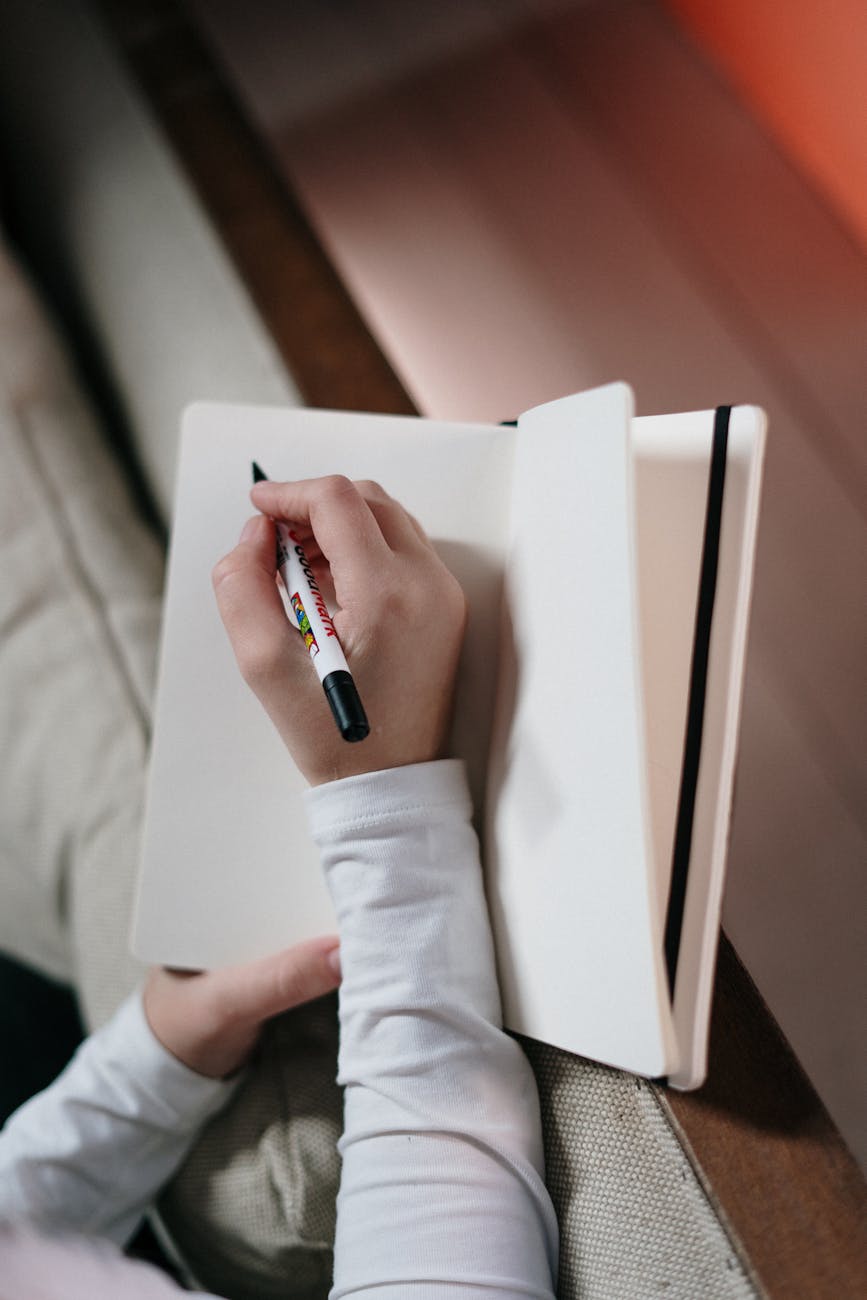
So I did. I wrote my own obituary.
It felt strange at first. A little uncomfortable. But somewhere in the middle of it, it became something else entirely. It became clear.
Writing it forced me to ask: what actually matters? Not what sounds good, not what looks impressive on paper, but what is true about who I am and what I’ve cared about.
The answer wasn’t my job titles. It wasn’t my degrees. It was the people, the animals, the moments, and the work that filled the space in between.
The first version came out long and traditional. The kind of obituary you’d find in a newspaper. But it felt like mine. Here’s a piece of it:
Alyn spent their childhood surrounded by animals and found a particular kind of freedom on the back of a horse named Comanche. Those rides, Alyn often said, were the times they forgot their limitations entirely.
Alyn was a service dog handler for much of their adult life. Their first partner, Dempsey, was a chocolate Lab who helped Alyn step into spaces that once felt overwhelming; less than three weeks after meeting, they rode an Amtrak train to Chicago together. After Dempsey passed in 2022, Alyn was matched with Surley, a yellow Labrador Retriever trained by Can Do Canines. Those who knew Alyn knew Surley too, a steady presence at the office, at Allianz Field, and at the campsite.
Alyn believed in direct conversation, deep friendships, a good cup of Caribou Coffee, the joy of soccer, and time in the woods around a campfire with good people. They believed that accessibility is not a courtesy; it’s a right. And they spent their life proving that a person can come from a place that wasn’t built for them and still build something worth leaving behind.
It was a good first attempt. But it still felt like a summary more than a story.
That’s when I started thinking about a movie I saw many years ago when I was a kid called With Honors. Near the end, a character named Simon Wilder leaves behind an obituary he wrote himself. It’s short. It doesn’t list his accomplishments. It captures who he was in a handful of true sentences, and everyone named in the survived-by section gets a single defining characteristic instead of just a title or a relation.
“He saw the world out of the porthole of a leaky freighter, was a collector of memories, and interrupted a lecture at Harvard.”
Simon Wilder, With Honors (1994)
That stuck with me.
So I tried again. I tried to write something that felt less like a record and more like a truth.
It’s harder than it sounds. You can go through a hundred versions and never feel fully satisfied. You second-guess every word. You wonder if you’re being too honest or not honest enough. You realize how strange it is to try to sum up a life while you’re still in the middle of living it.
But here’s where I landed, at least for now:

In Loving Memory
Levi “Alyn” Dokken
Born: November 17, 1983 Death: ________
Minneapolis, Minnesota
Alyn Dokken came into this world small and fierce, and proceeded to prove everyone wrong for the rest of his life.
He grew up on a farm in Benson, Minnesota, that wasn’t built for him, in a small town that didn’t always know what to do with him, with parents who loved him and were still figuring things out and a sister he fought with almost daily. He rode a horse named Comanche as if he had no limitations at all.
Alyn knew Benson wasn’t the whole story, so he hit the road; first to Hutchinson, where he started to find his footing, then to Minneapolis, where he found his voice.
In his travels, Alyn met people who saw him. He grew. He stopped asking permission and started just doing it: for himself, for his service dogs, for every disabled person who was told the table wasn’t theirs. He advocated for disabled people, visibly disabled and invisibly disabled, in rooms that were not always ready to hear it.
Alyn co-founded AccessiLoons, the first accessibility-focused supporter group at Allianz Field.
He started a blog he’d been thinking about for years because he wanted a place that was truly his and where he didn’t have to answer to anyone else.
He spoke for Can Do Canines wherever he was: in front of crowds, in front of classrooms, in front of a three-year-old who just wanted to give his dog their ice cream cone. He explained what a service dog is and what a service dog isn’t — that under the vest is a living, breathing creature, silly and lovable, and nothing like a machine. He was lucky enough to know two of them. Lucky enough twice.
He made choices he would make differently, and not one of them did he regret.
Alyn is survived by his family: his partner, who has been a steady presence for over sixteen years; Dad and Mom, who lifted him into the truck and onto the back of horses never once letting it slow any of them down; his sister, who even though they had a rough childhood always had his back no matter what, and her husband, who married into the chaos willingly; C, G, and A, who still have the whole road of life ahead of them; many aunts and uncles who once said, “He will ride the elephant”; Jens, Kat and their boys T and D, who became family without ever being asked; and by Surley, who still has work to do.
Alyn was preceded in death by his grandparents, who loved him unconditionally; Dempsey and Spaz, who were constants, one at his feet, one in his lap, and who taught him that the best companions don’t ask for much and give everything.
Keep rolling, keep exploring, keep speaking your truth.
Is it finished? Probably not. I’ll likely come back to it and change a word here, move a sentence there. That’s the thing about trying to tell your own story — there’s no final draft while you’re still writing the chapters.
But the exercise itself was worth it. It reminded me of what I actually care about. It reminded me who I actually am. And it reminded me that the story I’m living right now is the one that will be told later.
And I think that’s worth something.
Leave a Reply