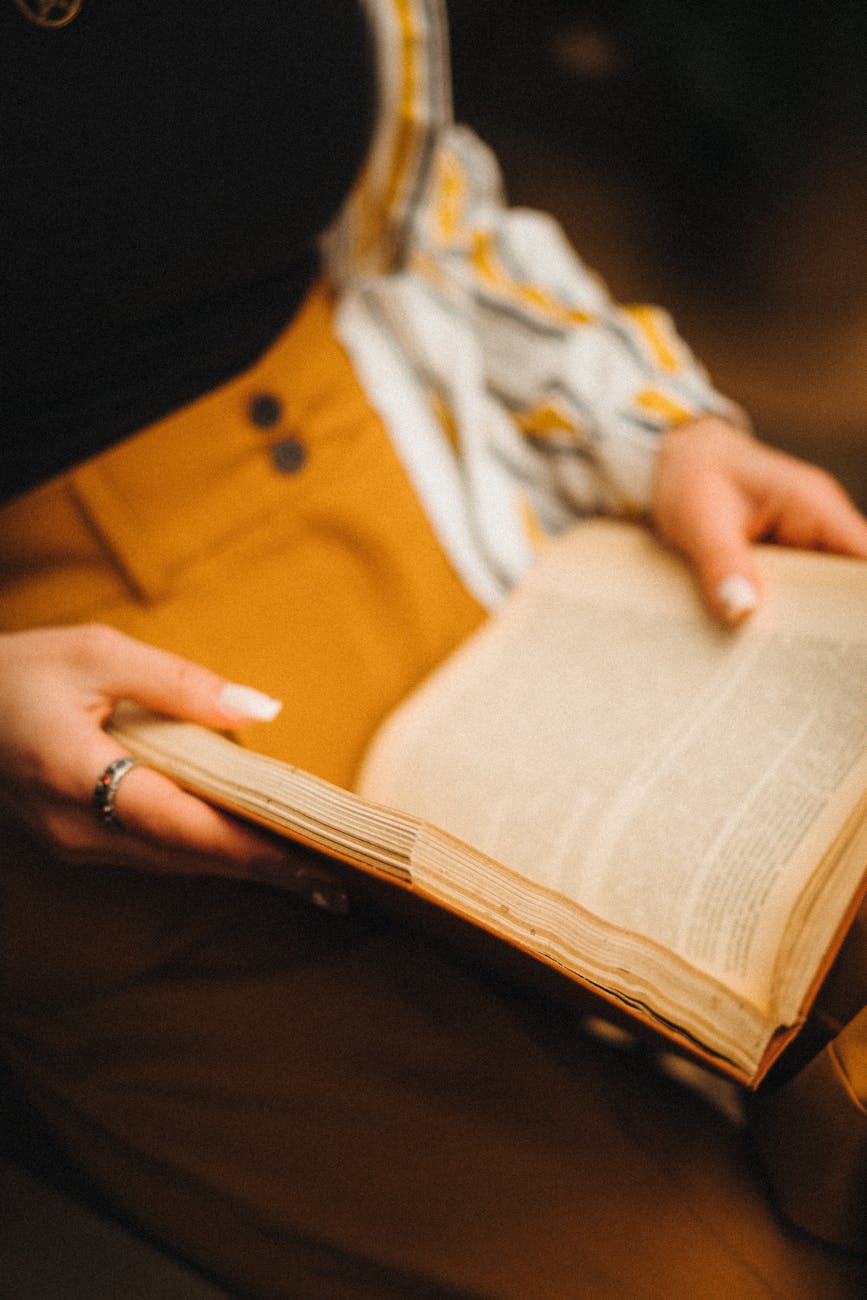
I finished The Things We Leave Unfinished yesterday. At work.
And then I sat there staring at my computer screen for a solid five minutes, headphones still in, not moving, because I genuinely did not know what the hell had just happened to me.
Eventually I took my headphones off, got up, and took the dog for a walk. Because what else do you do? You can’t just go back to trying to focus after that.
You can’t.
The dog didn’t know why we were suddenly going outside, but he didn’t ask questions, and I appreciated that.
Rebecca Yarros. If you’ve been anywhere near #BookTok in the last couple of years, you probably know her from the Empyrean series, Fourth Wing and everything that followed. That’s how I found her too.
And if you’re part of the disability or chronic illness community, there’s a good chance she hit you a little differently than she hit everyone else.
Yarros has Ehlers-Danlos syndrome. She’s talked openly about it, and she built that lived experience into the Empyrean series through her protagonist Violet, whose chronic illness is woven into the story not as a plot device, but as just part of who she is.
For a lot of us in the disability community, that kind of quiet, matter-of-fact representation is rare enough to stop you in your tracks. It stopped me. So I already trusted this author with something before I ever picked up The Things We Leave Unfinished.
I thought I was prepared for what she could do to me.
I was not prepared.
Dual timeline. WWII love story tangled up with a present-day one. If you know, you know. If you don’t, go read it, and then come back here, because I need to talk about it with someone who’s been through it.
A note before we go further: this post has vague spoilers. I won’t be laying out plot points in detail, but if you’re good at reading between the lines, you may be able to piece some things together. You’ve been warned. Go read the book first.
Seriously.
Go.
This Isn’t the First Time a Book Has Done This to Me
The last time a book wrecked me like this, I was sitting on my aunts’ kitchen floor.
I was in college. I had been over to their place with the last Harry Potter book, told them I couldn’t leave to go back to my dorm until I finished it, and proceeded to plant myself on the kitchen floor and read. For what felt like hours. Deeply, completely, embarrassingly immersed right up until the last page turn.
And then I just sat there. On the floor. Not ready to leave that world. Not sure how to go back to normal life after living so long inside that one.
That’s a particular kind of loss, not just the end of a story, but the end of a relationship with a story. The kind that’s been woven into actual years of your life. I filed that feeling away, figured it was specific to Harry Potter. To the scale of it. The years of it.
And then yesterday happened.
The Normal Kind of Grief
There’s a particular hollow feeling that shows up when you finish a book you loved. It’s not sadness exactly, or it is, but it’s mixed up with other things. The story was still living in my head all day. I’d think about a scene between Scarlett and Jameson and feel warm about it, the way you do, and then remember: oh. There’s no more. That’s all there is.
I miss the characters. Not in a hedged, I-know-they’re-fictional kind of way. Just, miss them. Full stop. I spent hours living alongside these people. I knew how they talked, what they were afraid of, the way love looked for them under impossible circumstances. And now they’ve stopped existing in any new way.
That’s the ordinary grief of a good book ending. I know it well. But this one had something extra.
The Revelation Kind of Grief (Here’s Where It Gets Vague)
There’s a specific kind of hurt that comes when a story delivers a revelation near the end that reframes everything you thought you knew. Not a trick. Not a cheap twist. The kind that’s been earned, slowly, carefully, and lands with a weight that almost knocks you flat.
That’s what happened near the end of this book.
I found out something about a character I had loved, trusted, and grieved alongside the whole time, something that changed who I understood her to be. Entirely. The character in the book who receives this news reacts in a way that mirrored exactly what was happening in my chest in that moment. I felt it right alongside her.
The grief doubled. I had to mourn the version of the character I thought I knew. Then mourn the truth. Then sit with the fact that the truth was, in its own way, even more heartbreaking than anything I’d braced for.
It’s a strange feeling, retroactive grief. Going back over everything in your head through a new lens. Realizing the sacrifices were bigger than you understood. The losses, deeper. The love, somehow even more devastating for it.
And I’m sitting at my desk at work going: holy crap. What the hell just happened.
The Audiobook Factor
Here’s the thing I didn’t fully account for going in: I listened to this book. And the narrator had a fairly decent English accent for the historical timeline: Scarlett, the letters, all of it. Which sounds like a small detail, but it wasn’t.
There’s something about a voice in your ear that collapses the distance between you and a character in a way that reading off a page doesn’t always do. I wasn’t just reading about Scarlett and Jameson, I was hearing them. Their world had a sound. And when that world ended, it didn’t just close like a book. It went quiet. All at once. In my ears.
One second I’m in WWII England. The next I’m just… at my desk. Staring at a screen. Surrounded by the ordinary sounds of my ordinary day. The whiplash of that is something else entirely.
Returning to Real Life, Reluctantly
Coming back to real life after a book like this always takes a minute. A story is its own world with its own weather, and you get used to that weather. Real life doesn’t have the same architecture. Problems don’t resolve by the final chapter. The pacing is all off.
Sometimes you need a walk. Sometimes you need to sit on your aunts’ kitchen floor for what feels like an hour. Sometimes you need to stare at your computer screen until the feeling settles enough that you can breathe normally again.
All of those are valid. All of those are just what it looks like when something got through.
That’s What a Good Book Does
I think the grief I’m carrying right now is actually a kind of gratitude in disguise. You don’t grieve stories that didn’t matter. You don’t lie awake thinking about characters who didn’t get under your skin.
This one got under my skin. So did Harry Potter, all those years ago on that kitchen floor. And I think I’m glad, genuinely glad, that I’m still capable of feeling it. That a voice in my ear, telling me about people who never existed, can send me out the door mid-workday just to walk it off.
The things we leave unfinished. Not just in the novel, but in the feeling it leaves behind. Some books close and you’re done. Some books close and you keep carrying them for a while, working something out.
This is one of those.
I’ll be okay. I just need a few days and probably something lighter to listen to next. (Suggestions welcome. Something with nobody dying would be great, thanks.)
Have you ever finished a book, or an audiobook, and just needed a minute? What sent you to the floor? Come sit with me.
Oh, and one more thing, because the universe apparently isn’t done with me yet: Lionsgate recently announced they’re adapting The Things We Leave Unfinished into a feature film. So I’m going to need a minute to process that too. If you need me, I’ll be on the floor.
Leave a Reply