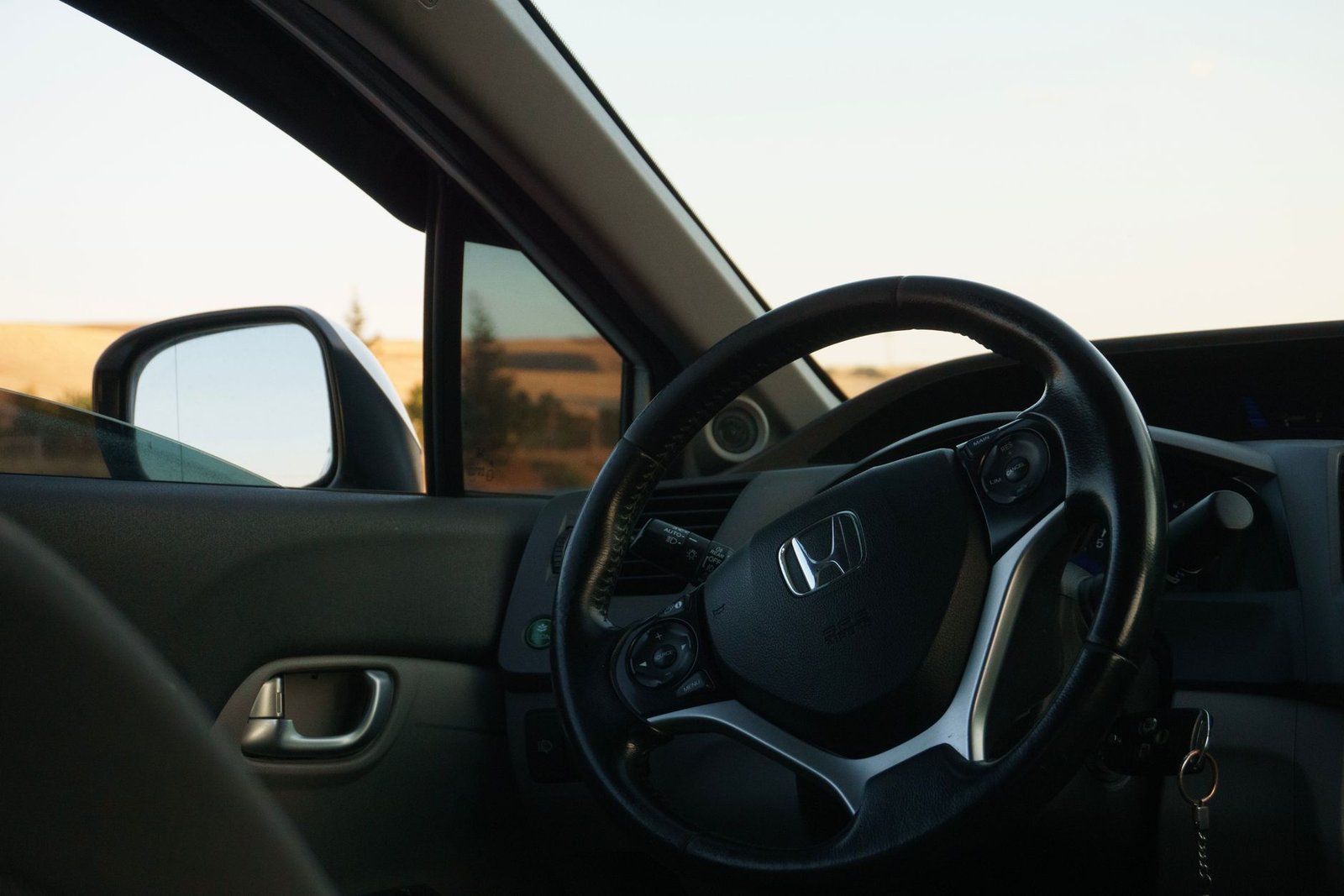
A month ago, I wrote about getting halfway through my adaptive driving assessment. Today, I finally got to experience the other half.
I would be lying if I said I wasn’t nervous and that my anxiety wasn’t pretty high going into it. I’ve wanted to drive since I was 15, but wanting to drive and actually being behind the wheel are two very different things.
Finally Behind the Wheel
We didn’t do any actual on-street driving, which, in hindsight, was probably a good thing.
One of my biggest challenges was figuring out where the right side of the vehicle was. There were several times when I wasn’t entirely on my side of the imaginary road. Maintaining a consistent speed was also a challenge.
The hand control for the accelerator was particularly sensitive. There were times when I accelerated more than I should have and other times when I probably could have gone faster. There was even one instance where I intended to brake but accidentally accelerated instead. Thankfully, the driving instructor had their own brake and was able to intervene.
I also sat lower than I would have liked. Technically, I was at an appropriate height for driving, but that doesn’t necessarily mean I was comfortable with what I could see out of the vehicle. The adjustments they suggested make sense to me, like adding a foam wedge to raise my seat and improve my sight lines. The gas/brake lever on the right was also very close to the steering wheel, and holding the brake while shifting into park, reverse, and drive was harder than I expected.
As I mentioned in my previous post, my goal isn’t to drive a sedan. My goal is to drive a wheelchair-accessible van from my power wheelchair. In my own wheelchair, I have more control over my seating position, including how high I sit.
I don’t know how much of today’s difficulty was related to the vehicle, how much was related to the adaptive equipment, and how much was simply because I’ve never driven before. It was probably a combination of all three.
Where Do I Go From Here?
Despite the challenges, I came away with the impression that they felt I was a good candidate to continue with the process. That’s encouraging.
The next step is to receive their written assessment. From there, continuing would likely involve several additional sessions to become more comfortable with the adaptive equipment before they write a formal prescription for the equipment and recommend restrictions for a potential driver’s license.
But this is where things get a little complicated.
I’m not an experienced driver who acquired a disability and now needs to learn how to drive using adaptive equipment. I’m someone who has never driven before. I need to learn both how to drive and how to use the equipment that makes driving possible for me.
Unfortunately, providing the extensive driving lessons I would need through their program wouldn’t be particularly time- or cost-effective.
I would also need to have my own appropriately equipped vehicle to complete the behind-the-wheel portion of my driver’s license test.
The Catch-22 of Adaptive Driving
This is something I’m going to have to think about.
How much money am I comfortable investing in a wheelchair-accessible vehicle and adaptive equipment before I even know whether I’ll ultimately be able to get my driver’s license?
For someone learning to drive without a disability, there might be the option of borrowing a parent’s car, practicing with a friend, or taking lessons through a traditional driving school.
My options aren’t quite that simple. I can’t just borrow someone’s car and spend an afternoon practicing in an empty parking lot. I need a vehicle equipped specifically for my needs.
It adds another layer of complexity and financial risk to something that is already expensive.
Being capable of learning how to drive and having the resources necessary to do so are two entirely different things. I think today made that distinction a little clearer for me.
Is Driving Still in My Future?
I don’t know yet.
As I said in my previous post, I don’t necessarily want to drive everywhere. I’m not looking to give up public transportation or completely change how I get around. I just want the option of going somewhere on my own terms.
That hasn’t changed.
Today wasn’t perfect. But I also have to remind myself that I’ve never done this before. It probably isn’t reasonable to expect myself to be comfortable behind the wheel after one session, especially when I’m learning to use adaptive equipment at the same time.
I’m glad I went through with the assessment. I would rather explore the possibility of driving and discover that it isn’t practical for me than spend the rest of my life wondering what might have been.
For now, I’m going to wait for the written assessment and take things one step at a time.
The door hasn’t been closed. Getting through it might just be a little more complicated than I had hoped.
If you’re someone who learned to drive with adaptive equipment without any previous driving experience, I’d love to hear how you navigated the process. How did you get the practice you needed? Did you purchase an accessible vehicle before getting your driver’s license?
And if you’re in the middle of a big first of your own, what’s helped you keep going?
Leave a Reply