Category: Society & Politics

Discussions on politics, policies, and social issues at local and national levels.

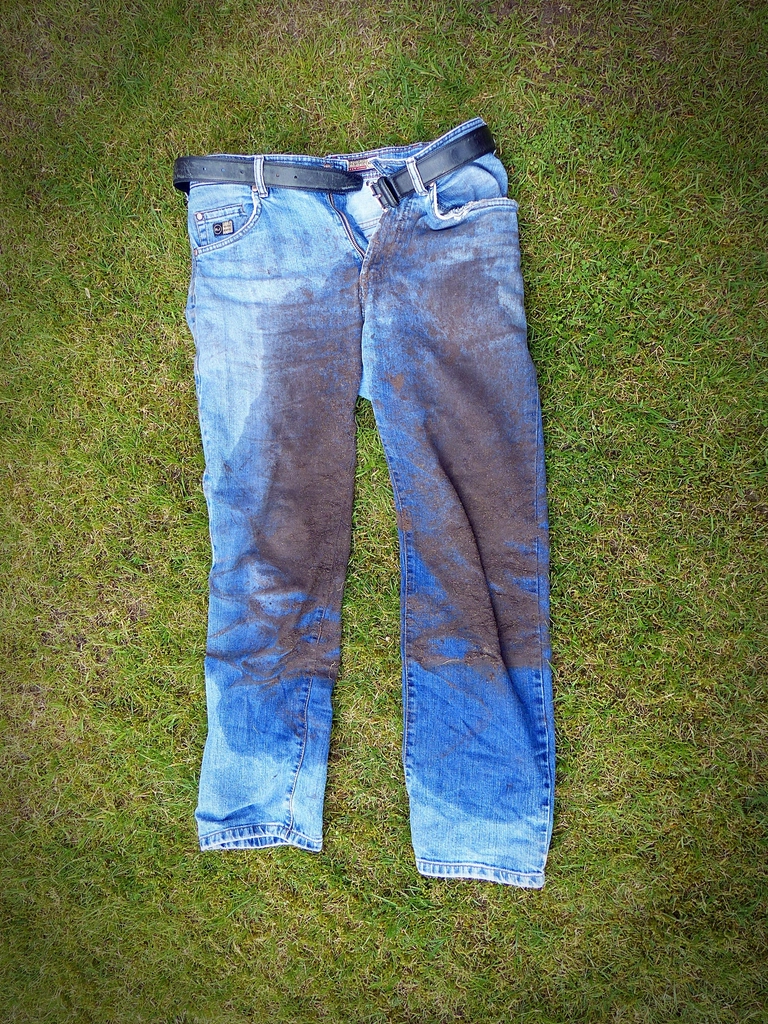
  • Why Can’t Pants Just Fit?

    Why Can’t Pants Just Fit?

    Let me set the scene. I am in the bathroom, getting ready to do what one does in the bathroom, and I go to pull down my pants. Except I don’t really pull them down. They just slide. Right off my hips, no effort required, like they were waiting for an excuse.

    My first thought was that I had grabbed a pair that were too big. It happens. I lost a significant amount of weight a few years ago and had to size down, and some of my older pairs are still floating around in the rotation. But no. I checked. Same size as my newer pairs.

    Which brings me to a question I have been asking for years: why can’t a size just be a size?


    Here is the thing about my wardrobe

    Most of my clothes come from the boys department.

    My shirts and pants, mostly from Target. My underwear, from JCPenney. A few adult shirts here and there, but adult sizing tends to run big and boxy, or long in the body and the leg, and none of that works great when you spend your day in a wheelchair. Boys sizing fits my body better, and there are real reasons for that.

    I am not especially tall, and I have a slim waist. My hips are another story: cerebral palsy has affected my hip joints over the years, and that has shaped my proportions in ways that make standard adult sizing a poor match. I also prefer shirts that hit just below the waist or near the hips, which makes dressing easier day to day. Adult cuts tend to be too long, too wide through the chest, or both. Boys sizing, more often than not, actually fits.

    I want to be clear about something, because I know where some people’s minds go when they hear that. Shopping in the boys department does not make me childish. It does not make me immature. It means I found clothing that fits my body, which is the entire point of clothing.

    Most of what I wear, you would never clock as coming from the boys section. A plain tee is a plain tee. A pair of jeans is a pair of jeans. Do I have a few shirts with something a little more fun on them? Sure. But the majority of my wardrobe could pass in either direction without anyone batting an eye.

    I am just a person wearing clothes that fit. Novel concept.


    So about that sizing problem

    Here is where it gets frustrating. Boys sizing runs differently than adult sizing, and I have made my peace with navigating both. What I have not made my peace with is that boys sizing is not even consistent with itself.

    A boys size 18 is a youth size, not an adult one. But that number does not mean the same thing from one brand to the next. I actually keep a reference chart just to keep track, not because I enjoy doing extra homework before buying a pair of pants, but because the numbers mean so little on their own that I genuinely need it. A boys size 18 at Target fits differently than a boys size 18 at JCPenney. Same number, two different brands, two different fits. And that is before you factor in that sizing can shift within the same brand from one year to the next.

    The number on the tag is not a measurement. It is a suggestion. A rough estimate. A vibe.

    If I buy a size, that number should reflect an actual measurement. The same measurement, every brand, every year. The fact that it does not is not just inconvenient. For a lot of people, it means clothes that do not fit, returns that are a hassle, and a shopping experience that already takes more effort than it should.


    And it is not just pants

    For a long time, shoes were their own separate nightmare.

    I wore AFOs for years. AFOs, or ankle-foot orthoses, are rigid braces that support the foot and ankle and are commonly used by people with conditions like cerebral palsy. They slip inside your shoe, which means your shoe has to be big enough to accommodate both your foot and the brace. My true foot size is a men’s 8. But for most of the years I wore AFOs, I was buying a men’s size 10 just to make them work. The last pair that actually fit over my braces were a pair of Doc Martens at a size 10. They did the job, but finding them was not easy, and shoe shopping was never simple.

    I stopped wearing AFOs a few years ago. That is when I found out what size my feet actually are.

    There is another wrinkle worth mentioning. Because of my cerebral palsy and the fact that I do not bear weight the way most people do, unless I am in the middle of a transfer, my feet do not sit flat. That makes it difficult to get an accurate measurement in the first place, which adds yet another layer to an already complicated process.

    Eventually I found Billy Footwear, and things got a lot better. Billy’s designs shoes that zip open fully around the sides, making them genuinely easier to put on for people with a wide range of mobility needs. For the first time, I was buying shoes in a size that actually reflected my feet, not my braces, not a workaround. I receive no compensation from Billy Footwear. I just think they are worth knowing about.

    But the point is: I spent years buying shoes two sizes too big because the alternative was not having shoes that worked. That is not a sizing inconsistency problem in the same way pants are. That is a whole different failure of the system. And it is exhausting to navigate both at once.


    For wheelchair users, the stakes are a little higher

    Back to those pants sliding off my hips in the bathroom.

    That moment was funny, in the way that a lot of disability moments are funny when you are not in the middle of a transfer. But it is also not nothing.

    I cannot count the number of times I have been mid-transfer into my chair and had to stop and readjust because my pants had slid down. Transfers require focus and coordination. Having to pause and hike your pants back up in the middle of one is not just annoying. It is a real disruption, and depending on the situation, it can affect your safety and your dignity.

    I could wear a belt every day. Sure. Except a belt is not just something I forgot to grab. It is time and energy, and when you are a wheelchair user who needs to get to the bathroom in a hurry, that time and energy is not always available. A belt between you and the bathroom can be the difference between making it and not making it. That is not a minor inconvenience. That is a real problem.

    Here is the thing, though. Most of my pants, because they come from the boys department, are either pull-on or they fasten with snaps rather than the buttons and zippers you find on adult men’s pants. That actually works in my favor. Both Target and JCPenney carry adaptive clothing lines, and I have tried a few things from each. But for my needs, regular boys department basics do the job just as well, often with the same easy-access features that adaptive clothing is designed around, and without the premium price tag. The boys department accidentally solved a problem the adaptive clothing industry charges extra to address.

    Which makes the sizing inconsistency even more frustrating. When you find a department that fits your body, fits your budget, and happens to have features that make your daily life easier, you want to be able to rely on it. A boys size 18 should mean the same thing every time. It does not. And that matters.


    A size should be a size. Every brand. Every year. Every time. It is not a complicated request. It just, apparently, is not how the industry works.

    And until it does, I will be in the boys department at Target, checking the tag on every pair of pants, and hoping for the best.

    Does inconsistent clothing sizing affect how you shop? I would love to hear how other wheelchair users and disabled folks navigate this, whether it is keeping your own reference chart, finding brands that actually work, or something else entirely. Drop a comment below.


  • When the Bus Doesn’t Pull Up: Advocating from the Back of the Bus

    When the Bus Doesn’t Pull Up: Advocating from the Back of the Bus

    So this actually happened last Saturday, and I’m just now sitting down to write about it because life has a way of doing that. But it’s been living rent-free in my head all week, so here we go.

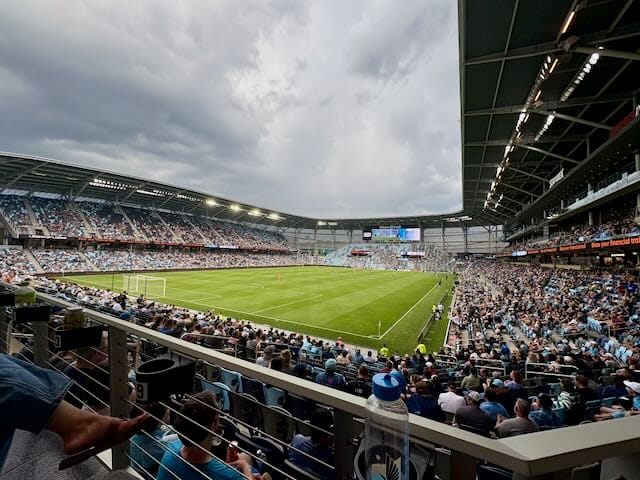
    Jason and I went to the Minnesota United game. Simple enough, right? Except it wasn’t.

    The green line was down for maintenance, so Metro Transit had shuttle buses running between downtown Minneapolis and downtown St. Paul. Shuttles on game days tend to get packed, so we decided to skip it and just take the 94. I take the 94 to work most days. I know the 94. The 94 and I are old friends.

    Or so I thought.

    Going: When the Bus Just… Doesn’t

    When the 94 pulled up to our stop, it didn’t actually pull up. It stopped in the street. The driver leaned out and shouted that he was full, that he couldn’t accommodate me.

    Does that happen? Yes. Is there much I can do about it in the moment if a driver says the bus is full? Not really. So I took him at his word. Everyone else at the stop stepped off the curb and boarded. Jason and I watched the bus go.

    We ended up taking the green line shuttle after all. We made it to Allianz Field just in time for kickoff. I was a little annoyed, but the game was good, and I shook it off. Soccer helps.

    Coming Home: A Different Story

    After the game, I figured the shuttle would be the easy option heading back. It was not easy.

    The shuttle loading area was right next to where a CVS had been torn down a few weeks earlier. Construction barricades were everywhere, and they were blocking the sidewalk. I couldn’t get through. I couldn’t load onto the shuttle. Just like that, the “easy” option was off the table.

    Since I don’t usually take the 94 from downtown St. Paul, I wasn’t entirely sure where it picked up. Cue some finagling, some frustration, and, honestly, a little aggravation on Jason’s part too. But we found it.

    This Time, I Spoke Up

    Here’s where it got interesting. The same scenario played out: the bus wasn’t pulled to the curb. But this time, I decided to speak up. A little louder. A little more firmly.

    The driver seemed to think I was just going to hop off the curb into the street. Power wheelchairs do not hop curbs. A few people nearby offered to lift me. They meant well, genuinely. I politely declined. One wrong move and someone gets hurt, I get hurt, or my chair gets damaged. None of those are great outcomes.

    The driver eventually maneuvered the bus to the curb and loaded me on. I don’t know if he was having a rough day. Game days are chaotic, the green line was down, and everyone was stressed. I get it. But it still needed to happen, and it happened because I asked for it to happen.

    Oh, and then the bus had a mechanical issue and had to pull off on the freeway. Which has genuinely never happened to me in all my years of riding Metro Transit. So that was a thing.

    Even Advocates Need a Nudge Sometimes

    Here’s what I keep coming back to: even those of us who do this work, who talk about disability rights, who know our rights, who have the language, sometimes freeze up in the moment. Sometimes we’re tired. Sometimes we’re just trying to get home after a long day and we don’t want to make it a whole thing.

    I needed a gentle nudge from Jason to speak up on the way home. And that’s okay. Advocacy isn’t a switch you flip on and it stays on forever. It takes energy. And sometimes it takes a partner, literally or figuratively, reminding you that you’re allowed to take up space.

    Even if that space is at the back of the bus, waiting for the driver to pull six feet closer to the curb.

    We got home. Minnesota United lost 0-1 to LAFC. And I’m still thinking about that ride.

    Have you ever frozen up in a moment when you knew you needed to speak up? What helped you find your voice?

    As for today: no bus rides on the agenda. Minnesota United is playing the Columbus Crew in Columbus tonight at 6:30, so I’ll be watching from the couch.

    Good thing too, because Metro Transit is doing more maintenance on the green line this weekend. Shuttle buses again. I’ll be staying home, thanks.

  • Grieving the End of The Things We Leave Unfinished

    Grieving the End of The Things We Leave Unfinished

    I finished The Things We Leave Unfinished yesterday. At work.

    And then I sat there staring at my computer screen for a solid five minutes, headphones still in, not moving, because I genuinely did not know what the hell had just happened to me.

    Eventually I took my headphones off, got up, and took the dog for a walk. Because what else do you do? You can’t just go back to trying to focus after that.

    You can’t.

    The dog didn’t know why we were suddenly going outside, but he didn’t ask questions, and I appreciated that.

    Rebecca Yarros. If you’ve been anywhere near #BookTok in the last couple of years, you probably know her from the Empyrean series, Fourth Wing and everything that followed. That’s how I found her too.

    And if you’re part of the disability or chronic illness community, there’s a good chance she hit you a little differently than she hit everyone else.

    Yarros has Ehlers-Danlos syndrome. She’s talked openly about it, and she built that lived experience into the Empyrean series through her protagonist Violet, whose chronic illness is woven into the story not as a plot device, but as just part of who she is.

    For a lot of us in the disability community, that kind of quiet, matter-of-fact representation is rare enough to stop you in your tracks. It stopped me. So I already trusted this author with something before I ever picked up The Things We Leave Unfinished.

    I thought I was prepared for what she could do to me.

    I was not prepared.

    Dual timeline. WWII love story tangled up with a present-day one. If you know, you know. If you don’t, go read it, and then come back here, because I need to talk about it with someone who’s been through it.

    A note before we go further: this post has vague spoilers. I won’t be laying out plot points in detail, but if you’re good at reading between the lines, you may be able to piece some things together. You’ve been warned. Go read the book first.

    Seriously.

    Go.

    This Isn’t the First Time a Book Has Done This to Me

    The last time a book wrecked me like this, I was sitting on my aunts’ kitchen floor.

    I was in college. I had been over to their place with the last Harry Potter book, told them I couldn’t leave to go back to my dorm until I finished it, and proceeded to plant myself on the kitchen floor and read. For what felt like hours. Deeply, completely, embarrassingly immersed right up until the last page turn.

    And then I just sat there. On the floor. Not ready to leave that world. Not sure how to go back to normal life after living so long inside that one.

    That’s a particular kind of loss, not just the end of a story, but the end of a relationship with a story. The kind that’s been woven into actual years of your life. I filed that feeling away, figured it was specific to Harry Potter. To the scale of it. The years of it.

    And then yesterday happened.

    The Normal Kind of Grief

    There’s a particular hollow feeling that shows up when you finish a book you loved. It’s not sadness exactly, or it is, but it’s mixed up with other things. The story was still living in my head all day. I’d think about a scene between Scarlett and Jameson and feel warm about it, the way you do, and then remember: oh. There’s no more. That’s all there is.

    I miss the characters. Not in a hedged, I-know-they’re-fictional kind of way. Just, miss them. Full stop. I spent hours living alongside these people. I knew how they talked, what they were afraid of, the way love looked for them under impossible circumstances. And now they’ve stopped existing in any new way.

    That’s the ordinary grief of a good book ending. I know it well. But this one had something extra.

    The Revelation Kind of Grief (Here’s Where It Gets Vague)

    There’s a specific kind of hurt that comes when a story delivers a revelation near the end that reframes everything you thought you knew. Not a trick. Not a cheap twist. The kind that’s been earned, slowly, carefully, and lands with a weight that almost knocks you flat.

    That’s what happened near the end of this book.

    I found out something about a character I had loved, trusted, and grieved alongside the whole time, something that changed who I understood her to be. Entirely. The character in the book who receives this news reacts in a way that mirrored exactly what was happening in my chest in that moment. I felt it right alongside her.

    The grief doubled. I had to mourn the version of the character I thought I knew. Then mourn the truth. Then sit with the fact that the truth was, in its own way, even more heartbreaking than anything I’d braced for.

    It’s a strange feeling, retroactive grief. Going back over everything in your head through a new lens. Realizing the sacrifices were bigger than you understood. The losses, deeper. The love, somehow even more devastating for it.

    And I’m sitting at my desk at work going: holy crap. What the hell just happened.

    The Audiobook Factor

    Here’s the thing I didn’t fully account for going in: I listened to this book. And the narrator had a fairly decent English accent for the historical timeline: Scarlett, the letters, all of it. Which sounds like a small detail, but it wasn’t.

    There’s something about a voice in your ear that collapses the distance between you and a character in a way that reading off a page doesn’t always do. I wasn’t just reading about Scarlett and Jameson, I was hearing them. Their world had a sound. And when that world ended, it didn’t just close like a book. It went quiet. All at once. In my ears.

    One second I’m in WWII England. The next I’m just… at my desk. Staring at a screen. Surrounded by the ordinary sounds of my ordinary day. The whiplash of that is something else entirely.

    Returning to Real Life, Reluctantly

    Coming back to real life after a book like this always takes a minute. A story is its own world with its own weather, and you get used to that weather. Real life doesn’t have the same architecture. Problems don’t resolve by the final chapter. The pacing is all off.

    Sometimes you need a walk. Sometimes you need to sit on your aunts’ kitchen floor for what feels like an hour. Sometimes you need to stare at your computer screen until the feeling settles enough that you can breathe normally again.

    All of those are valid. All of those are just what it looks like when something got through.

    That’s What a Good Book Does

    I think the grief I’m carrying right now is actually a kind of gratitude in disguise. You don’t grieve stories that didn’t matter. You don’t lie awake thinking about characters who didn’t get under your skin.

    This one got under my skin. So did Harry Potter, all those years ago on that kitchen floor. And I think I’m glad, genuinely glad, that I’m still capable of feeling it. That a voice in my ear, telling me about people who never existed, can send me out the door mid-workday just to walk it off.

    The things we leave unfinished. Not just in the novel, but in the feeling it leaves behind. Some books close and you’re done. Some books close and you keep carrying them for a while, working something out.

    This is one of those.

    I’ll be okay. I just need a few days and probably something lighter to listen to next. (Suggestions welcome. Something with nobody dying would be great, thanks.)

    Have you ever finished a book, or an audiobook, and just needed a minute? What sent you to the floor? Come sit with me.


    Oh, and one more thing, because the universe apparently isn’t done with me yet: Lionsgate recently announced they’re adapting The Things We Leave Unfinished into a feature film. So I’m going to need a minute to process that too. If you need me, I’ll be on the floor.

  • You Only See a Snapshot: That’s Not Enough to Judge

    You Only See a Snapshot: That’s Not Enough to Judge

    Scroll through Facebook on any given day and you’ll find it: a parent sharing a moment with their child, and buried in the comments, a pile-on. Someone calling them lazy. Someone asking why they haven’t “fixed” it yet. Someone offering unsolicited advice wrapped in thinly veiled judgment.

    It happens constantly in disability parenting spaces. And it needs to stop.


    The People I Follow And Why This Matters to Me

    I want to be clear upfront: I follow a lot of autistic people and autism families on Facebook, and I do it because they’re genuinely worth following. The autistic people I know personally are cool, funny, thoughtful, and totally normal.

    They are just navigating a world that wasn’t really designed with them in mind. The families I follow online are doing the same: showing up every day for their kids, sharing the good moments and the hard ones, and being more honest about their lives than most people are willing to be.

    Some of those families have kids with severe autism. And some of those kids are in diapers or pull-ups. When I see that, I don’t see failure. I see a family that’s figured out what works.

    When strangers on the internet see it, sometimes the reaction is very different.

    What People Don’t Understand About Severe Autism and Potty Training

    Potty training isn’t just about learning a habit. It involves sensory awareness, the ability to recognize and interpret body signals, motor coordination, communication, and the executive function to stop what you’re doing and act on that signal in time. For kids with severe autism, any or all of those pieces may be genuinely, neurologically difficult, not because no one tried, but because the wiring works differently.

    For some kids, traditional potty training isn’t a realistic goal at least not on anyone else’s timeline, and maybe not ever in the conventional sense. Pull-ups and diapers in those cases aren’t a sign that parents gave up.

    They’re often the result of years of trying, working with therapists, adjusting approaches, and ultimately landing on what actually preserves the child’s dignity and the family’s ability to function.

    When someone fires off “have you even tried potty training them?” in the comments. They’re not helping. They’re showing how little they understand about what that family has already been through.

    Pull-ups and diapers aren’t a sign that parents gave up. They’re often the result of years of trying, working with therapists, and ultimately landing on what actually works.

    I Have Some Skin in This Game, Too

    I’m not writing this from the outside looking in. I have cerebral palsy. CP affects muscle coordination and spasticity throughout the body, and for me, that includes my bladder.

    What that looks like in real life: there’s sometimes no gradual warning. One moment everything is fine. The next, my bladder is spasming and I have a very short window, sometimes no window, to get to a bathroom. It’s not a matter of planning better or paying more attention.

    That’s just how spasticity works.

    So yes, I use pull-ups. It’s practical. It’s smart. I’ve made my peace with it and I truly don’t care what anyone thinks.

    I’m sharing this not to make the post about me, but because I want to be honest: I understand something about making practical choices around a body that doesn’t always cooperate. And I understand what it feels like to have those choices be nobody’s business but your own.

    You’re Only Seeing a Snapshot

    Social media gives you a moment. One frame from a film that’s been running for years.

    You don’t see the context. You don’t see what was tried before. You don’t see the appointments, the therapy sessions, the late-night research, the hard conversations, the small victories that don’t look like anything to the outside world but meant everything to that family. You don’t see the grief, or the resilience, or the way a parent has quietly rewritten their definition of progress a hundred times over.

    What you see is one post. One photo. One moment.

    And yet that’s enough for some people to render a verdict.

    What to Do Instead

    This isn’t complicated. It just takes some intentional effort:

    • Pause before commenting. Ask yourself: does this person need my input, or did they just share something from their life?
    • Ask instead of assuming. If you genuinely don’t understand something, curiosity is more useful than criticism.
    • Believe people when they say something is hard. You don’t have to fully understand a situation to respect that someone is doing their best in it.
    • Amplify instead of critique. If you see a disability parent or a disabled person sharing their reality honestly, share it. Normalize it. Help build a space where people feel safe being real.

    The World Could Use More of This

    My original thought was simple: if there were more people willing to support instead of judge, the internet — and honestly, the world — would be a better place.

    I still believe that. Disability doesn’t come with a handbook, and every family’s path — every person’s path — looks different. The least we can do is show up with some grace for the moments we don’t fully understand.

    You only see a snapshot. Make sure the story you’re telling yourself about it is worth telling.


    Written by someone who knows this isn’t theoretical. 💙

  • When the Season Shifts

    When the Season Shifts

    When I first became a soccer fan, I never thought much about the weather. It was just part of the experience. The game and I have evolved. I’ve started thinking about how changing seasons shape what accessibility really means for fans like me. Changing bodies also influences this meaning.

    I’ve been reading about Major League Soccer’s proposed move to a fall–spring schedule. I understand the reasoning behind it. Still, I can’t help but think about how it will change the fan experience. This is especially true for those of us who feel the seasons differently than we used to.

    When I first became a fan back in 2015, the cold didn’t bother me. I was just excited to be there to feel part of something alive and electric. I remember going to a game one chilly October and bringing one of my aunts along. She thought I “looked cold,” even though I swore I was fine. By halftime, she’d bought me a hot chocolate, a hat, and maybe even a sweatshirt.

    I still remember that small act of care. The steam rose from the cup. Her laughter cut through the cold air. I didn’t think much of it then. Yet, looking back, I realize it was one of those simple, human moments that stay with you.

    A couple of years later, at our first home game in MLS, the weather turned on us fast. Heavy snow fell throughout the match, thick, wet flakes that clung to your eyelashes and soaked your gloves. The snow was coming down so fast that they had to use leaf blowers to clear the lines.

    My toes went numb halfway through, but it didn’t matter. The atmosphere was electric, the crowd united in equal parts misery and joy. We were there together, and that was enough.

    Those were different times. I was a different person. I was more willing to push through the discomfort just to be part of the moment.

    These days, I’ve noticed that the same weather affects me differently. I attend fewer matches as temperatures drop, and this year I didn’t opt in for playoff tickets at all. It’s not that my passion for the team has faded far from it. It’s just that Minnesota’s fall weather is unpredictable. This unpredictability makes it hard to plan. I find it difficult to feel confident that I’ll be comfortable or safe. The wind cuts a little deeper now. The cold lingers a little longer.

    Supporting a team with an outdoor stadium like Allianz Field comes with that territory. Still, it’s made me think more about what “accessibility” really means. We often talk about it in physical terms, ramps, seating, transportation, and those things matter deeply.

    Accessibility can also mean something softer, more personal: being capable of participating fully without discomfort, fear, or exhaustion. Weather affects this aspect, particularly for fans with mobility challenges. It impacts those with chronic pain or other health conditions, making the cold more than just an inconvenience.

    For some fans, colder games are part of the charm. They enjoy layers of scarves and hands wrapped around coffee cups. There is a sense of endurance that becomes almost a badge of honor. But for others, it’s not that simple. The cold can turn joy into endurance, and that can change the whole experience.

    As I’ve grown and my needs have shifted, I’ve noticed some changes. I’ve started to see how sports, something built on togetherness, can sometimes overlook the quiet ways inclusion matters.

    The fan experience isn’t just about ticket sales. It isn’t solely about crowd energy either. It’s about whether everyone can share in those moments equally. That’s true for people of all kinds.

    This includes those experiencing changes due to age. It also includes people with disabilities, sensory needs, or simply changing bodies who experience the world differently than before. Accessibility isn’t one-size-fits-all, and weather adds another layer to that reality.

    I still love this sport, this team, and the community it builds. Soccer has been a steady thread through so many seasons of my life, literally and figuratively. But my relationship to it has evolved as I have. The same stands that once made me feel unstoppable now remind me to listen to my body. To respect its limits. To show up in ways that make sense for where I am now.

    If MLS does move to a fall–spring schedule, I hope clubs and stadiums will think creatively. They should consider what that means for all fans.

    Maybe that looks like expanding covered seating in some venues. It could also mean improving heat access. Or it could simply involve offering more understanding around accessibility options in cold weather. Sometimes inclusion begins with small acts. It could be a staff member who notices. It might be a space to warm up. Or it could be the willingness to ask, “What do you need to feel comfortable here?”

    For many of us, being a fan isn’t about braving the elements anymore. It’s about connection: to the game, to the people around us, and to ourselves. It’s about finding warmth in community, even when the temperature drops.

    Seasons shift, people change, and that’s okay. What matters most is finding warmth in the stands. We need warmth in the community. It is essential in the spaces that still make us feel like we belong.

  • Government Shutdowns: Why Ordinary Americans Pay the Price While Congress Gets Paid

    Government Shutdowns: Why Ordinary Americans Pay the Price While Congress Gets Paid

    The United States government has shut down. Again.

    This isn’t just political theater happening in Washington. When the government shuts down, real people suffer. Federal workers are furloughed without pay. Others are forced to show up and work for free, waiting and hoping that back pay eventually comes. Contractors may never see the money they lose. Families who rely on government programs are left with uncertainty.

    Meanwhile, Congress just shrugs and keeps collecting their paychecks.

    Here’s what gets me: if I don’t pay my rent, I lose my apartment. If I don’t pay the electric bill, the lights go out. But when Congress doesn’t pay the government’s bills? They get to stay in their cushy offices while the rest of the country pays the price.


    The Duct Tape of Democracy: What a Continuing Resolution Is

    When Congress can’t pass an actual budget, they often slap on a Continuing Resolution (CR). Think of it like duct tape: it keeps the machine running for a little while, but it’s no long-term fix.

    A CR basically says: “We’ll just keep spending at last year’s levels.” That means agencies can’t start new projects. They can’t adjust to new needs. They just sit in limbo, waiting for Congress to stop bickering. Sometimes multiple CRs get passed in a single year — kicking the can further down the road.

    And when even a CR doesn’t pass? That’s when the shutdown slams into place.

    A Quick History Lesson on Shutdowns

    Shutdowns weren’t always the rule. Before 1980, if Congress blew the deadline, agencies kept operating. That changed after Attorney General Benjamin Civiletti ruled that under the Antideficiency Act, funding gaps legally required shutdowns. Since then, they’ve become a recurring disaster.

    Some of the biggest shutdowns:

    • 1995–96 (Clinton vs. Gingrich): Lasted 21 days. About 800,000 workers furloughed. A standoff over spending cuts.
    • 2013 (Obama): Sixteen days. Sparked by the fight over the Affordable Care Act. Cost the economy an estimated $24 billion.
    • 2018–19 (Trump): The record-holder at 35 days. Caused by the border wall funding battle. About 800,000 workers went without pay; countless contractors never got their money back.
    • 2025 (Right Now): Once again, Congress blew the deadline. Here we are, living the same old nightmare.

    Every shutdown looks different. The fallout is predictable. Families end up at food banks because paychecks stopped. Veterans wait longer for benefits. Disability services are disrupted. Medical research is stalled. Parks are shuttered. Small businesses near federal facilities take losses they can’t recover.

    Who Gets Hurt the Most

    Shutdowns don’t hit everyone equally.

    Disabled people often feel the blow first. There are delays in Social Security claims. There are disruptions to medical research. Federal grants that keep vital services running can be paused.

    Veterans face delayed benefits. Families who rely on nutrition programs like WIC find themselves in limbo.

    For federal employees who live paycheck to paycheck, a missed paycheck can have serious consequences. Many of these employees are veterans or disabled. It can mean bills pile up, rent becomes overdue, or prescriptions are skipped. It’s not just numbers on a ledger. It’s human lives destabilized by political games.

    Why This Keeps Happening

    Here’s the kicker: shutdowns aren’t about money. The U.S. has the credit to pay its bills. Shutdowns are about politics — leaders holding the budget hostage to force fights over unrelated issues.

    It’s brinkmanship at the expense of ordinary people.

    A Better Way Forward

    It doesn’t have to be this way.

    Look at Minnesota. Our state legislature is required to pass a budget by the end of session. Is it always pretty? No. But the government doesn’t shut down every time lawmakers disagree. There’s a built-in deadline that forces people to do the job.

    Why can’t Congress do the same?

    Maybe we need rules that make shutdowns impossible. No budget? No recess. No budget? No pay. No budget? No office.

    If I don’t pay my rent, I get evicted. If I don’t pay my bills, I lose my lights. Maybe it’s time Congress faced the same reality.

    Conclusion

    What do you think? I’d love to hear your thoughts, but let’s keep it civil. No name-calling, no bashing, no personal attacks. This is about ideas, not insults.

    And let me be perfectly clear: I am not laying the blame on one party alone. Both Republicans and Democrats share responsibility for this mess. My goal isn’t to pick sides. I aim to highlight a broken system that keeps hurting real people. I also want to suggest a better way forward.

  • When School Safety Plans Leave Students Behind

    When School Safety Plans Leave Students Behind

    I wasn’t sure how much more I was going to say about the recent school shooting at Annunciation Catholic School. But then I stumbled across an article in the Minnesota Star Tribune, and it stopped me in my tracks.

    We practice drills in school—lock downs, tornado, fire—because safety matters. I remember those drills vividly from my own time in elementary school. My experience was never quite like my classmates’.

    During tornado drills, everyone crouched on the floor, arms covering their necks. Me? Still sitting upright in my wheelchair, because that was the safest option we had.

    Fire drills were even more complicated. I remember a specific instance when the alarm went off. No one was sure if it was a drill or the real thing. Elevators can’t be used in an actual fire, but that day, there wasn’t time to debate. A staff member just scooped me up and carried me down three flights of stairs. I sat on the grass outside without my chair until we got the all-clear.

    I applaud that staff member for their quick thinking in getting me out of the building. I also applaud the Annunciation staff. They pulled a student out of his wheelchair and shielded him with their bodies. Those moments were heroic—but they were also unplanned. They happened because people acted on instinct, not because the system had a clear, inclusive plan.

    The Hard Truth: Our Plans Have Gaps

    Yes, emergency procedures can be written into IEPs. Many do. But let’s be honest—you can’t plan for every scenario. Right now, too many schools are failing to plan for some of the most basic ones.

    Here’s the reality for students with disabilities:

    • They may not be able to flatten to the ground during a lock down.
    • They may not move as fast as their peers—or at all—when evacuating.
    • They may not cognitively understand what’s happening in the chaos and could unintentionally move toward danger.

    These are life-or-death gaps. And yet, they’re rarely talked about until tragedy strikes.

    What Minnesota Requires—and Where It Falls Short

    Minnesota law requires schools to have comprehensive emergency plans, and those plans are supposed to include students with disabilities. Best practices suggest:

    • Individual Evacuation Plans for students who need them
    • Accessible alerts for students with hearing or vision impairments
    • Specialized evacuation equipment, like stair chairs

    But in practice, these things don’t always happen. Many schools still:

    • Skip individualized drills because they’re time-consuming
    • Lack staff training for evacuating students with disabilities
    • Depend on instinct in emergencies, instead of clear systems

    That gap between policy and practice is dangerous—and it needs attention now.

    The Bigger Picture: Gun Violence and Safety for All

    I’ve said this before and I’ll say it again:

    • We need common-sense gun reform.
    • We need mental health screenings.
    • We do not need weapons of war on our streets.

    I support the Second Amendment. I support responsible gun ownership. But firearms designed to fire dozens of rounds in seconds have no place in civilian life. They exist for one purpose: destruction.

    Until laws change, we live in a reality where lock down drills and emergency plans are essential. That reality must include every student.

    What Needs to Happen Now

    We can’t just design safety for the majority and leave the minority behind. Here’s what schools should be doing now:

    • Individualized Safety Plans for every student with mobility, sensory, or cognitive disabilities
    • Regular drills that include students with disabilities (not afterthought drills)
    • Evacuation equipment and staff training to make sure no one is left behind
    • Collaboration with first responders so they know how to assist students with disabilities during real emergencies

    Why This Matters

    I hate writing about this. It breaks me to even think about it. But ignoring it won’t make it go away. These conversations matter because too often, we design for the majority and leave the rest to fend for themselves.

    It’s time to change that. Every student deserves a clear, safe path in an emergency. No exceptions.

    We can’t wait for another headline to have this conversation. Start it now—because safety should never be optional.

    What You Can Do Today

    • Ask your school if students with disabilities have individualized safety plans.
    • Talk to your school board about inclusive drills and evacuation equipment.
    • Advocate at the state level for stronger accountability and resources for schools.

    Resources for Parents and Advocates

  • A Dangerous Precedent

    A Dangerous Precedent

    A Quick Word Before We Begin

    In the age of TikTok headlines and 24-hour news cycles, stories come and go at warp speed. Even major developments—like the string of settlements between powerful institutions and Donald Trump—are quickly overshadowed by the next viral controversy. While much has already been said about these deals, I believe this conversation deserves more depth and context. So I’m adding my voice to it. Let’s dig in.

    When Colleges and Newsrooms Pay to Stay Silent

    Columbia made a massive $200 million payout. ABC followed with a $15 million hush-money deal. CBS also sealed a deal worth $16 million. Institutions are caving to politically motivated pressure, which jeopardizes academic integrity, press freedom, and democratic norms.

    Something Strange, and Dangerous, Is Happening

    In the past eight months, a pattern has emerged. Institutions, once considered the bedrock of academic freedom, are quietly agreeing to large settlements. These agreements are with Donald Trump or his administration. These aren’t settlements of moral or legal accountability. They are settlements of political intimidation.

    Let’s walk through the cases:

    1. Columbia University agreed to pay over $200 million. This payment resolves federal investigations tied to its handling of foreign funding disclosures. It also addresses its response to antisemitism and pro-Palestinian protests. The payment allowed Columbia to restore access to roughly $400 million in frozen federal funding.
    2. ABC News, owned by Disney, settled a defamation lawsuit by Trump. This was over George Stephanopoulos’s repeated claim that Trump was “found liable for rape” in the E. Jean Carroll case—a legal finding that actually stopped short of that label. Disney paid $15 million to Trump’s presidential library and another $1 million in legal fees.
    3. Paramount/CBS settled with Trump after he alleged that a 60 Minutes interview with Kamala Harris constituted “election interference.” The network agreed to pay $16 million. It also agreed to donate programming value to Trump’s campaign. Additionally, it will release full transcripts of future candidate interviews.

    None of these settlements included a court finding against the institutions. None of them were compelled by loss in court. They were voluntary. And that’s the problem.

    Columbia University: $200 Million and Policy Concessions

    Columbia’s settlement was staggering not just in dollars but in scope. Beyond the $200 million fine, it included sweeping changes to academic and student governance. The changes involved reshaping its Middle Eastern studies department. It banned race-based admissions policies. Additionally, dozens of students and faculty were disciplined.

    The underlying investigations were rooted in Trump-era policies that targeted elite academic institutions. Critics argue they were less about compliance and more about culture war. By settling, Columbia may have preserved short-term funding but sacrificed its long-term credibility as an independent educational institution.

    ABC News: $15 Million for a Word

    The ABC News case sets an equally grim precedent. After anchor George Stephanopoulos repeatedly misstated that Trump had been found liable for rape, Trump sued for defamation. The actual legal finding was for sexual abuse and defamation, not rape.

    Rather than fight the case, Disney paid $15 million to Trump’s presidential library and covered $1 million in legal fees. They also issued a public apology.

    This may seem like a reasonable correction, but the implications are dire. Legal scholars warn that it gives powerful public figures a playbook. They can target a minor misstatement. Then, they escalate it into a lawsuit. Finally, they extract concessions to fuel their political brand.

    CBS/Paramount: Election Interference, or Editorial Independence?

    The CBS settlement over its 60 Minutes interview with Kamala Harris is arguably the most absurd. Trump alleged the interview violated election law by favoring Harris and sued under Texas’s consumer protection laws.

    Despite the lawsuit’s flimsy legal grounding, Paramount settled. The company agreed to a $16 million payout. Additionally, they accepted a range of non-financial concessions. These include releasing full interview transcripts for any future presidential candidates.

    CBS insiders expressed outrage. One longtime producer resigned, calling the settlement a betrayal of journalistic independence. Dan Rather called it “a sell-out to extortion.”

    Many media analysts and political commentators believe the settlement was about more than just legal risk. It was aimed at facilitating Paramount’s merger with Skydance Media. Trump could effectively stall or block the merger through his influence over the FCC. The settlement is widely seen as a strategic move to secure regulatory clearance.

    The Real Damage: Institutional Cowardice

    What these cases share is not just large payouts—it’s institutional surrender. When power is abused to intimidate, institutions should stand up, not cave in.

    The real damage isn’t measured in millions of dollars. It’s in:

    • The self-censorship that will follow. Reporters and professors may avoid controversial topics.
    • The politicization of academic research and journalistic standards. Compliance becomes policy.
    • The erosion of public trust. If our most credible institutions fold under pressure, who can we trust to speak truth to power?

    What’s at Stake

    These settlements are not about accountability. They are about leverage.

    They reveal a strategy: use the legal system to financially exhaust your critics, then spin their silence into political capital.

    If this continues, we risk normalizing a future where:

    • Power is transactional.
    • Truth is negotiable.
    • Dissent is punishable.

    What We Need Now

    This moment demands more than outrage. It demands resolve. Here’s what must happen:

    1. Demand Transparency – Institutions must publicly explain their settlement decisions.
    2. Strengthen Legal Protections – For journalism, academic freedom, and nonprofit independence.
    3. Support Courageous Institutions – Alumni, donors, and audiences should reward integrity, not cowardice.

    Because when truth is silenced by settlements, democracy becomes little more than a brand.

    If you appreciated this analysis, share it widely. Stay loud. Stay informed. Because the cost of silence is too high.

    Sources

  • Still in Business: How Trump’s Refusal to Divest Shattered Presidential Norms

    Still in Business: How Trump’s Refusal to Divest Shattered Presidential Norms

    Americans expect their presidents to work for the people, not for personal profit. Traditionally, presidents have gone to great lengths to separate themselves from their private financial interests. But Donald Trump broke that norm in 2016, and he did it again in 2024.

    Despite claiming otherwise, Trump never truly divested from his sprawling business empire. Instead, he used the presidency to enhance his brand. He enriched himself in the process. This created an unprecedented web of conflicts of interest. It set a dangerous new standard for executive ethics.

    I’ve been following this story for years. However, it was a NPR article that finally pushed me to write about it. The piece highlighted just how far Trump’s business tentacles have reached, even during his second term in office.

    What Divestment Is…And Why It Matters

    Divestment isn’t about optics; it’s a safeguard against corruption.

    It means fully separating a public official from financial assets that could bias their decision-making. In most cases, that means selling off those assets. Alternatively, it means placing them in a blind trust. This is a structure managed by an independent party. The party makes investment decisions without the official’s knowledge or input.

    Organizations like the Campaign Legal Center and the Brennan Center for Justice have emphasized the importance of these safeguards. When a president can personally profit from the policies they enact, it undermines democracy. Engaging with certain countries for profit also poses a threat to democratic principles.

    “A blind trust is the gold standard for ensuring that public servants act in the public interest, not for personal gain,” said Meredith McGehee, executive director of Issue One.

    2016: The First Ethical Breach

    When Trump took office in 2017, he refused to place his assets in a blind trust. Instead, he transferred control of the Trump Organization to a revocable trust managed by his sons, Donald Jr. and Eric Trump.

    A revocable trust is not blind—Trump could take back control at any time. He remained the sole beneficiary, meaning he continued to profit from his businesses.

    This move defied precedent. Even Jimmy Carter famously sold his peanut farm to avoid any perception of impropriety. Trump, by contrast, hosted foreign dignitaries at his hotels.

    He jacked up membership fees at Mar-a-Lago. He also saw a flood of government business to his properties. A report by the House Oversight Committee confirmed that Trump pocketed millions from foreign governments during his first term.

    According to Citizens for Responsibility and Ethics in Washington (CREW), there were over 3,700 conflicts of interest. These occurred during Trump’s first term alone. That number is not just a statistic; it’s a warning sign.

    “We’ve never seen anything like this level of financial entanglement with the presidency,” said Noah Bookbinder, president of CREW.

    2024: A Second Term, Same Conflicts

    Fast forward to Trump’s second term, and the pattern continues. In 2024, Trump launched or expanded several for-profit ventures, including:

    • Trump Media & Technology Group (Truth Social) is a publicly traded company. He held a controlling stake in it well into his return to office.
    • Trump Mobile, a wireless phone plan launched in partnership with Patriot Mobile and reportedly backed by T-Mobile infrastructure.
    • Licensing deals for fragrances, cryptocurrency tokens, and more.

    In December 2024, Trump transferred shares of Trump Media to a trust controlled by Donald Jr., again claiming this was sufficient to avoid conflicts. But this was not a blind trust, nor did it involve a sale of the assets. According to Reuters, Democratic lawmakers raised concerns about regulatory favoritism, especially in light of T-Mobile’s prior business before Trump-era agencies.

    Meanwhile, AP News reported that Trump Organization inked new deals with foreign investors. One of these deals was a major golf resort agreement in Qatar.

    These transactions were made while Trump once again held the power of the presidency. They raise clear constitutional issues under the Foreign Emoluments Clause.

    How This Breaks Precedent

    Presidents have long understood the importance of avoiding even the appearance of impropriety. Jimmy Carter sold his peanut farm. George W. Bush and Barack Obama placed their assets into diversified blind trusts or mutual funds. Trump did neither.

    Instead, Trump leveraged his time in office to further entrench his brand and open new revenue streams. The Brennan Center notes that such behavior erodes the norms of democratic governance. Once one president normalizes self-dealing, future presidents may feel entitled to do the same—or worse.

    “The Trump administration has obliterated a long-standing ethical firewall between public service and private profit,” wrote the Brennan Center.

    Why It Matters Now

    Ethical leadership matters, especially in a time of deep public distrust. Trump’s refusal to divest means every policy he enacts is under a cloud of suspicion. Does a trade agreement benefit America—or his hotels? Does a telecom merger face scrutiny—or get a pass because of Trump Mobile?

    This matters not just as a legal issue, but as a moral one. The presidency is not a business venture. It is a public trust.

    As Vox notes in their deep dive on Trump’s for-profit presidency, the risk isn’t just that Trump is profiting now. The danger is that we’ve permanently lowered the bar for what’s acceptable.

    Conclusion

    Donald Trump never truly divested. He rearranged control, rebranded conflict as cleverness, and doubled down on monetizing the presidency. In doing so, he shattered a bipartisan norm that once served as a bulwark against corruption.

    If we want to restore faith in the presidency, we need more than just outrage. We need laws: mandatory blind trusts, enforceable emoluments restrictions, and robust financial disclosure. Because if the president can profit from the office unchecked, then the office no longer belongs to the people.


    Sources

  • Presidents Shouldn’t Get to Undo Progress With a Pen Stroke

    Presidents Shouldn’t Get to Undo Progress With a Pen Stroke

    The United States has a problem. A structural one. A whiplash problem.

    This past week made it impossible to ignore. First, reports surfaced about a potential rollback of the EPA’s Endangerment Finding. Then came news that the U.S. had pulled out of UNESCO—again. And just to round things out? Federal cuts to public media, already triggering layoffs at PBS and NPR stations across the country.

    It forced me to take a deeper dive. What I found was unsettling. It was not entirely surprising. Our system gives one person, one president, the power to reverse decades of policy and progress. This happens with little to no input from Congress or the public.

    Worse yet, I learned that the U.S. has still not fully committed to the UN Convention on the Rights of Persons with Disabilities (CRPD). This is a global framework modeled on our own ADA. Somehow, even that fell victim to partisan whiplash.

    This isn’t just bad policy. It’s bad structure. Every new administration brings a chance for hard-won progress to be erased with the stroke of a pen. A new administration comes in with different values. Suddenly, the country’s climate policy, civil rights posture, or global commitments disappear swiftly.

    Case in Point: The Recent EPA Endangerment Finding

    On July 22, 2025, The New York Times reported that the Trump administration is considering rescinding the Environmental Protection Agency’s “Endangerment Finding.” This serves as the legal foundation for regulating greenhouse gases under the Clean Air Act. It was established back in 2009, after a thorough scientific and legal review. Undoing it now would undermine U.S. climate policy just as the world teeters on the brink of irreversible climate damage.

    Let’s be clear. If one president can erase a foundational legal finding like that, it occurs without new evidence. It happens without congressional approval and without public accountability. Then what we have isn’t a democracy. It’s a monarchy with a four‑year contract.

    We left UNESCO… Again.

    Just days ago, the U.S. withdrew, again, from UNESCO, the United Nations Educational, Scientific and Cultural Organization. This is not the first time. We left under Reagan. We rejoined under Bush. Left again under Trump. Rejoined under Biden. And now here we are. Again.

    UNESCO isn’t some niche club. It helps coordinate global efforts to preserve culture. It promotes science education. It also protects free expression.

    This is particularly important in marginalized communities around the world. Walking away doesn’t just hurt our international credibility. It also impacts LGBTQ+ educators, disabled students, and scientists in the U.S. who benefit from cross-border collaboration.

    Public Media: More Than TV and Radio

    This political power play extends to PBS and NPR. These are institutions trusted by millions. They are now being targeted simply because one administration disagrees with their editorial mandates.

    • In June, the U.S. House narrowly passed legislation rescinding $1.1 billion in funding to the Corporation for Public Broadcasting, which supports both NPR and PBS
    • The Senate followed suit with a 51–48 vote in mid‑July to finalize the cuts for fiscal years 2026–27
    • According to a recent Star Tribune article Twin Cities PBS (TPT) laid off staff promptly on July 22. They stated they had no choice after the federal funding loss.

    These cuts aren’t abstract they’re local, tangible, and affecting real people right now:

    • Rural and tribal stations are especially vulnerable, with many relying on CPB for over half their budget
    • The National Public Radio editor-in-chief will step down as top staff endure this turmoil

    Why This Matters

    This isn’t just about classical music and Frontline documentaries. Public media are key sources for independent journalism, civic education, emergency alerts, and cultural programming. De-funding them isn’t a symbolic gesture. It leaves news deserts and diminishes local voices. It also disrupts support services for underrepresented communities across formats inclusive of disability and LGBTQ+ issues.

    A Missed Opportunity: The CRPD

    The CRPD, adopted by the U.N. in 2006, cements a full spectrum of rights for disabled people—from accessibility and legal capacity to education and nondiscrimination. Read it here (PDF).

    The U.S. signed in 2009, but failed in the Senate by just five votes in 2012. Opponents claimed it threatened American sovereignty, overlooking that it mirrors our own Americans with Disabilities Act.

    Ratifying the CRPD would:

    • Reinforce civil rights for disabled Americans abroad,
    • Elevate U.S. leadership globally in disability inclusion,
    • Offer solidarity to over a billion disabled people worldwide—even as domestic advocacy continues.

    Yet, just like public broadcasting, that commitment can vanish at the will of one person.

    This Hurts Real People, Not Just Policy Nerds

    These aren’t isolated incidents. They’re symptoms of an administration-centric system that thrives on the absence of guardrails—and here’s who suffers most:

    • LGBTQ+ Rights: Anti-discrimination enforcement under Title IX or federal healthcare regs can vanish or reappear depending on the day’s wind.
    • Public Media Access: Rural disabled listeners lose these lifelines almost overnight. Deaf communities rely on accurate closed captioning. LGBTQ+ youth tune in to inclusive programming.
    • Disability Policy: We haven’t ratified the CRPD. Executive orders often set protections that can be undone. This illustrates how brittle our rights framework still is.

    What Needs to Happen

    Here’s how we fix the structural rot:

    1. Mandate Congressional Approval for Major Executive Withdrawals:
      If presidents need a vote to enter, they should need one to leave.
    2. Codify Protections into Statute:
      The Endangerment Finding, Title IX, ADA interpretations, and more must be hard law, not easily revoked.
    3. Ratify the CRPD
      Transform disability rights from fragile executive fiat to durable international commitment.
    4. Set Up Public Review Mechanisms:
      Major decisions, like de-funding PBS/PBS or leaving UNESCO, should need public hearings and community feedback.

    Final Thought: Rights Shouldn’t Be Reversible

    Rights aren’t privileges. Civic trusts shouldn’t expire when a new President moves in. Whether environmental safeguards, civil protections, public media, or global disability frameworks the template shouldn’t wobble with the Washington weather.

    That’s not democracy. That’s not leadership. It’s short‑term thinking.

    We deserve better. Our communities deserve better. And the next four-year spin cycle shouldn’t decide whether we have them at all.

    Suggested Further Reading

    Sources Cited