Month: October 2026

  • Half a Driving Assessment: Competent, Curious, and a Little Nervous

    Half a Driving Assessment: Competent, Curious, and a Little Nervous

    Today was supposed to be my driving assessment. It’s been on the books since the end of July, so I’d been looking forward to it for a while. I got halfway.

    How I Got Here

    I haven’t written about driving here before, so some background. I’ve wanted to drive since I was 15. Money always got in the way, first because my family didn’t have enough of it, and later because I wasn’t earning enough. Now I’m making a good wage, so I finally decided to look into it.

    I want to be able to go places without relying on public transit, a cab, or a friend. I’m not going to drive everywhere. I just want the option.

    I have my driving permit, and my goal is a wheelchair-accessible van I can drive from my power chair. That means a ramp or lift, hand controls, and a tie-down system, so I can stay in my chair instead of transferring to a driver’s seat.

    Vocational Rehabilitation Services helped me get my current job, but they told me they can’t help with the cost of vehicle modifications. So the van is something I’m figuring out how to fund myself. My current power chair is also aging out, and my needs have changed, so I’m planning to replace it first. It’s easier to fit a van around the chair than the other way around.

    The driving assessment is the step that tells me whether, and how, this can work.

    What the Assessment Showed

    The good news first: we did the cognitive portion, and I’m competent enough to drive. After waiting that long, I’m holding onto that, and I don’t want the rest of this post to bury it.

    The other half, the behind-the-wheel test, is a different story.

    Part of the cognitive portion was watching driving scenarios and picking the best choice or choices. What I learned is that I’m a defensive driver. I’m always looking for what could go sideways. In one scenario, a semi was making a left turn, and the driver in the scenario hadn’t given it enough room. The car was going to have to back up so the semi could make the turn. I noticed that right away.

    There was also a vision test, and it raised some concern about my depth perception and possible night vision issues. I haven’t had an eye exam in a year, so that sent me looking for a new eye clinic.

    The clinic I used to go to is more than likely no longer wheelchair accessible. The optometrists work from other locations and control things remotely, which has made it impossible to move the exam chair. A change that probably looked efficient on paper quietly shut people like me out. Shout out to a fellow wheelchair user for the recommendation of a wheelchair friendly clinic I have an appointment later this week. So, I’m starting over with a new clinic.

    The Van

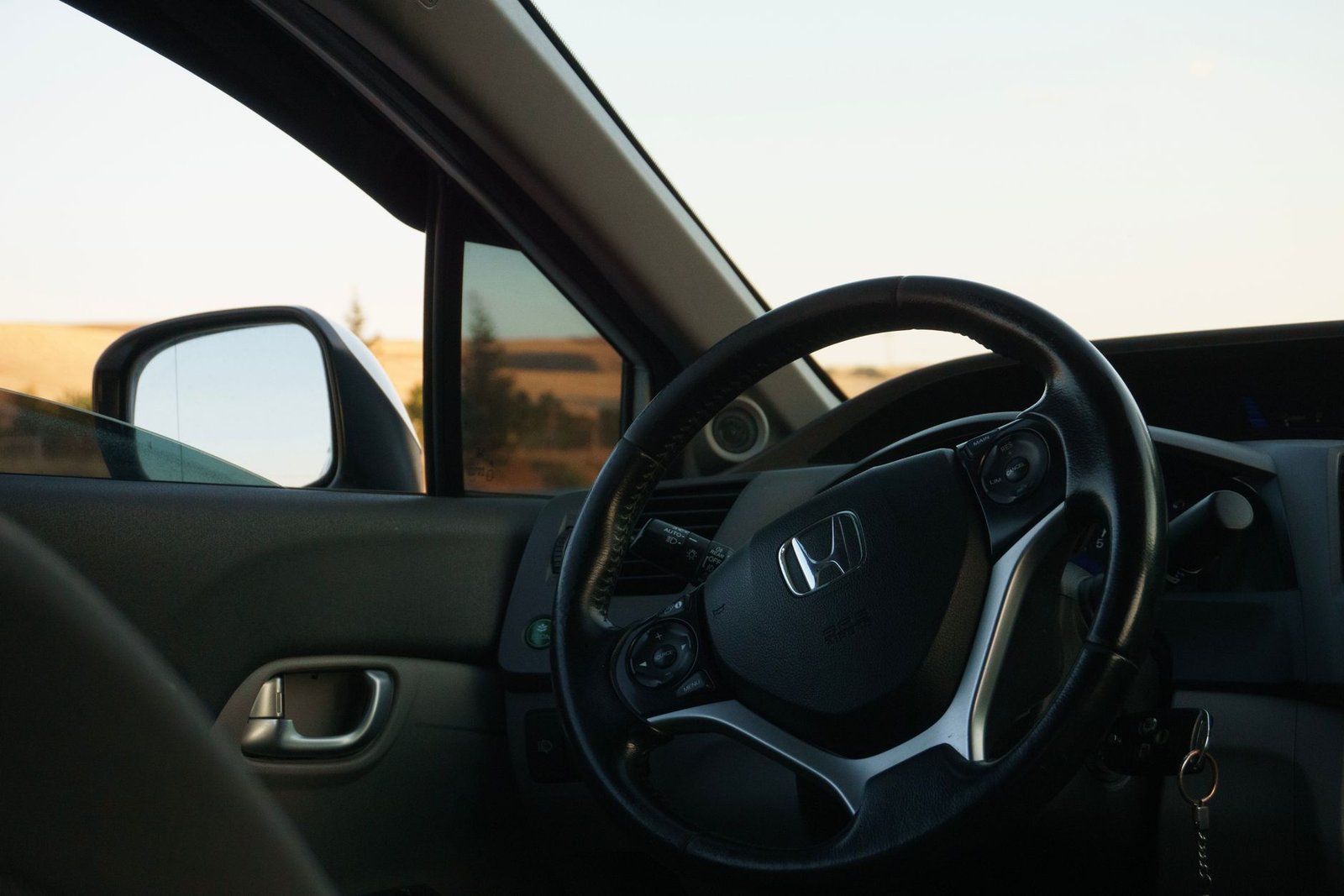
    They have a wheelchair-accessible van, which is what I’d eventually want to drive from my chair. Sitting in it was cool. I was excited. I had to raise my chair because I couldn’t see over the dash.

    The hand controls weren’t ideal for me. They were set up for gas brake with the left hand and steering with the right. I’d be steering with my left hand and using the gas and brake with my right. I had better control of the steering wheel with my left hand, and I have some slight concern about my response time on the gas and brake with that same hand. The controls in the van are not able to be swapped. Accessible vehicles aren’t one-size-fits-all. Two people can both use wheelchairs and need completely different setups.

    The SUV and the Sedan

    They also have an SUV that I would have to transfer into, but the seat was higher and farther from my chair than I’m comfortable with, and I was at real risk of falling. I’ve never transferred from my chair into a driver’s seat. The only time I transfer from my power chair to another “seat” is when I’m going to the bathroom, and I wasn’t going to try it for the first time during a test.

    They also have a sedan. It’s lower to the ground, so it should be easier to transfer into, and the behind-the-wheel portion is rescheduled for the end of November in the sedan. That means transferring from my power wheelchair into the driver’s seat. I’m thinking about using my manual chair for the transfer, since it can get tighter to the car.

    What I’m Thinking

    Here’s what I keep going back and forth on. I don’t plan to drive a car. I plan to drive a van from my power chair. So will driving a sedan make me uncomfortable because it isn’t my normal? Will it give the assessor a clear picture of what I can do? Since the hand controls are the same, it should at least show how I handle them. But I won’t know until I try.

    I’m excited, and a bigger part of me is nervous. Waiting from July to get here and then walking out with half an answer stings a little. But I’d rather find out properly than rush it in the wrong vehicle.

    If you’ve been through a driving assessment, or you drive with adaptive equipment, did you get tested in something that wasn’t your everyday vehicle? How did it go? I’d really like to hear.

  • Running on Fumes: Solo Home Edition

    Running on Fumes: Solo Home Edition

    I’ve been home alone for more than a week now, with Jason away until Tuesday, and I’m running on fumes.

    Here’s why. I’m doing the things Jason normally does. I’m keeping the house clean and not letting the dishes pile up in the sink. I’m keeping the litter box from smelling up the apartment. I’m making sure the kitchen and bathroom trash don’t add to the funk. And I need clean clothes for work, so the laundry can’t wait either. If I do all of that right, the apartment will look like nothing happened. That’s the part nobody sees.

    Let me be clear: I’m not complaining. I like a clean home, and I can keep one. What I want to talk about is cost. Most chores take me more time and more energy than they would for someone else, and when I only have so much of both, every chore comes out of something else I could have done.

    Why Jason Is Gone

    Jason is my partner, and he’s also my PCA. This year, Minnesota is moving people from PCA to a new program called Community First Services and Supports (CFSS). Because of that transition, there’s a gap in my hours, and the new program doesn’t start for me until November 1. We asked the county for an extension of my PCA services, and as of today, I haven’t gotten one.

    With a month of no work, Jason decided it was a good time to visit a friend in Los Angeles. I knew about a week and a half ahead, so I had time to prepare. What I didn’t expect was how clearly this stretch would show me what those supports do. They don’t just get chores done. They give me the energy I need for everything else.

    What Jason Usually Handles

    Most days, a lot of the household runs through Jason, and I don’t always notice how much until he’s gone. He feeds the cat and cleans the litter box and any messes. He sets up the coffee for the next morning. He asks what I want for breakfast and lunch and gets both ready, and sometimes he gets the dog’s lunch ready too. He helps me get dressed once I’ve picked out my clothes, helps me with my shoes, and sometimes puts the cape on Surley. When I head out the door, he locks it behind me.

    None of those jobs are huge. Together, they’re most of the small tasks that fill a day. When he’s here, I spend that energy on other things. This stretch, I’ve been spending it on all of them myself.

    The Daily Math with Jason Gone

    With Jason gone, my mornings start differently. I have a cup of coffee and feed the dog. Then I get the dog’s lunch ready and into my work bag and check that the cat hasn’t thrown up his breakfast. He’s on an automatic feeder that doles out small meals through the day, and I adjusted its timing because he occasionally throws up right after eating. I’d rather that happen when I’m home and can clean it up easily. Then I clean the litter box, looking around to see whether he went somewhere else in the apartment.

    Somewhere in there I go to the bathroom, pick out my clothes, and get dressed, which is energy I don’t normally spend. I decide whether I’m taking a lunch and whether I’ll eat breakfast at home or grab something at work. A couple of days, that meant Caribou Coffee. Then it’s teeth, shoes, jacket, and Surley’s cape, and out the door. Locking it behind me is usually Jason’s job, so that’s one more thing I have to remember.

    I get home between 5 and 5:45, check the mail, set down my work bag, and take off my jacket and Surley’s service dog cape. Then I check the apartment for cat throw up and clean up any I find. The cat gets a can of wet food, the dog gets dinner, and I grab one of the premade meals I ordered ahead of time so I didn’t have to cook lunch or dinner on top of everything else, feeding one of the animals while it heats in the microwave.

    After I eat, I clean up and do whatever dishes are in the sink. Depending on the time, I might play video games for 30 minutes to an hour. Around 8, I take the dog out one last time, then set the coffee for the next morning. One day I forgot and woke up with none. Another time I set it but forgot to turn on the timer. Then it’s teeth and pajamas, and I’m in bed around 8:45, watching about an hour of TV before I fall asleep. At 4:45, I wake up and do it all again.

    None of that is hard on its own. But it’s a long chain of small things, and if I drop one link, I usually find out at the worst possible time.

    The Extra Steps

    Last Sunday night, I noticed someone had been sick on my comforter. Probably the dog, since he was in bed with me, but I can’t say for sure. It wasn’t too cold in the apartment, so I threw the comforter off the bed and left it until Monday, when I was working from home. Then I had to time the wash so it didn’t collide with my work. Once it was washed, I hauled it down the hall to the dryer, because otherwise I’d be cold that night. That’s one task on paper. In practice, it was a few rounds of wrestling a heavy, wet comforter, and it used up energy I’d planned to spend elsewhere.

    Dishes are the same. When you’re the only one dirtying them, it’s a cup, a bowl, and a few pieces of silverware. That sounds like nothing, but it still takes energy, and it still has to happen. Then there’s the trash. It had to go out a couple of times because of cat litter and my incontinence supplies, and I don’t want that sitting in the bathroom all day. When the bag filled up, I had to manhandle it out of the can and down the hall to the trash chute. Coming back was its own struggle, getting a fresh bag into the can.

    None of these are big jobs. But they stack up, and by the end of the day I’ve spent most of what I had. If you read my post on shrimp videos and doing the math, this is the same idea. Every task draws from one pile of spoons, and a comforter or a trash bag comes out of the same pile as everything else. Preparing ahead helped, but it can’t make the pile bigger.

    Work Doesn’t Pause

    My job isn’t physically demanding. I sit at a computer for eight hours a day processing things, and compared to a lot of work, it’s fairly easy. But it takes focus and attention to detail, and you can’t do either well on an empty tank.

    These past couple of weeks haven’t been slow at work. They’ve dragged. I was spending my energy at home, so by the time I sat down at my desk, I was already running on fumes. There were several days I wanted to call it a day, go home early, and just relax. That’s the part people don’t always see. The energy I use on a comforter or a trash bag in the morning is the same energy I need for a 2 p.m. stretch of detail work. It doesn’t refill in between.

    Two Games, Two Weekends

    Jason is away for two weekends, and both have a Minnesota United game. The first was a Saturday evening match. I went. I’d had the day to rest, and it was in the 70s and low 80s, which is about as kind as Minnesota weather gets for sitting outside in a wheelchair.

    The second weekend’s game was midday Saturday, kickoff at 3:30, and the temperature was in the low 50s. I skipped it.

    The cat threw up on Jason’s bed Saturday morning. I could have left it. Jason isn’t back until Tuesday, and it would have been there waiting for him. But I didn’t want to leave it, so I stripped the blanket and sheets and ran them through the wash, the same routine as the comforter the week before. Then the dishes were starting to pile up in the sink, and I wanted things clean. By the time everything was finished, it was 1 o’clock. I had little energy and even less enthusiasm for a game that started in two and a half hours, in the cold.

    Nothing was wrong in the way people usually picture “can’t go.” I just had nothing left. The first weekend, I had rest and good weather, and I went. The second, I had neither, and I stayed home. Same fan, same team, different pile of spoons. I’m writing this on Saturday afternoon, during the match I skipped. That’s not a complaint either. It’s just what the math looked like today.

    Coming Home

    Jason gets back Tuesday, October 20, while I’m at work in the office. He’s told me plainly that he expects the house to be messy. That’s not how I roll. I want him to walk in to a clean home with as little waiting for him as possible. I’m also thinking about a Target delivery so there’s real food in the fridge when he gets home, and I already have a small premade meal delivery scheduled for that Tuesday, just four meals. After that, I’ll probably pause it.

    Some of that is love, and some of it is just who I am. But it’s also the same math. Cleaning now, ordering ahead, and letting delivery carry the grocery run are all ways of spending spoons on purpose, so I’m not spending them on a bad day. He’s back Tuesday, but the gap in my hours runs until November 1, and this is how I’m trying to make that stretch easier for both of us.

    What I’d Tell Myself

    I’ve been pushing through. I haven’t asked anyone for help, and I haven’t left work early, even on the days I wanted to. I got the comforter washed, the trash out, and everyone fed. But I also skipped a game I’d been looking forward to, so pushing through wasn’t free.

    Here’s what I keep coming back to: I had time to prepare, and I still ran low. I don’t know what that means yet. Maybe it means the preparing only goes so far. Maybe it means I should have asked for help sooner.

    I haven’t figured that out. I do know this: the support I get isn’t a luxury. It’s what lets me spend my energy on the things I care about, like work, games, and my own home.

    Pushing through isn’t a badge of honor, and it isn’t a failure either. It’s what I did with the energy I had. What I’m asking for isn’t for the work to go away. I’m asking people to understand what it costs.

    On Tuesday, Jason will walk into a clean apartment. The dishes will be done, the litter box fresh, the trash out, and my clothes washed. From the outside, it will look like nothing happened. From the inside, that’s what running on fumes looks like.

    How do you pace yourself when you’re the only one holding things up?
  • RJ Mitte, and What We Don’t See

    RJ Mitte, and What We Don’t See

    Content note: This post talks about suicide and suicidal thoughts, including my own experience. If that’s not where you are today, save it for another time. No pressure.

    If you need support right now:

    • Call or text 988 (Suicide & Crisis Lifeline), or chat at 988lifeline.org
    • Text HOME to 741741 (Crisis Text Line)

    If you’re in immediate danger, call 911.

    I found out Tuesday while scrolling Facebook. I’m not on social media much anymore, so I only catch things sporadically, and this was one of those moments where the news just landed. RJ Mitte died Monday. He was 34. He had cerebral palsy and used his own experience to inform his role as Walt Jr. on Breaking Bad. His representative confirmed he died by suicide. The investigation is still ongoing, so I’m not going to speculate about why. I don’t know, and neither does anyone else writing about this.

    There’s already a flood of coverage trying to explain why. Some of it comes from unnamed sources, and I’m not going to repeat it. Nobody gets to be the final word on what was going on inside someone else. What I can say is that suicide is almost never about one thing, and we honor people better by not reducing them to a headline.

    What I do know is what he meant to a lot of us. He was one of the first people I ever saw on television with cerebral palsy. I don’t remember exactly when I started watching Breaking Bad, but I thought it was really cool that there was a character with CP on the show. I remember when Walt Jr. got his driver’s license and his first car, and I thought that was pretty cool too. Before that, I didn’t see many people like me on screen, if any.

    RJ was an ambassador for many organizations, and he put that into action here in Minnesota. On October 22, 2025, he visited Can Do Canines in New Hope to begin a partnership with our own service dog organization. He toured the facility, watched an assistance dog demonstration, and spent time with Tiff, a client who also has cerebral palsy, and her mobility assist dog, Tucker. He told reporters this wasn’t just a pet, it was “a partner.” I didn’t get the chance to meet him, and I wish I had. But it was awesome that a Hollywood celebrity chose to come to Minnesota and support a cause that matters so much to people like me.

    I’m not writing this from a distance. I’ve lived with depression most of my life. I didn’t get a diagnosis until I was an adult and started seeing a psychologist regularly. In high school, I had suicidal thoughts, and I came close to acting on them. Something stopped me. I don’t know if it was an angel, a presence, or just a tiny voice in the back of my head, but I didn’t do it.

    The next day, I told someone. A trusted person at school. I didn’t have polished words. I just said it, and they sat and listened. That’s all they did, and it mattered more than I can explain. They helped me through some very difficult times after that, and I’m forever grateful.

    Living with a disability can make the hard days harder. Part of it is the struggle to do simple, easy things. Yesterday I got an Amazon package and had a hard time opening it. I ended up getting the scissors. It’s not having the same access as able-bodied people. It’s not being able to get in a car and just go. It’s planning, organizing, and coordinating just to do simple things. It’s exhaustion, it’s being overlooked, it’s all of the above. People with disabilities also face a higher risk of depression and suicidal thoughts, and that deserves more honesty than it gets.

    So what helps me? People. Friends who have disabilities, and being able to talk to them. I also see my psychologist on a regular basis, just to check in. Sometimes we talk about the important things we’ve been working on for six months. Sometimes we talk about really cool things that happened in the last week. Both count.

    I’m sharing this because it can happen to anyone. It can happen to famous people like RJ, and it can happen to people nobody has heard of. Success, visibility, and advocacy don’t make someone immune.

    If you’re struggling, know that you’re not alone. I know that sounds cliché, and you hear it a lot, but it’s the truth, and it’s important that you hear it. It’s important that I say it, period.

    I don’t want to turn RJ’s death into a neat lesson, because there isn’t one. But I don’t want us to quietly move on either. If you’re carrying something heavy, you’re not weak and you’re not a burden. Tell someone, even if it comes out clumsy. If someone tells you, you don’t need the right words. Sit and listen, like that person did for me.

    If you want to honor RJ’s legacy in a practical way, Can Do Canines is always looking for volunteers and donations. You can read about his visit in their post and in WCCO’s coverage.

    If this brought something up for you, the 988 information is at the top of this post. Please use it.

    Who is your “trusted person,” or who could be? I’d love to hear in the comments, if you’re up for it.