Month: May 2026

  • The Song You Didn’t Hear

    The Song You Didn’t Hear

    There’s a particular kind of magic that lives inside the best songs. Not the kind you notice right away. The kind that waits.

    A little while ago I came across a Facebook reel from Allison Hagendorf, a music journalist and host who spends a lot of her time doing exactly what that title suggests — digging into the stories behind the songs. Her reel was about “Closing Time” by Semisonic. I thought I knew that song. Turns out I didn’t know it at all.

    The Song You Thought You Knew

    You know “Closing Time” by Semisonic. Of course you do. It’s the song that played at the end of every school dance, every bar night, every moment where the lights came up and the night had to end. Last call for alcohol. Last call for your broken heart. It’s a song about a night being over.

    Except it isn’t. Not really.

    Dan Wilson, the songwriter, wrote it about the birth of his daughter. The bar isn’t a bar — it’s a womb. “Every new beginning comes from some other beginning’s end” isn’t about stumbling out into the night looking for a ride home. It’s about a life beginning. It’s about a door opening that can never be closed again.

    Two truths, living in the same song. One obvious, one hidden — and both of them real.

    Wilson is from Minnesota, by the way. One of ours. And I think there’s something very Minnesotan about the whole thing — putting something that vulnerable and that enormous into a song and just letting people think it’s about last call for twenty years.

    The Meaning You Bring Yourself

    But here’s the thing about songs holding two truths: sometimes the writer puts both of them there on purpose, and sometimes you bring one of them yourself.

    Sara Bareilles’ “Gravity” is, on the surface, about a person. A relationship you can’t escape no matter how hard you try. The pull of someone who isn’t good for you, who keeps drawing you back in even when you know better.

    That’s not what I hear when I listen to it.

    I actually touched on this in an earlier post — The Story of Me: A Life in Songs — where “Gravity” was already part of my soundtrack. I noted then that the song had become a conversation with my depression and anxiety. But I want to go deeper here, because that description doesn’t fully capture what it means to me.

    What I hear in that song is depression itself.

    Something always brings me back to you. It never takes too long.

    That’s not a person for me. That’s the weight that has followed me for most of my life. The pull that never fully goes away, no matter how much work I do, no matter how many good days I string together. Depression is always there, somewhere in the background, with its own kind of gravity.

    There are days when the pull is weak. Days when I barely feel it and I can move and breathe and just live my life. And then there are other days, days I don’t talk about as often, where the pull is so strong I wasn’t sure I was going to be able to break free. Days where I was deep enough in the darkness that I couldn’t see a way out.

    I’m not in that place right now. Things are better. Not perfect, not cured. I want to be clear about that, because I think the “I got through it and now I’m fine” story does a disservice to the reality of how this works. But better. Manageable, with the right medication and the right support. That’s the honest version.

    But when that song comes on, I still feel it. I still hear the truth it holds for me, even if Sara Bareilles was writing about something else entirely.

    The Other Side of the Dark

    “Angel” by Ellis Delaney lives in that same space for me — and it also appeared in The Story of Me, sitting just a few songs away from “Gravity” in my Act 2 playlist. Not a coincidence, I think.

    I’ve actually talked with Ellis a handful of times, and I’ve heard them speak about what “Angel” means to them. And I’m pretty sure it isn’t what I hear when I listen to it.

    What I hear is the other side of depression. If “Gravity” is the weight pulling you down, “Angel” is the reaching. That quiet, aching hope that someone will just show up and be there not to fix anything, not to have all the answers, just to sit with you in it.

    I need a little company. All I need is a pat on the back.

    There have been moments in my life where that was all I needed, and it felt like the hardest thing in the world to ask for.

    Knowing what Ellis intended doesn’t change any of that. I’ve heard it straight from the artist, and I still walk away with my own meaning intact. That’s not me mishearing the song. That’s the song doing something Ellis may not have even known it was capable of.

    The Gift Inside the Song

    That’s the power of a great song. It gives you something, and then it gives you permission to find whatever lives inside it for you.

    Dan Wilson wrote a lullaby for his daughter and handed the world what sounded like a bar-closing anthem. Sara Bareilles wrote about heartbreak and handed me a map of something I’d been carrying for years without quite having the words for it. Ellis Delaney wrote whatever “Angel” is really about — and handed me a lifeline on the nights I needed one.

    The meaning you weren’t supposed to find might be the one that matters most.
  • Watching Shrimp Videos and Doing the Math

    Watching Shrimp Videos and Doing the Math

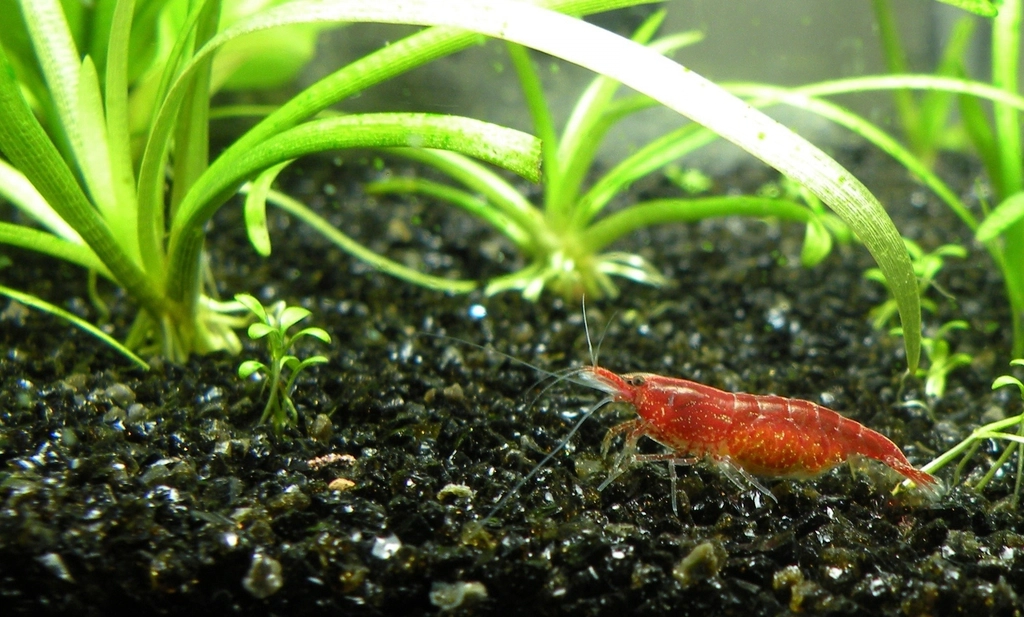
    So I’ve fallen down a YouTube rabbit hole again. Shrimp keeping. Fish keeping. Aquascaped tanks I’ll never build. Planted nano setups with little neocaridina shrimp picking around the moss.

    I had fish and shrimp for years, with the joy and the loss that come with keeping anything alive. Eventually it all came down.

    Now I’m sitting here thinking about getting back into it. And the more I sit with that thought, the more I realize I’m not really thinking about shrimp. I’m doing the same quiet math I do with every hobby and every pet:

    What can my body actually sustain?

    Why the tanks came down

    I started the hobby with a 36 gallon tank. It didn’t take long for that to feel like too much. So I downgraded to a Fluval Flex 15 gallon in the living room, then later added a Fluval Flex 9 gallon on my desk in the bedroom.

    The 9 gallon happened because of a betta. One of those poor fish living in a lonely little cup at a big box pet store. You’ve seen them. Stacked on shelves in maybe an inch of water, sometimes for weeks. A whole nine gallon planted tank felt like the bare minimum I could offer.

    The 9 gallon lasted a couple of years, until enough shrimp and fish had died in too short a stretch that it felt like the right time to let the tank go too. The 15 gallon hung on a few more years before the urge to rearrange and downsize finally pushed me out of the hobby altogether.

    Fish tank maintenance is hard work. Even more so when you have mobility challenges.

    You’re hauling water in and out. Reaching down into the tank to scrub algae. Wrestling a gravel vacuum into corners you can barely see. Lugging buckets that are either too heavy on the way out or sloshing everywhere on the way back in.

    None of that is a one-time thing. It’s every week or two, forever, as long as the tank is running.

    I loved having the tanks. I loved watching everyone in them.

    A planted aquarium with several small fish swimming through tall green leaves. The fish have bright red faces and black-and-white striped tails. Driftwood and a cluster of pale green moss sit on light-colored gravel below.

    But the cleaning slowly became something I dreaded. And a hobby you dread isn’t really a hobby anymore.

    Why shrimp keep pulling me back

    Shrimp tanks, especially small planted ones, are a different animal. They’re forgiving in ways fish tanks aren’t.

    A well-cycled, heavily planted nano tank with shrimp basically runs itself. Light feeding. Small water changes. The plants do a lot of the heavy lifting for water quality. The shrimp themselves are tiny cleanup crews.

    It’s the same hobby in spirit: the watching, the planning, the gentle obsession with water parameters. But with a fraction of the physical demand.

    That matters. A lot.

    The quiet pet math

    It’s worth pausing here to say what I actually mean by “the math.”

    If you’ve heard of Spoon Theory, you already get it. Coined by Christine Miserandino in 2003, the shorthand is this: disabled and chronically ill people start each day with a limited number of spoons. Each spoon is a unit of energy. Every task costs spoons.

    Showering. Cooking. An appointment. A conversation. Cleaning a fish tank.

    All of it draws from the same pile. When you’re out, you’re out. And borrowing against tomorrow has a cost.

    The math is figuring out which spoons go where.

    That’s what I’m doing when I think about a shrimp tank versus a fish tank. It’s what I’m doing constantly, with everything else too.

    Disabled people do this math all the time. Not just with hobbies. With pets too.

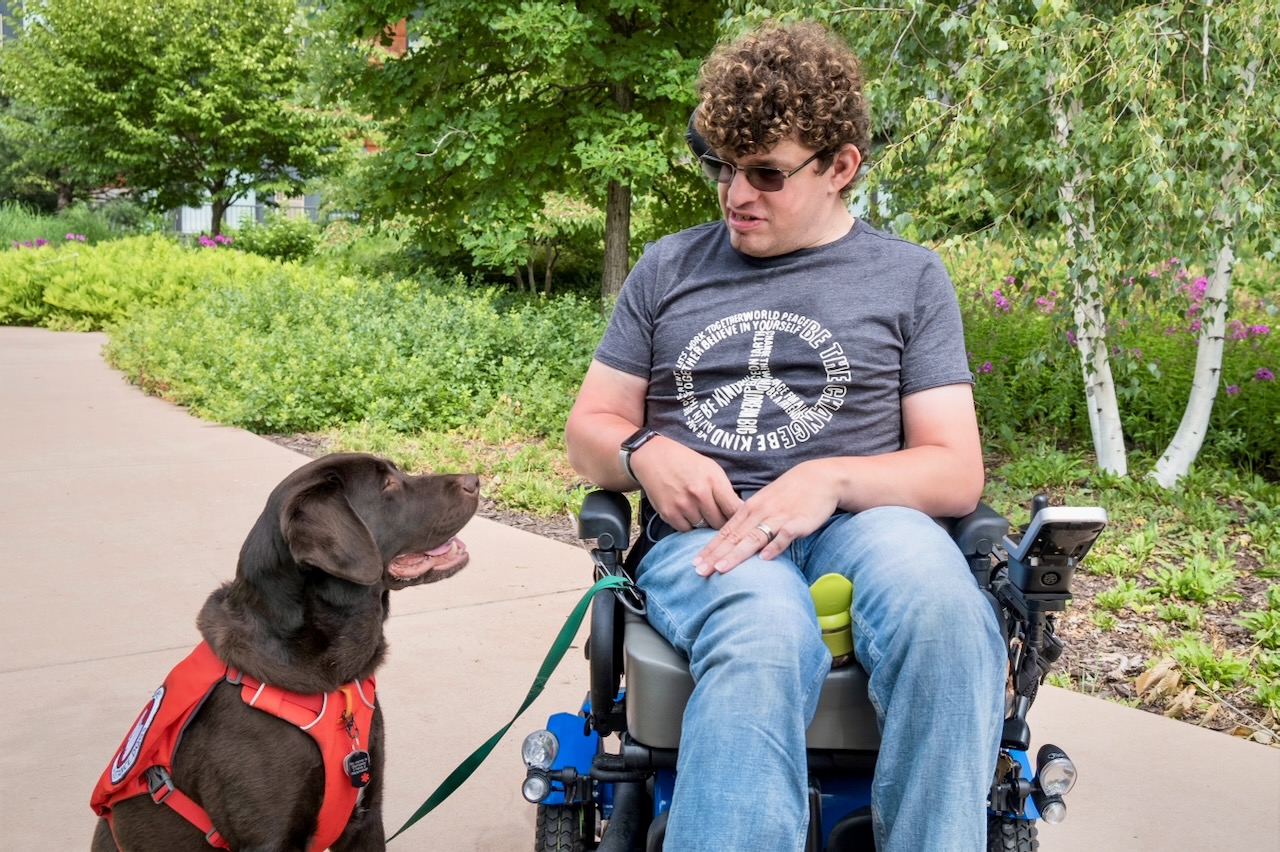
    Surley is my service dog. He earns his keep, and he saves me spoons. Every task he does for me is a task I’d otherwise spend my own energy on. If he weren’t a working dog, I honestly don’t think I would have a dog at all. Dogs are physical. Walking. Picking up after them. Bath time. All of it costs spoons.

    The cat is easier, mostly because Jason handles the day-to-day. Feeding, cleanup, all of it. I handle the vet appointments. And when Jason’s out of town, the rest is on me too. Most days though, the cat doesn’t draw much from my pile.

    And shrimp? Different math entirely.

    Every fish tank I had cost spoons no matter the size. The 36 took more than the 15. The 15 took more than the 9. But all of them took, week after week, forever.

    A planted shrimp tank would still cost spoons up front. Cycling. Planting. Getting the water dialed in. That’s real work.

    But once it’s established, the ongoing cost drops in a way a fish tank’s never did. Top off some water. Drop in a piece of food. Watch them be weird little aliens.

    That’s not laziness. That’s a real consideration.

    What I’m sitting with

    I haven’t decided anything yet. The tanks aren’t back up. The shrimp aren’t ordered.

    But I think a small planted shrimp tank might happen. Something low. Something I can reach into without contorting. Something that’s mostly self-sustaining and mostly there for the joy of watching it.

    That feels like the right kind of hobby for where my body is right now. Not the version of fish keeping I had before. A version that fits.

    I’ve done this kind of right-sizing before, after all. 36 gallons to 15 to 9 to nothing. A small shrimp tank would just be the next step in the same direction.

    I think a lot of disabled people end up doing this same kind of right-sizing with the things we love. Not giving them up, but reshaping them. Finding the version we can actually sustain.

    That’s not settling. That’s smart.

    If you have a hobby or pet, have you done this kind of right-sizing too? I’d love to hear what that looked like for you.

  • Wondering Who Would They Be

    Wondering Who Would They Be

    Today would have been Dempsey’s 10th birthday.

    Ten. Double digits. I keep turning that number over.

    Dempsey was my service dog: a silly, loud, boundlessly energetic chocolate lab who was on my right side for four and a half years. He passed away on August 18, 2022. This post lives honestly in the space of grief and loss, so if that’s not where you are today, save it for another time. No pressure.

    But if you’ve ever lost someone too soon, a pet, a person, anyone you loved, and found yourself wondering who they would have become: this one is for you.

    A Heart That Was Always a Little Too Big

    Dempsey was diagnosed with third-degree AV block shortly after his fifth birthday. His heart’s electrical system wasn’t communicating the way it should. We got a pacemaker. The vet was reassuring: he would go on to live a normal life, with limitations, but not dramatic ones. He would still be Dempsey.

    I believed that. I had every reason to.

    And then August came.

    I try hard not to play the would’ve, should’ve, could’ve game with what followed. It doesn’t do me any favors, and I think it does a disservice to his memory. What I know is that the pacemaker gave me more time with him. I’m grateful for that time.

    I joke with my friends that he went out with his boots on. You didn’t know anything was wrong until he was gone. He didn’t feel anything. I, on the other hand, lost my best friend, my right arm, my companion, my Dempsey, my silly chocolate lab, my world.

    The questions I carry aren’t about what I did or didn’t do. They’re not regret questions. They’re love questions. There’s a difference, and it matters.

    The Questions I Keep Coming Back To

    One shape of grief I didn’t expect was the wondering. Not just missing who he was, but genuinely not knowing who he would have become.

    Here are the questions I keep asking.

    Would he still be working?

    Dempsey was a service dog. A good one. But at 10, would he still have been working? Would the day-to-day craziness of my life still have felt like a calling to him, or would he have looked at the situation, looked at the couch, looked at Kalo, and made a quiet executive decision to retire?

    (Kalo, for the record, did not like him. Spaz before him merely tolerated him. The cats were united on this.)

    Service dogs do retire. It’s a real and normal part of their lives. But I never got to watch that transition with Dempsey. I never got to see him decide he’d done enough and that a calmer chapter was waiting. That’s one of the smaller losses nested inside the bigger one.

    If you want the longer version of who he was and where we started, Dempsey: Where It All Began has it.

    Would he still have played like that?

    When Dempsey played, the whole room knew it. He was loud. He was energetic. He didn’t do anything quietly when there was fun to be had.

    Would that have mellowed at 10? Would he have found a more dignified approach to playtime, or would he still have been the dog who showed up to have a good time and made absolutely sure everyone knew it?

    I think I know the answer. But I’ll never be sure. And there’s something in that uncertainty that sits with me.

    Would my grief be different if he had been older?

    This is the question I sit with the most.

    Honestly? I think yes.

    Not smaller. Not easier. But different.

    When someone dies after a long life, there’s still loss. There’s still grief. But there can also be something else: a sense of a full arc, of a life that had room to unfold. Losing Dempsey at six, suddenly, after every reassurance that he had years ahead of him, didn’t have that. There was no arc. No completion. Just an ending that arrived without warning and left the rest of the story unwritten.

    That kind of grief, the sudden kind, the too-soon kind, carries a particular weight. The future you expected doesn’t just disappear. It hangs there, unfinished.

    For Anyone Who Has Lost Someone Too Young

    Dempsey was a dog. But the “who would you have been” question doesn’t only live in pet loss. It lives in any grief where someone was taken before the story felt finished. A child. A friend. A parent too young. A companion of any kind.

    If you’re carrying a version of this question, I hope it helps to know that someone else is asking it too. And that there is no wrong way to grieve someone who mattered to you.

    Who would Dempsey have been at 10? I don’t know. But asking is one of the ways I keep him close. And I’m not going to stop anytime soon.

    If this landed somewhere tender, there’s more on Dempsey here: A Ghost in the Wiggles is a poem that lives in a similar space, and Passengers on the Journey takes a wider look at how loss accumulates over a life.

    Resources

    If you’re navigating grief and could use some support, a few places to start:

    • Association for Pet Loss and Bereavement: Online support groups and resources specifically for people grieving the loss of a pet, including scheduled chat support groups.
    • Pet Loss Support Page: A long-running online community with support resources, memorial pages, and a Monday evening chat group for those in grief.
    • The Compassionate Friends: Primarily a resource for families who have lost a child, but their broader community and materials can offer support to anyone navigating sudden or early loss.
    • SAMHSA National Helpline: Free, confidential mental health and emotional distress support, available 24 hours a day, 7 days a week.

    Have you ever found yourself wondering who someone you lost would have become? I’d love to hear about it in the comments, if you’re up for sharing.

  • When the Bus Doesn’t Pull Up: Advocating from the Back of the Bus

    When the Bus Doesn’t Pull Up: Advocating from the Back of the Bus

    So this actually happened last Saturday, and I’m just now sitting down to write about it because life has a way of doing that. But it’s been living rent-free in my head all week, so here we go.

    Jason and I went to the Minnesota United game. Simple enough, right? Except it wasn’t.

    The green line was down for maintenance, so Metro Transit had shuttle buses running between downtown Minneapolis and downtown St. Paul. Shuttles on game days tend to get packed, so we decided to skip it and just take the 94. I take the 94 to work most days. I know the 94. The 94 and I are old friends.

    Or so I thought.

    Going: When the Bus Just… Doesn’t

    When the 94 pulled up to our stop, it didn’t actually pull up. It stopped in the street. The driver leaned out and shouted that he was full, that he couldn’t accommodate me.

    Does that happen? Yes. Is there much I can do about it in the moment if a driver says the bus is full? Not really. So I took him at his word. Everyone else at the stop stepped off the curb and boarded. Jason and I watched the bus go.

    We ended up taking the green line shuttle after all. We made it to Allianz Field just in time for kickoff. I was a little annoyed, but the game was good, and I shook it off. Soccer helps.

    Coming Home: A Different Story

    After the game, I figured the shuttle would be the easy option heading back. It was not easy.

    The shuttle loading area was right next to where a CVS had been torn down a few weeks earlier. Construction barricades were everywhere, and they were blocking the sidewalk. I couldn’t get through. I couldn’t load onto the shuttle. Just like that, the “easy” option was off the table.

    Since I don’t usually take the 94 from downtown St. Paul, I wasn’t entirely sure where it picked up. Cue some finagling, some frustration, and, honestly, a little aggravation on Jason’s part too. But we found it.

    This Time, I Spoke Up

    Here’s where it got interesting. The same scenario played out: the bus wasn’t pulled to the curb. But this time, I decided to speak up. A little louder. A little more firmly.

    The driver seemed to think I was just going to hop off the curb into the street. Power wheelchairs do not hop curbs. A few people nearby offered to lift me. They meant well, genuinely. I politely declined. One wrong move and someone gets hurt, I get hurt, or my chair gets damaged. None of those are great outcomes.

    The driver eventually maneuvered the bus to the curb and loaded me on. I don’t know if he was having a rough day. Game days are chaotic, the green line was down, and everyone was stressed. I get it. But it still needed to happen, and it happened because I asked for it to happen.

    Oh, and then the bus had a mechanical issue and had to pull off on the freeway. Which has genuinely never happened to me in all my years of riding Metro Transit. So that was a thing.

    Even Advocates Need a Nudge Sometimes

    Here’s what I keep coming back to: even those of us who do this work, who talk about disability rights, who know our rights, who have the language, sometimes freeze up in the moment. Sometimes we’re tired. Sometimes we’re just trying to get home after a long day and we don’t want to make it a whole thing.

    I needed a gentle nudge from Jason to speak up on the way home. And that’s okay. Advocacy isn’t a switch you flip on and it stays on forever. It takes energy. And sometimes it takes a partner, literally or figuratively, reminding you that you’re allowed to take up space.

    Even if that space is at the back of the bus, waiting for the driver to pull six feet closer to the curb.

    We got home. Minnesota United lost 0-1 to LAFC. And I’m still thinking about that ride.

    Have you ever frozen up in a moment when you knew you needed to speak up? What helped you find your voice?

    As for today: no bus rides on the agenda. Minnesota United is playing the Columbus Crew in Columbus tonight at 6:30, so I’ll be watching from the couch.

    Good thing too, because Metro Transit is doing more maintenance on the green line this weekend. Shuttle buses again. I’ll be staying home, thanks.

  • Grieving the End of The Things We Leave Unfinished

    Grieving the End of The Things We Leave Unfinished

    I finished The Things We Leave Unfinished yesterday. At work.

    And then I sat there staring at my computer screen for a solid five minutes, headphones still in, not moving, because I genuinely did not know what the hell had just happened to me.

    Eventually I took my headphones off, got up, and took the dog for a walk. Because what else do you do? You can’t just go back to trying to focus after that.

    You can’t.

    The dog didn’t know why we were suddenly going outside, but he didn’t ask questions, and I appreciated that.

    Rebecca Yarros. If you’ve been anywhere near #BookTok in the last couple of years, you probably know her from the Empyrean series, Fourth Wing and everything that followed. That’s how I found her too.

    And if you’re part of the disability or chronic illness community, there’s a good chance she hit you a little differently than she hit everyone else.

    Yarros has Ehlers-Danlos syndrome. She’s talked openly about it, and she built that lived experience into the Empyrean series through her protagonist Violet, whose chronic illness is woven into the story not as a plot device, but as just part of who she is.

    For a lot of us in the disability community, that kind of quiet, matter-of-fact representation is rare enough to stop you in your tracks. It stopped me. So I already trusted this author with something before I ever picked up The Things We Leave Unfinished.

    I thought I was prepared for what she could do to me.

    I was not prepared.

    Dual timeline. WWII love story tangled up with a present-day one. If you know, you know. If you don’t, go read it, and then come back here, because I need to talk about it with someone who’s been through it.

    A note before we go further: this post has vague spoilers. I won’t be laying out plot points in detail, but if you’re good at reading between the lines, you may be able to piece some things together. You’ve been warned. Go read the book first.

    Seriously.

    Go.

    This Isn’t the First Time a Book Has Done This to Me

    The last time a book wrecked me like this, I was sitting on my aunts’ kitchen floor.

    I was in college. I had been over to their place with the last Harry Potter book, told them I couldn’t leave to go back to my dorm until I finished it, and proceeded to plant myself on the kitchen floor and read. For what felt like hours. Deeply, completely, embarrassingly immersed right up until the last page turn.

    And then I just sat there. On the floor. Not ready to leave that world. Not sure how to go back to normal life after living so long inside that one.

    That’s a particular kind of loss, not just the end of a story, but the end of a relationship with a story. The kind that’s been woven into actual years of your life. I filed that feeling away, figured it was specific to Harry Potter. To the scale of it. The years of it.

    And then yesterday happened.

    The Normal Kind of Grief

    There’s a particular hollow feeling that shows up when you finish a book you loved. It’s not sadness exactly, or it is, but it’s mixed up with other things. The story was still living in my head all day. I’d think about a scene between Scarlett and Jameson and feel warm about it, the way you do, and then remember: oh. There’s no more. That’s all there is.

    I miss the characters. Not in a hedged, I-know-they’re-fictional kind of way. Just, miss them. Full stop. I spent hours living alongside these people. I knew how they talked, what they were afraid of, the way love looked for them under impossible circumstances. And now they’ve stopped existing in any new way.

    That’s the ordinary grief of a good book ending. I know it well. But this one had something extra.

    The Revelation Kind of Grief (Here’s Where It Gets Vague)

    There’s a specific kind of hurt that comes when a story delivers a revelation near the end that reframes everything you thought you knew. Not a trick. Not a cheap twist. The kind that’s been earned, slowly, carefully, and lands with a weight that almost knocks you flat.

    That’s what happened near the end of this book.

    I found out something about a character I had loved, trusted, and grieved alongside the whole time, something that changed who I understood her to be. Entirely. The character in the book who receives this news reacts in a way that mirrored exactly what was happening in my chest in that moment. I felt it right alongside her.

    The grief doubled. I had to mourn the version of the character I thought I knew. Then mourn the truth. Then sit with the fact that the truth was, in its own way, even more heartbreaking than anything I’d braced for.

    It’s a strange feeling, retroactive grief. Going back over everything in your head through a new lens. Realizing the sacrifices were bigger than you understood. The losses, deeper. The love, somehow even more devastating for it.

    And I’m sitting at my desk at work going: holy crap. What the hell just happened.

    The Audiobook Factor

    Here’s the thing I didn’t fully account for going in: I listened to this book. And the narrator had a fairly decent English accent for the historical timeline: Scarlett, the letters, all of it. Which sounds like a small detail, but it wasn’t.

    There’s something about a voice in your ear that collapses the distance between you and a character in a way that reading off a page doesn’t always do. I wasn’t just reading about Scarlett and Jameson, I was hearing them. Their world had a sound. And when that world ended, it didn’t just close like a book. It went quiet. All at once. In my ears.

    One second I’m in WWII England. The next I’m just… at my desk. Staring at a screen. Surrounded by the ordinary sounds of my ordinary day. The whiplash of that is something else entirely.

    Returning to Real Life, Reluctantly

    Coming back to real life after a book like this always takes a minute. A story is its own world with its own weather, and you get used to that weather. Real life doesn’t have the same architecture. Problems don’t resolve by the final chapter. The pacing is all off.

    Sometimes you need a walk. Sometimes you need to sit on your aunts’ kitchen floor for what feels like an hour. Sometimes you need to stare at your computer screen until the feeling settles enough that you can breathe normally again.

    All of those are valid. All of those are just what it looks like when something got through.

    That’s What a Good Book Does

    I think the grief I’m carrying right now is actually a kind of gratitude in disguise. You don’t grieve stories that didn’t matter. You don’t lie awake thinking about characters who didn’t get under your skin.

    This one got under my skin. So did Harry Potter, all those years ago on that kitchen floor. And I think I’m glad, genuinely glad, that I’m still capable of feeling it. That a voice in my ear, telling me about people who never existed, can send me out the door mid-workday just to walk it off.

    The things we leave unfinished. Not just in the novel, but in the feeling it leaves behind. Some books close and you’re done. Some books close and you keep carrying them for a while, working something out.

    This is one of those.

    I’ll be okay. I just need a few days and probably something lighter to listen to next. (Suggestions welcome. Something with nobody dying would be great, thanks.)

    Have you ever finished a book, or an audiobook, and just needed a minute? What sent you to the floor? Come sit with me.


    Oh, and one more thing, because the universe apparently isn’t done with me yet: Lionsgate recently announced they’re adapting The Things We Leave Unfinished into a feature film. So I’m going to need a minute to process that too. If you need me, I’ll be on the floor.