Tag: Grief Journey

  • Dempsey: Where It All Began

    Dempsey: Where It All Began

    Wow, it’s been eight years since I met you.

    Some days it only feels like yesterday. It’s strange how certain moments stay so sharp in your mind. Moments you won’t ever forget. Even if you forget the exact date once in a while, you never forget the feeling of it.

    Meeting you was that moment for me.

    I was nervous. I was excited. I was scared. I didn’t know what the hell I was doing. I didn’t know what I didn’t know. You knew a lot more than I did. You already came pre-programmed. I had to learn what you knew. I had to unlearn what I thought I understood about dog behavior.

    Before you, dogs were companions. Pets. Family. But you were something different. You were a partner. You had a job. And stepping into life with you meant stepping into something much bigger than I had imagined.

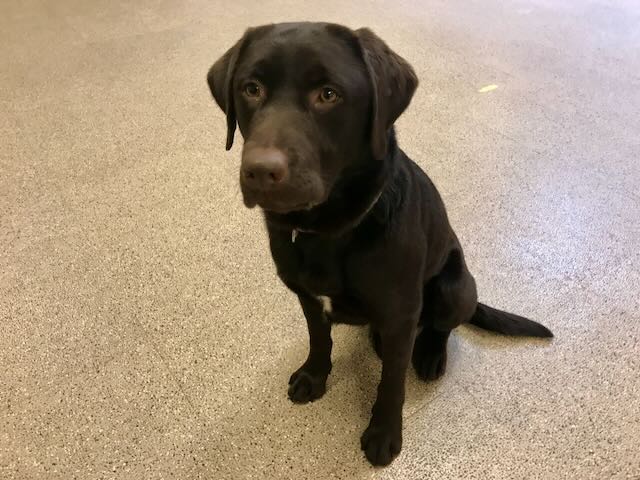
    Dempsey was a silly chocolate lab with boundless energy. The kind of energy that filled a room before he even fully walked into it. He was mischievous in that clever, always-thinking kind of way. When he played, he played loud. Vocal. Dramatic. Fully committed. There was no halfway with you. Everything was big.

    But when it came time to work, you were ready.

    When you first came to live with me, I remember sitting down. I read through the notes from your trainers, your foster family, and even the prison inmates who helped train you. I wanted to know everything about the dog standing in my living room. Who you were before you were mine.

    One comment has stayed with me all these years. An inmate wrote that you were eager to work. That you were ready. That you found repetition boring. You didn’t want to keep practicing the job. You wanted to go out and do the job you were meant to do.

    That didn’t surprise me.

    You were never content just going through the motions. You wanted real life. Real challenges. You faced challenges while working at the largest mall in America. There were lights, crowds, and noise everywhere.

    Or you traveled on an Amtrak train eight hours to Chicago. This was less than three weeks after moving into my home. Three weeks. Most dogs are still figuring out where the water bowl is. And there you were, settling at my feet on a moving train like it was exactly where you belonged.

    Meanwhile, I was still figuring out how to hold your leash without feeling like the entire world was watching me.

    You understood your job. I was still trying to understand mine.

    I had to learn how to trust you. Really trust you. I had to learn how to advocate for you. I had to learn how to take up space in public without apologizing for it. Trusting you meant admitting I needed help. And that was something I hadn’t fully made peace with yet.

    You pushed me ahead simply by being ready. When I would have stayed home, you were eager to go. When I doubted whether I could handle something, you stood steady beside me like you already knew we could. Your energy didn’t just make you a good service dog—it made me braver.

    You weren’t perfect. You were goofy. You got into things. You made me laugh at the worst possible times. But that was part of your magic. You reminded me that partnership didn’t have to be heavy all the time. There was room for joy. Room for chaos. Room for silliness—even in a life that required so much seriousness.

    That first meeting in 2018 didn’t just introduce me to my first service dog. It reshaped the direction of my life. It changed how I see disability. It changed how I move through the world. It changed what I believe I’m capable of.

    Maybe one of the greatest gifts you gave me wasn’t fully understood until after you were gone. It became clear to me later.

    Can Do Canines often says, “Our dogs fetch amazing things.” After everything we experienced together, that line felt deeper. It made me think about the places we went, the fears we faced, the things I once thought were impossible.

    So I had these words tattooed on my arm along with your paw print after you passed:

    Together we did amazing things.

    And we did.

    We did things I never thought I could do.
    We did things I was scared to do.
    We stepped into spaces that once felt overwhelming and made them ours.
    But we did it together.

    You were always on my right side.
    And in many ways, you still are.
    Working with you made me a better dog dad.

    Not just to you—but now to Surley.

    You two could not be more different. You were a chocolate lab—energetic, chaotic, vocal when playing. Big personality. Big presence.

    Surley is a yellow lab with a completely different rhythm. He’s calmer. Quieter. A little more sensitive. Where you barreled ahead, he reads the room. Where you demanded engagement, he offers steady presence.

    At first, that difference took adjustment.

    After years of your intensity and eagerness, learning Surley’s softer cues meant slowing down. Paying closer attention. Meeting him where he is instead of expecting what I was used to.

    But I wasn’t starting from scratch this time.

    You had already taught me how to listen. How to watch. How to respect that every working dog is still an individual first. You showed me that partnership isn’t about molding a dog into a standard. It’s about understanding who they already are. From there, you build trust.

    Because of you, I advocate better. I communicate better. I balance structure with play. I know that behind the red cape is still a dog. This dog needs joy, decompression, and room to just be themselves.

    Surley benefits from the lessons you taught me.

    And in that way, your impact didn’t end three years ago. It’s still here. It’s shaping how I lead and shaping how I love. It’s still walking beside me just in a different form.

    Eight years ago, you were ready to do the job you were meant to do.

    You helped me become ready, too.

    And for that, for you, I will always be grateful.


    Levi wearing a gray Minnesota United FC hat and yellow shirt, hugging his chocolate Labrador service dog, Dempsey, outdoors with a green background.
    Levi and his service dog, Dempsey, sharing a happy moment outdoors.

    In memory of Dempsey — my first partner, my brave beginning.
  • Thirty-Three Years Later

    Thirty-Three Years Later

    Disclaimer: What follows in this post contains my thoughts and my recollection of childhood memories. They are 33 years old and may not be the full truth, but they are my truth.

    I have written about death and loss before. Grief can reshape us. It can bring love and pain together in unexpected ways.

    This reflection feels different. This isn’t just about loss. It’s about understanding what that first loss meant. It’s also about how my relationship with it has changed over time.

    Thirty-three years ago, I lost my first grandparent. My grandpa, Garfield Dokken, passed away suddenly. It’s interesting how distinctly I remember that life event. Maybe it’s because it was my first experience with death as a child. Maybe it’s because of other reasons.

    The Day I Learned About Death

    November 3, 1992

    That night is etched in my mind.

    I had undergone a selective dorsal rhizotomy a surgery meant to help reduce the tightness in my legs. It was an intense surgery, and I was still sore, tired, and trying to heal.

    I remember the phone ringing. My mom was staying with me at the hospital so my mom answered it. My mom was talking on the phone. I don’t recall who she was speaking to. I remember her face when she hung up. She turned to me and told me that my grandpa had passed away.

    I don’t remember what I said after she told me.

    My parents asked the doctors if I could go home for the funeral, but they strongly advised against it. I was still recovering.

    My parents suggested that I write him a note something my dad could tuck into his pocket. So I did.

    When you’re young, you don’t really understand death. You don’t grasp what it means when someone won’t walk through the door again or call you on the phone. I didn’t know what it truly meant that he was gone.

    After grandpa passed this picture was above my hospital bed.

    “When I was a child, I spoke like a child, I thought like a child, I reasoned like a child.
    When I became a man, I gave up childish ways.”

    1 Corinthians 13:11

    Growing into Grief

    As I was writing this I thought of the verse from 1 Corinthians. As a child, I grieved as a child. For a long time, I carried his passing in a unique way. I saw it through the eyes of the boy in that hospital bed.

    That chapter of my life always felt unfinished, the story incomplete. There was a recording of the funeral service that exists. Still, I don’t believe I have ever sat down to watch the whole thing. I don’t know if I would even want to watch it.

    It took decades to realize that I needed to grieve differently, not to forget, but to forgive.

    To forgive the child who couldn’t yet understand.

    After years of therapy and reflection, I’ve learned to process loss with more compassion especially toward my younger self.

    I’m not perfect at it, but I’m getting better everyday.

    Writing Allows Grief to Evolve

    In, “Passengers on the Journey”, I wrote about how the people we love are like fellow travelers. Some ride with us longer than others, but all leave an imprint on our path. My grandpa was one of my first fellow travelers to step off the bus early in my life. I didn’t understand it then, but he helped me see that love and loss are part of the same journey.

    In “Holding Onto Love”, I wrote about how love doesn’t disappear when someone dies. It transforms. It changes shape. I think that’s what I’ve come to understand now, too. My love for my grandpa has transformed. It’s quieter, steadier, woven into who I am rather than something I reach for.

    Questions Without Answers

    Now, as an adult, I find myself wondering:
    What would he think of the person I’ve become?
    What would he think of the life I am leading?
    What would he think of my hair, my name, my humor?

    Growing up, I often heard that question used as a moral compass:

    “What would your grandpa think if they saw that report card?”

    “What would he say about your behavior?”

    It’s something people say to motivate, to guide, or to remind us to be our best. But sometimes, it can have the opposite effect.

    Instead of inspiring, it can carry shame. This is especially true when it’s tied to someone we loved deeply and would never want to disappoint.

    I don’t believe those words are spoken with bad intentions.

    Still, they overlook something important: the people we invoke in those moments aren’t here to speak for themselves.

    We can’t know what they would think. We can’t know how they might have grown. We can’t know how their love for us might have changed over time.

    Love evolves. People do too. Love remains after loss. It deserves to be carried forward. It should not be used as a measure of guilt or worth.

    Closing Reflections

    Thirty-three years have passed since that night in the hospital. Yet, in some ways, I’m still that child learning what it means to say goodbye. The difference now is that I can hold both the pain and the gratitude together. I can look back and see how that moment shaped me, not just in loss, but in love.

    In Passengers on the Journey, I wrote about the people we love. They travel alongside us for a time. They leave their imprint even after they’ve stepped off the bus. And in Holding Onto Love, I reflected on how love doesn’t fade when someone dies. It changes shape. It becomes part of who we are.

    That’s what I feel now. My grandpa is no longer a passenger beside me, but his love remains part of the path beneath my wheels. His laughter, his kindness, his presence—they continue to move with me in quiet, unseen ways.

    Grief shows up differently for all of us. Sometimes loud and raw, sometimes quiet and unseen. It doesn’t leave us; it transforms. It teaches us to carry memories with gentleness. It teaches us to live in a way that honors those who came before us.

    So on this anniversary, I don’t just remember his passing. I remember his life, his laughter, and the lessons that continue to guide me.

    And in that remembering, I find peace.

  • Passengers on the Journey: Reflections on Loss and Memory

    Passengers on the Journey: Reflections on Loss and Memory

    As I get older, I find myself more aware of death. I am more aware than I ever was in my twenties or even thirties. It feels like more and more people I’ve known, whether from childhood, family, or community, are passing away. Each loss isn’t just about the person; it’s about the piece of my own history that goes with them.

    A Friend of Garfield’s

    Just this past week, I learned that one of my grandpa Garfield’s friends passed away. This man used to drive for the Heartland Express bus in my hometown. He would sometimes pick me up and take me to school when I was in early elementary school.

    Although I didn’t know him closely, I knew he had a friendship my grandpa. Watching his funeral service online, I felt the depth of their friendship. It reminded me that the people who shape our families’ lives, even at the edges, help shape our own too.

    Saying Goodbye to Colleen

    This summer, the loss came much closer. I said goodbye to my friend Colleen, who passed away after a battle with cancer. Last month, I attended her memorial service and had the honor of speaking. In preparation, I had written a eulogy.

    I didn’t end up delivering it in full. I made sure to share it with her daughter. She told me how much it meant to her. For me, that was just as important. Writing those words wasn’t only about what I needed to say. It was about preserving what Colleen meant to me and sharing it with those who loved her most.

    Here is the eulogy I wrote for her:

    There’s a part of me that feels like an outsider here today. It’s been so long. So many of you knew her in ways I didn’t. You saw chapters of her life that I missed. But I hope you’ll let me speak from the part of her story that I did know the years when she was a steady presence in my life, helping me grow into the person I am.

    It’s probably been over twenty years since I last saw Colleen. Life took us in different directions, as it does. We lost touch. But coming together now to honor her memory, I’m reminded that the connections that shape us don’t always follow a straight path or come with a tidy ending. I realized that even after all this time, the lessons she left me with, the care she gave, the way she made me feel like I mattered—those things are still with me. And maybe sharing that is one small way to honor her.

    It’s hard to put into words what someone like Colleen meant to me. We met during a season of change in my life when everything felt new and uncertain, and I didn’t quite know what I needed.

    I had just moved to Hutchinson and had recently started receiving PCA services. I remember the first time I met her. Frazzled hair, green sweatpants, sweatshirt the picture of someone who had already lived through half a day’s chaos before 9 a.m. But right away, she brought something into my world that I didn’t know I was missing: understanding. Patience. The kind of grounded presence that makes everything feel a little less overwhelming.

    She helped me learn how to navigate the system, yes—but more importantly, she helped me find confidence in myself. She didn’t just do her job; she showed up as a person. A kind, no-nonsense, fiercely loyal person who stayed by my side through some of life’s hardest transitions.

    Over time, Colleen became more than a caregiver. She became a friend. As time went on, our relationship grew beyond the usual roles. That’s where I met Lizzy—her daughter. At the time, Lizzy was this awkward teenager who probably wanted nothing to do with this random kid her mom had brought into their world. And now, she’s become an amazing young woman and a mother herself. I know Colleen would be proud. No—is proud. That much, I have no doubt.

    Colleen always took care of people. That was just in her nature. She made sure people had food to eat, a place to sit, and if you needed to crash on the couch—well, rules were more like suggestions. I’m sure letting me stay over more than once probably broke some kind of policy, but I don’t think she cared. Colleen wasn’t one for letting bureaucracy get in the way of doing the right thing.

    I remember one specific time, right before I moved to the Twin Cities for college. I had a campus visit coming up, and the logistics were… complicated. My dad was going on the visit with me. He would’ve had to drive all over creation from Benson to Hutchinson to Minneapolis and back again. Colleen just looked at the map and said, “I’ll drive you.” And she did. On the way home, she even offered to take a detour so I could visit my grandma, who was in a nursing home in Minneapolis at the time. That’s who she was—always thinking about how to make things easier for the people she cared about.

    The last time I saw her before I moved we promised we’d stay in touch and we did for a while I even remember calling her on my 21st birthday a little tipsy and she got mad at me because I shouldn’t be mixing alcohol with the meds I was on. 

    Even though we eventually lost touch, the impact she had on my life didn’t fade. You don’t forget someone who shows up for you when you’re still figuring out who you are—who makes space for you in their home and their heart without asking for anything in return.

    Colleen was more than my PCA. She was a guide, a protector, and a friend. And even all these years later, the memories of her kindness, her humor, her complete disregard for red tape when someone needed help they’ve stuck with me. And I suspect I’m not the only one who could say the same.

    She took care of people. That was her gift. And the world is better for it.

    Even though I didn’t read the entire eulogy aloud, writing it felt like my way of saying goodbye. Sharing it was also my way of bidding farewell.

    Family Losses

    Of course, loss doesn’t stop with friends. My family has been touched by death too. All of my grandparents have passed. Grandpa Garfield in 1992. Grandpa Roger followed in 1994. Grandma Jonnette in 2004. Grandma Marlys in 2022. Over the years, I’ve also said goodbye to aunts, uncles, and cousins.

    I’m fortunate that both of my parents are still alive. That’s not the case for my partner. In August, he lost his father after a long struggle with dementia.

    Watching him walk through that grief has reminded me that loss affects us differently. It depends on timing, relationships, and the battles fought along the way.

    The Four-Legged Companions

    And grief isn’t reserved for humans alone. Over the years, I’ve also had to say goodbye to the four-legged friends who shaped my life. My black cat, Spaz. My first service dog, Dempsey. My childhood horse, Comanche. Even my first hamster, Sir Henry Lipton, and my second hamster, Bert.

    Each of them carried their own kind of love, their own kind of presence. Their roles in my life were different from the humans I’ve lost, but their impact was no less meaningful. Their loss is still noted, still acknowledged, still woven into the fabric of who I am.

    What Grief Has Taught Me

    When I step back, what strikes me most is how loss accumulates over time. At nearly 42, death isn’t an abstract idea anymore. It’s a thread woven through my own story. Sometimes this happens in small ways, like a bus driver who was briefly part of my life. At other times, it affects me in deeply personal ways. These include Colleen, my grandparents, and the animals who gave me unconditional love.

    I don’t pretend to have answers about how to handle death. What I do know is this: the people and creatures we lose remain with us in the stories we tell. They are also present in the habits we keep.

    Additionally, they stay with us in the ways they shaped us. That’s what makes memory so sacred—it refuses to let death have the last word.

    Closing Reflections

    Life is a lot like that old Heartland Express bus. People get on and people get off. Some rides are long and some are short. But every passenger, whether human or animal, leaves an imprint on the journey.

    I’ve come to see loss not as an ending but as part of the fabric of living. Each goodbye, whether to a grandparent, a friend, or a four-legged companion, stitches another thread into who I am. And the road ahead is stronger because it carries all of them with me.

  • Cheers to Clarity: What Grief, Generational Patterns, and a Non-Alcoholic IPA Taught Me About Choice

    Cheers to Clarity: What Grief, Generational Patterns, and a Non-Alcoholic IPA Taught Me About Choice

    Author’s Note:
    This began as a casual Facebook post. It was just me, a can of non-alcoholic beer, and a quiet summer evening on the patio. But the more I sat with it, the more I realized this moment wasn’t casual at all. It was part of a larger story about grief, generational patterns, and learning to choose—really choose—what supports me best. Sometimes that looks like a cold drink. Sometimes it looks like not having one. And sometimes, it looks like sitting still with what hurts, and making a mindful choice anyway.

    A Quiet Evening, A Different Kind of Cold One

    It’s a quiet evening on the patio. The sun’s fading out slow and golden, and I’m sitting with a cold one in hand.

    But not that kind of cold one.

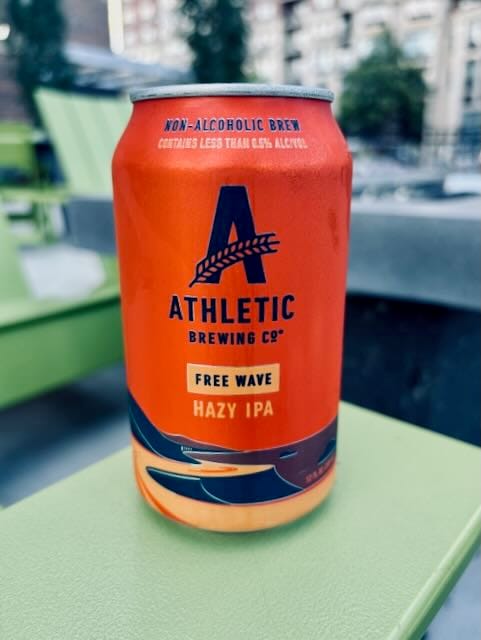
    This one’s a Free Wave Hazy IPA from Athletic Brewing Company. Non-alcoholic, but every bit as satisfying as the real deal. Bright. Citrusy. Complex. It hits all the right notes—just without the mental fog or emotional whiplash.

    These days, before I drink anything alcoholic, I pause. I check in with myself. And I ask a question that’s become surprisingly important:
    Why do I want this?
    Is it for the taste? To unwind? Or… am I trying to dull something I don’t want to feel?

    When Grief Shatters

    After Dempsey passed in the summer of 2022, something in me broke.

    Not just cracked—shattered.

    He wasn’t just a dog. He was my service dog. My companion. My lifeline. Dempsey was the one creature on this earth I could trust completely. I trusted him with my safety and with my disability. I relied on him with the quiet parts of me that don’t always have words.

    Grief wasn’t kind. It wasn’t poetic. It was heavy and raw and relentless. And in the middle of it, I found myself craving alcohol. It wasn’t to celebrate or relax, but to feel less.

    Less pain.
    Less loss.
    Less of that deep, marrow-level heartbreak that doesn’t let up just because the world keeps spinning.

    But I knew that craving. I knew its edges. And I knew where it could lead.

    Because I come from a family with a history of alcohol misuse. Even though the people I love found their way to sobriety, those patterns still echo. That kind of history doesn’t disappear. Instead, it lingers in the background. It shapes how you respond to stress, grief, and loss. Even if you never pick up a bottle, you still inherit the instincts.

    So when I felt that whisper—Just one drink. Just take the edge off—I recognized it. Not just as a moment of grief, but as part of a longer story. A story I want to write differently.

    Choosing Wisely: The Power of Options

    That’s where drinks like this come in. That’s why I sing the praises of Athletic Brewing like they’re saving lives. Sometimes, having a non-alcoholic option helps me stay sober in spirit. It is not just about alcohol content. It helps me stay grounded. Stay honest.

    And let’s be clear: I’m not anti-alcohol. I’ll still have a drink now and then. But the rule I’ve made for myself is simple—if there’s even a fraction of hesitation, even a 0.00001% chance that I’m reaching for it to numb instead of enjoy, I choose something else.

    That isn’t weakness. That’s wisdom. That’s clarity. That’s care.

    Even now, Surley is by my side. My mental health is better supported. There is more stability and joy woven into my days. Still, those urges whisper sometimes. That itch still sneaks in.
    And when it does, I don’t shame it. I meet it with honesty.
    I ask the question again. Why do I want this?
    And if I’m not sure, I choose the option that keeps me rooted.

    My Choices, My Rules

    You might think all this sounds excessive. Or overly cautious. Or dramatic.

    That’s okay.

    You’re not living my grief. You’re not carrying my history. You’re not holding my DNA or my memories or my triggers. I am.

    These are my choices. My rules. My safety nets. Built not just to keep me upright, but to keep me honest with myself.

    So tonight, I raise a glass—a cold one, sure, but one that supports the life I want. The healing I’ve worked for. The clarity I’ve chosen.

    Cheers. 🧡🍻
    To grief. To growth. To generational healing.


    If you’ve been affected by grief, loss, or struggles with alcohol, you’re not alone. Feel free to share your story or thoughts in the comments below. Let’s support each other with compassion and understanding.