Tag: Current Events

  • Presidents Shouldn’t Get to Undo Progress With a Pen Stroke

    Presidents Shouldn’t Get to Undo Progress With a Pen Stroke

    The United States has a problem. A structural one. A whiplash problem.

    This past week made it impossible to ignore. First, reports surfaced about a potential rollback of the EPA’s Endangerment Finding. Then came news that the U.S. had pulled out of UNESCO—again. And just to round things out? Federal cuts to public media, already triggering layoffs at PBS and NPR stations across the country.

    It forced me to take a deeper dive. What I found was unsettling. It was not entirely surprising. Our system gives one person, one president, the power to reverse decades of policy and progress. This happens with little to no input from Congress or the public.

    Worse yet, I learned that the U.S. has still not fully committed to the UN Convention on the Rights of Persons with Disabilities (CRPD). This is a global framework modeled on our own ADA. Somehow, even that fell victim to partisan whiplash.

    This isn’t just bad policy. It’s bad structure. Every new administration brings a chance for hard-won progress to be erased with the stroke of a pen. A new administration comes in with different values. Suddenly, the country’s climate policy, civil rights posture, or global commitments disappear swiftly.

    Case in Point: The Recent EPA Endangerment Finding

    On July 22, 2025, The New York Times reported that the Trump administration is considering rescinding the Environmental Protection Agency’s “Endangerment Finding.” This serves as the legal foundation for regulating greenhouse gases under the Clean Air Act. It was established back in 2009, after a thorough scientific and legal review. Undoing it now would undermine U.S. climate policy just as the world teeters on the brink of irreversible climate damage.

    Let’s be clear. If one president can erase a foundational legal finding like that, it occurs without new evidence. It happens without congressional approval and without public accountability. Then what we have isn’t a democracy. It’s a monarchy with a four‑year contract.

    We left UNESCO… Again.

    Just days ago, the U.S. withdrew, again, from UNESCO, the United Nations Educational, Scientific and Cultural Organization. This is not the first time. We left under Reagan. We rejoined under Bush. Left again under Trump. Rejoined under Biden. And now here we are. Again.

    UNESCO isn’t some niche club. It helps coordinate global efforts to preserve culture. It promotes science education. It also protects free expression.

    This is particularly important in marginalized communities around the world. Walking away doesn’t just hurt our international credibility. It also impacts LGBTQ+ educators, disabled students, and scientists in the U.S. who benefit from cross-border collaboration.

    Public Media: More Than TV and Radio

    This political power play extends to PBS and NPR. These are institutions trusted by millions. They are now being targeted simply because one administration disagrees with their editorial mandates.

    • In June, the U.S. House narrowly passed legislation rescinding $1.1 billion in funding to the Corporation for Public Broadcasting, which supports both NPR and PBS
    • The Senate followed suit with a 51–48 vote in mid‑July to finalize the cuts for fiscal years 2026–27
    • According to a recent Star Tribune article Twin Cities PBS (TPT) laid off staff promptly on July 22. They stated they had no choice after the federal funding loss.

    These cuts aren’t abstract they’re local, tangible, and affecting real people right now:

    • Rural and tribal stations are especially vulnerable, with many relying on CPB for over half their budget
    • The National Public Radio editor-in-chief will step down as top staff endure this turmoil

    Why This Matters

    This isn’t just about classical music and Frontline documentaries. Public media are key sources for independent journalism, civic education, emergency alerts, and cultural programming. De-funding them isn’t a symbolic gesture. It leaves news deserts and diminishes local voices. It also disrupts support services for underrepresented communities across formats inclusive of disability and LGBTQ+ issues.

    A Missed Opportunity: The CRPD

    The CRPD, adopted by the U.N. in 2006, cements a full spectrum of rights for disabled people—from accessibility and legal capacity to education and nondiscrimination. Read it here (PDF).

    The U.S. signed in 2009, but failed in the Senate by just five votes in 2012. Opponents claimed it threatened American sovereignty, overlooking that it mirrors our own Americans with Disabilities Act.

    Ratifying the CRPD would:

    • Reinforce civil rights for disabled Americans abroad,
    • Elevate U.S. leadership globally in disability inclusion,
    • Offer solidarity to over a billion disabled people worldwide—even as domestic advocacy continues.

    Yet, just like public broadcasting, that commitment can vanish at the will of one person.

    This Hurts Real People, Not Just Policy Nerds

    These aren’t isolated incidents. They’re symptoms of an administration-centric system that thrives on the absence of guardrails—and here’s who suffers most:

    • LGBTQ+ Rights: Anti-discrimination enforcement under Title IX or federal healthcare regs can vanish or reappear depending on the day’s wind.
    • Public Media Access: Rural disabled listeners lose these lifelines almost overnight. Deaf communities rely on accurate closed captioning. LGBTQ+ youth tune in to inclusive programming.
    • Disability Policy: We haven’t ratified the CRPD. Executive orders often set protections that can be undone. This illustrates how brittle our rights framework still is.

    What Needs to Happen

    Here’s how we fix the structural rot:

    1. Mandate Congressional Approval for Major Executive Withdrawals:
      If presidents need a vote to enter, they should need one to leave.
    2. Codify Protections into Statute:
      The Endangerment Finding, Title IX, ADA interpretations, and more must be hard law, not easily revoked.
    3. Ratify the CRPD
      Transform disability rights from fragile executive fiat to durable international commitment.
    4. Set Up Public Review Mechanisms:
      Major decisions, like de-funding PBS/PBS or leaving UNESCO, should need public hearings and community feedback.

    Final Thought: Rights Shouldn’t Be Reversible

    Rights aren’t privileges. Civic trusts shouldn’t expire when a new President moves in. Whether environmental safeguards, civil protections, public media, or global disability frameworks the template shouldn’t wobble with the Washington weather.

    That’s not democracy. That’s not leadership. It’s short‑term thinking.

    We deserve better. Our communities deserve better. And the next four-year spin cycle shouldn’t decide whether we have them at all.

    Suggested Further Reading

    Sources Cited

  • Flying Forward: Let’s Talk About the Flag Controversy

    Flying Forward: Let’s Talk About the Flag Controversy

    A few days ago, the Star Tribune published an article titled “Not a ‘Greater Minnesota’ flag? Detroit Lakes latest city to refuse flying state flag.” It covered the growing number of cities. These cities—including Hastings and Detroit Lakes—are opting not to raise Minnesota’s new state flag.

    I followed the redesign process with cautious optimism. I found the piece frustrating. Not everyone needs to love the new flag. However, so much of the conversation continues to miss the point.

    This is what I had to say in the Star Tribune comments:

    I understand the desire to honor history and the comfort of the familiar. While some believe the previous flag honored our past, others saw it as a symbol of racism. Another fact is the old Minnesota flag was frequently confused with others because it lacked distinction as it was just the state seal on a blue background. I don’t love the new design, and I do think there’s room for improvement, but the old flag wasn’t serving us well. One clear advantage of the new flag is that it can actually be recognized as Minnesota’s something the previous design failed to do. Change is uncomfortable, but it’s also an opportunity. It has given us the ability to have a conversation. If people feel passionately about changing the flag again take the initiative to make it happen.

    A New Emblem for a New Era

    Minnesota’s new state flag was officially adopted on May 11, 2024. It replaced the blue banner bearing the state seal. This banner had flown in one form or another since 1957. Its design lineage goes back to 1893.

    The new flag features a deep blue field symbolizing the night sky. A light blue curve represents Minnesota’s lakes and rivers. An eight-pointed star evokes the state motto, L’Étoile du Nord (“The Star of the North”).

    Looking Back: A Brief History of the Flag

    For the first 35 years of statehood, Minnesota had no official state flag.

    1983

    That changed in 1893 when the Auxiliary Board sponsored the creation of an official flag. The design selected came from Amelia Hyde Center, a Minneapolis artist and leather worker. This original flag featured a white front and blue reverse, which made it expensive and less durable.

    1957

    In 1957, Minnesota redesigned the flag to have a blue field on both sides. This change simplified production. They updated the floral elements for botanical accuracy. They replaced the original moccasin flowers with pink-and-white lady’s slippers. The pink-and-white lady’s slippers are the official state flower.

    1983

    The flag saw another redesign in 1983. Designers lightened the blue. They also updated the seal to include imagery such as the Mississippi River, St. Anthony Falls, and pine trees. This reflects the state’s natural heritage.

    Over time, the 1983 flag drew criticism. It was seen as overly complex and visually confusing. It resembled other state flags that simply feature a seal on a blue background. Critics also raised concerns about the symbolism of the seal, which some viewed as a representation of Manifest Destiny.

    Design Debates and Grassroots Alternatives

    Minnesota’s flag redesign hasn’t been without controversy or creative alternatives. In 1957, Representative John Tracy Anderson and Major General Joseph E. Nelson proposed a star-based flag with red, white, and blue tribands, though it was rejected by the legislature.

    More recently, the North Star Flag was created in 1988 by Lee Herold and Reverend William Becker. It gained grassroots support with its meaningful colors. Its simple and distinctive design also contributed to its popularity. While never officially adopted, the North Star Flag has remained a beloved unofficial symbol. It was even presented to the redesign commission in 2023.

    The Redesign Process

    The push for a new flag gained official momentum starting in 2021. A Wayzata High School student approached State Senator Ann Johnson Stewart with the idea.

    This led to legislation establishing the State Emblems Redesign Commission in 2023. The commission is charged with proposing new designs that reflect Minnesota’s shared history, resources, and diverse communities. It explicitly prohibits symbols that represent only a single group.

    The commission includes representatives from Indigenous, African Heritage, Latino, and Asian-Pacific communities, as well as members of the general public. The commission presented a new flag design after careful deliberation and public input. The legislature adopted this design on May 11, 2024.

    The Refusals and Reactions

    Some People Love It

    As with any change, the new flag has its fans. Many appreciate that the design is clean, modern, and—most importantly—distinctly Minnesota. The new flag doesn’t just look nice on paper. It’s practical and recognizable. It is also far less likely to be confused with any other state’s banner. For decades, people saw a blue flag with a complicated seal. Few could identify it. Now, Minnesota finally has a flag that can stand on its own.

    Some People Don’t

    But of course, not everyone loves the new flag. Some cities, like Detroit Lakes and Hastings, have refused to fly it. Critics often cite nostalgia for the old flag and a desire to honor the past.

    Others see the old flag’s imagery as a reflection of Minnesota’s history. They acknowledge its warts and all. They worry that the new flag erases or sanitizes that story.

    Some also point out that the new flag isn’t perfect and could be improved. And that’s fair—no flag is flawless, and every design involves compromises. The truth is, flags are symbols, and symbols carry different meanings for different people.

    My Take

    I understand the desire to honor history and the comfort of the familiar. While some believe the previous flag honored our past, others saw it as a symbol of racism. Another fact is the old Minnesota flag was frequently confused with others. It lacked distinction because it was just the state seal on a blue background.

    I don’t love the new design. I do think there’s room for improvement. However, the old flag wasn’t serving us well.

    One clear advantage of the new flag is that it can actually be recognized as Minnesota’s. The previous design failed to achieve this. Change is uncomfortable, but it’s also an opportunity. It has given us the ability to have a conversation.

    Flags Aren’t Sacred. They’re Evolving.

    Plenty of iconic flags have undergone change:

    • The U.S. flag has changed 27 times.
    • Canada didn’t adopt its maple leaf until 1965.
    • South Africa’s current flag, widely recognized today, was finalized in days.

    Designs come and go, but the values we attach to them can deepen over time.

    Discomfort is an Invitation

    As I wrote before in my Star Tribune comment:

    “Change is uncomfortable, but it’s also an opportunity. It has given us the ability to have a conversation.”

    Don’t like the flag? Great. Say so. Offer your vision. Start a petition. Participate in the next redesign cycle. But don’t opt out of the conversation entirely.

    Because flags don’t just represent where we’ve been. They shape how we see where we’re going.

    Minnesota is big enough to hold multiple truths. To love parts of the past while acknowledging its harms. To critique a design without discarding what it stands for. To fly a flag that looks forward, not just backward.

    If you don’t feel represented by the new flag—make your voice heard. But don’t assume that refusing to fly it is the same as standing for something noble. Sometimes, progress looks like a banner that’s unfamiliar. Sometimes, unity starts with a little discomfort.

    And sometimes, the bravest thing a flag can do is change.

  • Not a Fan of the Man But Like the Plan

    Not a Fan of the Man But Like the Plan

    Why Elon Musk’s “America Party” Could Shake Up U.S. Politics

    I am a big fan of Elon Musk. Let’s just get that out of the way up front.

    His contributions and support in the past of President Trump have been problematic. His handling of public infrastructure and social programs has also caused concern.

    Additionally, he casually toys with systems people actually depend on, both in the U.S. and around the world. These actions have done real harm. That’s not a small thing. And it’s part of why I approach anything he does with a healthy dose of skepticism.

    But then he threw a wrench into American politics yesterday by announcing his new America Party. Whether you love him or hate him, you have to admit it’s a bold move. Even if you mostly just wish he’d stay in his lane, it’s a bold move. One that’s already sparking debate, and it’s definitely got me thinking too.

    I may not be a fan of the man, but I like the plan. It’s not his plan specifically, at least not yet. It’s the bigger idea.

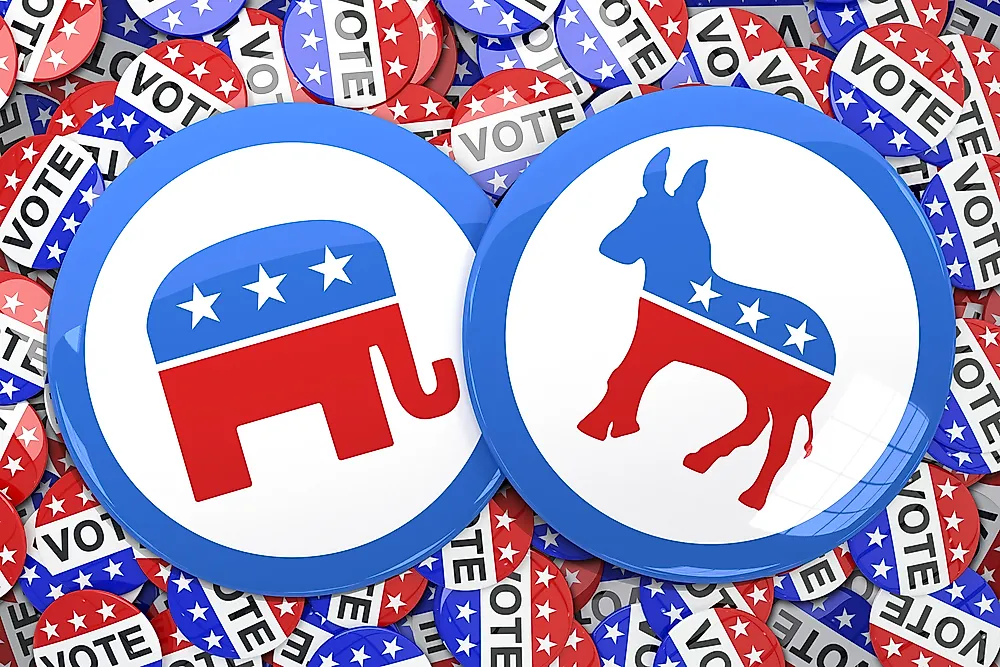
    This country deserves more than two political parties playing tug-of-war with our future. This moment prompted me to reflect on our history. I considered the role third parties have played in shaping American democracy. They could still play an important part.

    We Weren’t Always Just Red and Blue

    American political history has always been a bit messier than the red-vs-blue binary we’ve come to expect. The U.S. used to have vibrant (and sometimes downright bizarre) political alternatives. Some shaped the nation. Others burned fast and weird.

    Here’s a quick tour through notable political parties that once stirred the pot:

    Party NameYears ActiveNotable For
    Federalist Party1790s–1820sThe original pro-central government party; Hamilton’s legacy.
    Democratic-Republican Party1790s–1820sJefferson and Madison’s vision; states’ rights-focused.
    Whig Party1830s–1850sAnti-Jackson coalition; produced four presidents.
    Know-Nothing Party1850sNativist, anti-immigration movement.
    Free Soil Party1848–1854Opposed slavery’s expansion.
    Progressive Party (Bull Moose)1912Teddy Roosevelt’s breakaway reform movement.
    Socialist Party of AmericaEarly 1900sPushed labor rights; Debs ran for president from prison.
    States’ Rights Democratic Party (Dixiecrats)1948Segregationist Southern breakaway group.
    American Independent Party1968–presentGeorge Wallace’s ultra-conservative party.
    Reform Party1995–presentRoss Perot’s fiscally conservative, anti-corruption effort.
    Green Party1984–presentEnvironment, peace, and social justice.
    Libertarian Party1971–presentSmall government, civil liberties, and personal freedom.

    Want to go deeper? Full list on Wikipedia

    What Elon Musk Just Did

    As reported by The Guardian, Fox News, and CNBC:

    • Musk launched the America Party via X (formerly Twitter), saying it would reclaim power for the people.
    • Framed it as a response to the “uniparty” — a dig at both Democrats and Republicans.
    • Criticized Trump’s $3.3 trillion spending bill.
    • Declared he would target 2–3 Senate seats and 8–10 House seats, not the presidency (yet).
    • Claimed the party would represent the “80% in the middle.”
    • A poll on X showed 65% support — but no voter verification.

    Why a Third Party Could Be a Good Thing

    • Centrists feel homeless. Millions of voters don’t feel represented by either major party.
    • Accountability improves. A strong third voice can hold both sides in check.
    • Elections could get real. Ranked-choice voting and open primaries could gain traction.
    • New ideas. Politics could become about solutions, not just brand loyalty.

    But… There Are Some Big Problems

    • Ballot access nightmares. Every state has its own rules and deadlines.
    • No ground game. Musk has no party infrastructure or grassroots support.
    • Spoiler effect. Could split votes and backfire — especially in tight races.
    • Brand confusion. What does the “America Party” even stand for?

    Even If It Fails, It Sends a Message

    If nothing else, the America Party proves there’s a real hunger for something new. Maybe Musk’s version fizzles — but maybe it opens the door for better third-party efforts in the future.

    Perhaps it encourages changes to ballot access laws. These changes would help minority parties, such as the Green and Libertarian Parties, gain access to local, state, and federal races.

    More choices.
    More voices.
    More ideas.
    More democracy.

    Join the Conversation

    Where do you stand on this? I want to hear from you:

    • Could a serious third party get your vote?
    • Do you think Musk’s money makes this a real threat or is this just political cosplay?
    • Which defunct party do you wish was still around?
    • If you could create a party what would it’s name be and what would you stand for?

    Drop your thoughts in the comments — I’ll be reading.

    Sources and Further Reading