Category: Life & Perspective

Personal experiences, reflections, accessibility topics, and disability advocacy.

  • Writing What Moves Me

    Writing What Moves Me

    This was supposed to be just a Facebook post…

    I didn’t plan on writing this post.

    It started as a quiet, reflective moment. You realize just how much you’ve been writing lately. You start wondering why. Not just why you write, but why certain things strike that spark in the first place. Lately, it’s been the little things: a headline, a thought, an unexpected experience.

    Sometimes it’s something I’ve been chewing on for a while. Sometimes, it’s something that hits me in the moment. Either way, it always starts with curiosity and ends with a need to put it into words.

    From Flags to Elevators: Finding Meaning in the Everyday

    Last weekend, I read an article in the Star Tribune. It was about how some Minnesota cities are choosing not to fly the new state flag. That small decision triggered a lot of big questions for me: Why this flag? Why now? And why are local governments opting out? That led me to explore Minnesota’s flag history. More importantly, it prompted me to consider what symbols truly mean to the communities they are meant to represent.

     Flying Forward: Let’s Talk About the Flag Controversy

    During the same reading session, I came across another article. This one was about Elon Musk floating the idea of starting a third political party. Will he actually do it? I doubt it. But it opened up a much more interesting rabbit hole: what could a serious third party mean for the U.S.? Have we really been a two-party country forever? (Spoiler: not exactly.) I knew it wasn’t the post designed for clicks, but I wrote it anyway. Because it made me think.

    Not a Fan, Like the Plan

    Then came something a lot more personal. Jason got stuck in our apartment building elevator. In the basement. No way to get out. No easy way to communicate. That moment shook me, and not just because of the immediate concern for the person I love. I realized how fragile safety is when systems fail. It is easy for someone to be literally and metaphorically trapped without a voice.

    Trapped Without a Voice

    Time, Connection, and the Quiet Things

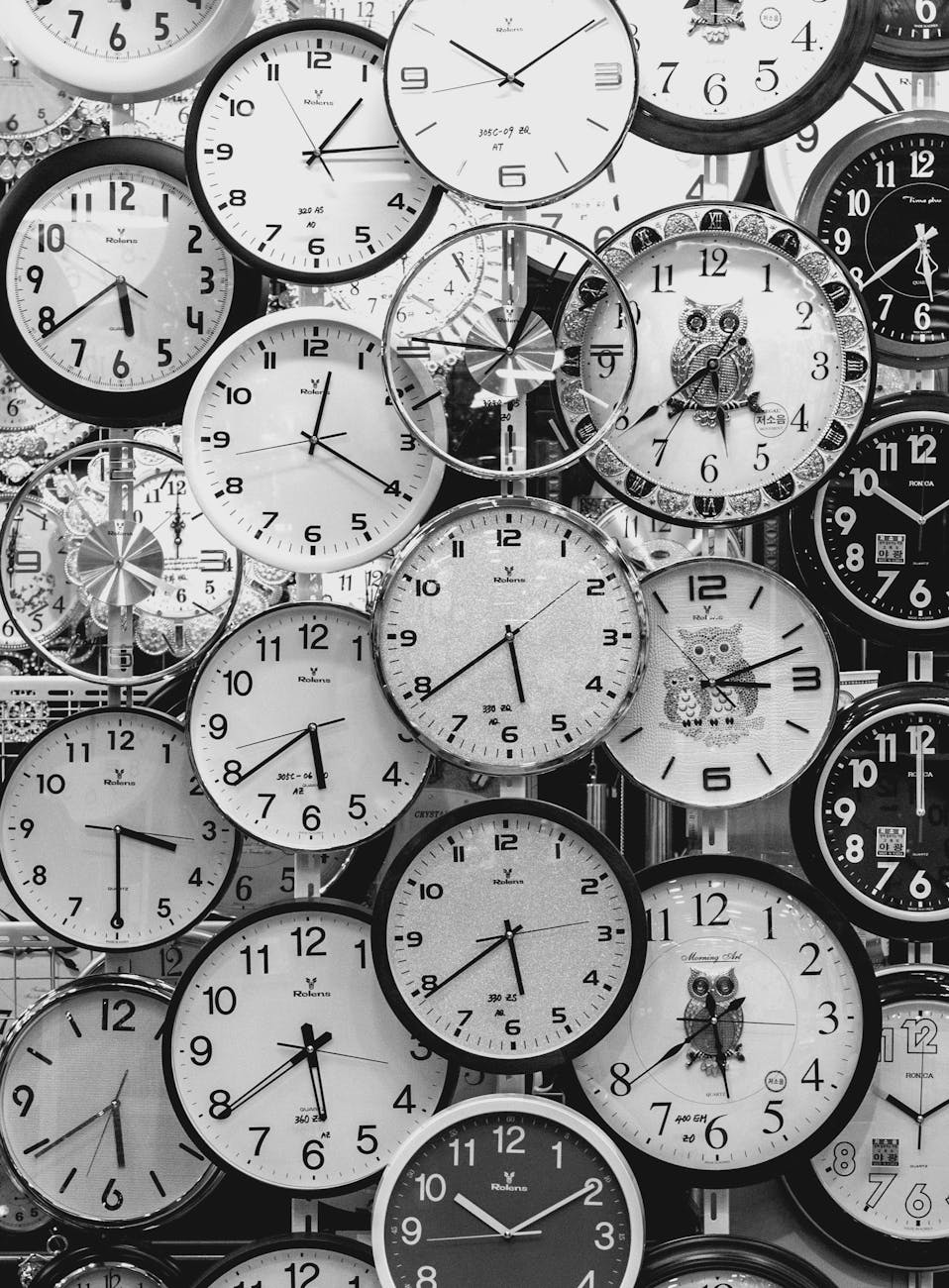
    A few days later, it hit me that the week was already flying by. I blinked, and it was suddenly Friday. When I was younger, time felt like it moved through molasses. These days, it barrels ahead like it’s trying to break a land speed record. It’s unsettling. But also a reminder: if we don’t stop and notice our days, we miss them completely.

    The Speed of Time

    And then there was my neighbor, John. I hadn’t seen him in a while, but I’d been thinking about him just the day before. He’s in his nineties. He is still sharp. He still tinkers with classic cars. He still carries that calm, measured way that reminds me so much of my grandfather. There’s a quiet connection there, the kind you can’t explain but feel all the same. It reminded me how relationships, even the subtle ones, shape us.

    A Quiet Reminder

    So… Why Do I Write?

    Because I need to.

    Not for clicks. Not for likes. Not to chase trends. I write because something stirs in me. The only way I know how to make sense of it is by turning it into a story. A question. A shared moment.

    I write to reflect. To connect. To offer something real.

    If even one person reads what I’ve written and feels seen, my purpose is fulfilled. If they become curious or feel a little less alone, I’ve accomplished what I came here to do.

    What about you?

    What little things have made you stop and think lately? What everyday moments have sparked something deeper?

    I’d love to hear.

  • A Quiet Reminder: When the Universe Nudges You with Kindness

    A Quiet Reminder: When the Universe Nudges You with Kindness

    Funny how the world works.

    Just the other day, I found myself thinking about my neighbor John. He’s in his 90s, and I hadn’t seen him in a while. You know how it is when someone elderly hasn’t been around for a bit, the mind goes places. You hope they’re okay, but that little shadow of worry sneaks in.

    I don’t know John all that well. Our relationship has been stitched together by small, neighborly kindnesses.

    For a time, Surley and I would drop the Star Tribune at his door in the mornings. A few months ago, he stopped getting the paper. As those little routines tend to do, that small thread of connection quietly unraveled. We haven’t crossed paths in a while.

    John has always struck me as one of the good ones. Soft-spoken. Sweet. A gentle presence with a love for classic cars that’s stuck with him for decades.

    Cut from the Same Cloth

    And that’s where the memory of my grandfather, Garfield, comes rolling in.

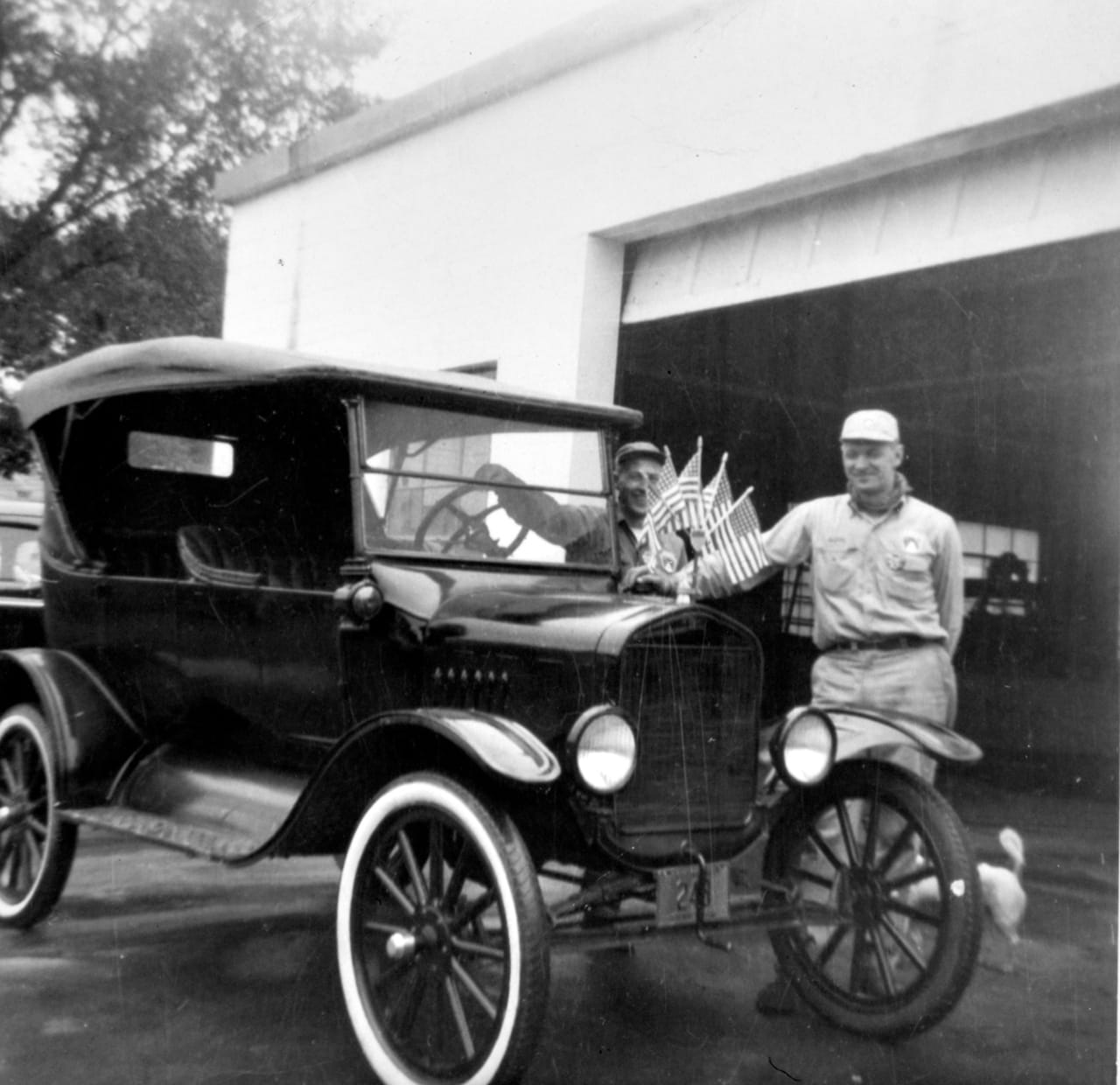
    My grandpa Garfield, a mechanic in Benson, Minnesota. The smell of motor oil and the sound of a well-tuned engine were as natural to him as breathing.

    Grandpa Garfield was a mechanic in Benson, Minnesota—worked at the local Ford garage for years. The smell of motor oil, the sound of a well-tuned engine… those were as natural to him as breathing. He didn’t just love cars—he understood them. Working on them, talking about them, driving them. Engines were his language. He spoke it with a quiet and steady kindness. This kindness settled into your bones if you spent enough time around him.

    Last fall, I spotted John outside in the parking lot with one of his cars—he has a few. He was working on something under the hood, tools spread out on the ground, a rag in his hands. Dressed in a T-shirt and jeans, completely in his element.

    And for just a moment, I saw my grandpa.

    The way John moved felt familiar. The gentle focus felt familiar. The way he spoke when I called out a hello felt familiar. Two men, decades apart, sharing a love that never really leaves the hands. The kind of love that smells like grease and perseverance.

    I truly believe Grandpa Garfield and John would’ve gotten along famously. They’re cut from the same cloth wrenches in one pocket, stories in the other.

    And the Universe Listens

    Surley and I were coming in from the patio. tonight Who did we run into but John by the elevator. Upright. Moving. Still smiling.

    The universe, apparently, had heard my unspoken thoughts and decided to drop a little reassurance right in front of me.

    Surley, of course, was hoping John might have a cookie in his pocket. He didn’t, but he was happy enough with the pet and the hello. Tail wagging, body practically vibrating with joy.

    As for me? I was just happy to see that sweet old man still here. Still a part of this building. Still himself.

    It’s strange how these small moments, the ones that sneak up on you, can carry so much weight. A hallway hello. A familiar face. A quiet whisper from the universe saying, 

    “Hey, I see you. I know what you were thinking.”

    We move through life thinking big thoughts. We chase big answers. Sometimes, it’s the smallest encounters that fill in the gaps. That remind us of who we love. Of who we’ve been. Of who’s still around.

    Sometimes the universe doesn’t need to shout. Sometimes it just smiles at you near the elevator.

  • The Speed of Time

    The Speed of Time

    There’s been so much happening this week that I didn’t even realize tomorrow is Friday.

    Wasn’t it just Tuesday?

    Next thing I know, summer will be over. The sun will dip behind the trees a little earlier each night. The evenings will turn crisp. And soon enough, we’ll be brushing snow from our coats and wondering where the warm days went.

    I’ve only gone camping once this year. Once. And I’d like to go again before the snow flies and the long stillness of winter sets in.

    Time is strange like that.

    When you’re young, it drags. You want to grow up so badly to reach that next milestone. You want to finally be old enough to drive, to graduate, to move out.

    It feels like everything worth having is just out of reach, waiting on some distant shore.

    Then you get there.

    In college and those early years afterward, time starts to pick up. It begins to move at a steady jog instead of a crawl. You’re chasing things: jobs, rent, friendships, maybe love. You’re figuring things out. Some days still feel long, but the years start to feel shorter.

    And then you hit 30.

    At least, I did. And from that point on, it’s like time strapped on a pair of rocket boosters.

    Now I’m 41. Almost 42. And I can’t help but wonder what is the speed of time going to feel like when I’m 60?

    Or 70?

    Or…God help me…90?

    Will it keep accelerating until months feel like days and years like a blink?

    I don’t know. But what I do know is this: moments are all we really get.

    Little flashes. Fireflies in a jar. A dog curled up beside you. The crunch of gravel underfoot on a summer walk. The way the air smells before a storm. A cup of coffee in the early morning sun. A smile from a stranger.

    That’s all life is, in the end. A string of fleeting, fragile moments.

    So I’m trying, really trying, to enjoy them. To notice them. To breathe them in before they vanish.

    Because time doesn’t stop. But I can.

    Even if just for a moment.

  • Trapped Without a Voice: Elevator Safety for DeafBlind Residents

    Trapped Without a Voice: Elevator Safety for DeafBlind Residents

    Surley and I had quite the eventful morning.

    We started off with our usual walk through downtown Minneapolis and along the Loring Greenway. It was a beautiful day. We stretched our legs a little further and wandered through Loring Park. It looks strikingly different without the usual Pride festivities filling every inch.

    Then we crossed the Irene Hixon Whitney pedestrian bridge over Interstate I-94, Hennepin Avenue, and Lyndale Avenue. I stopped to snap a picture of Surley, who was looking particularly dashing in the breeze.

    Surley on the bridge.

    We entered the Sculpture Garden after rolling off of the bridge. This brought on a wave of memories. I remembered the time my Aunt Kate took my sister and me there one summer during a visit. She capped the trip off with Sebastian Joe’s ice cream, which triggered an instant craving. Nostalgia always knows where your sweet tooth lives.

    It had been a few years since I’d been there so I looked up the address on their website. I discovered they had affogato on the menu, espresso over ice cream, and that was it. We were going.

    After a few minor detours thanks to road construction in the area, classic Minnesota summer, we made it. I ordered affogato with chocolate peanut butter ice cream. Unexpectedly bold and delightful. Then I spotted the chocolate chip cookies and, well, you know how that goes.

    Chocolate, peanut butter, espresso is a deliciously dangerous combination.

    Cue: emergency mode.

    So there I was cookie in one hand, affogato in the other, soaking in the calm of a summer morning…

    …and then my phone buzzed.

    “help i am stuck in elevator”

    At first I was a little confused. It was random and out of the blue. I sent a follow up message seeking clarification. When I didn’t get a response, I sent another message. After not hearing back for about five minutes, I started to get worried. This was outside of his normal behavior.

    Jason managed to send another message with a few more details. He was stuck between the basement and first floor of our apartment building, where cell signal was weak. The elevator’s emergency call box was no help—unsurprising, given that he’s Deaf and has low vision.

    He also sent a brief video. From that, I called 911 and explained the situation: a Deaf and low vision person was trapped in an elevator. I let them know the office was closed and no one was answering the phone. Thanks to the video, I could tell the dispatcher exactly which elevator he was in and where it had stopped.

    Quick PSA: Many counties in Minnesota, including Hennepin, support text-to-911. It’s a good choice for folks who can’t speak or hear during emergencies. But not everyone knows it’s available, and it doesn’t always work well underground.

    Once help was on the way, I woke Surley from his nap on the cool tile floor and jogged home.

    Surley napping on the cool tile floor at Sebastian Joe’s.

    Poor Surley, tongue lolling and tail wagging, worked hard to keep pace. He trotted beside me as we walked home at mach 10 like a champ.

    By the time we returned, Jason had just gotten out with help from the fire department. He was headed to the store with a friend. He was okay: hot, sweaty, but safe.

    Afterwards

    Later, we sat down. We talked through everything that had happened. The more I heard, the more disturbing the story became.

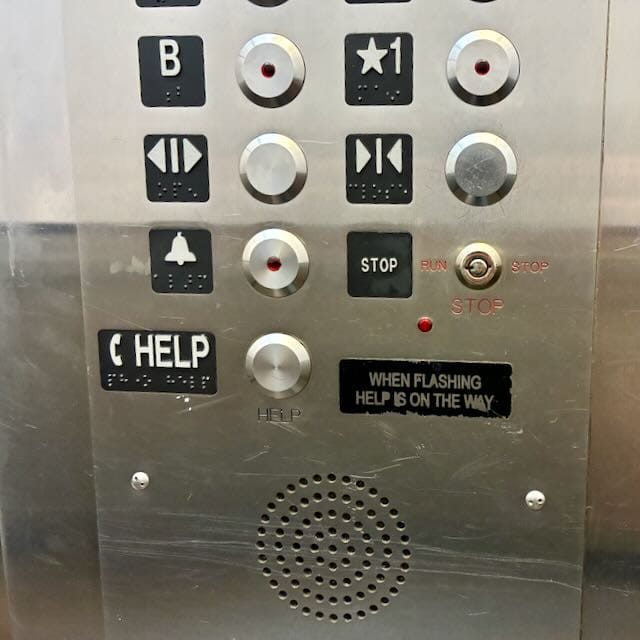
    Jason had taken the elevator down to grab some things from his storage unit. When it stopped in the basement, the doors didn’t open. He tried hitting the “door open” button. Nothing. He attempted to go back up to the first floor. He swiped his fob for access to his floor. Still nothing.

    Because of his low vision, he had trouble seeing what floor the elevator thought it was on. There were no audible cues. He pressed the emergency “help” button. He wasn’t sure whether it activated. The indicator was too small and hard to see. He backed up further and got on his knees. Only then was he able to see the blinking red light. He used text-to-speech on his iPhone. He said, “I’m Deaf, stuck in elevator.”

    He also tried live captioning on his phone to transcribe the audio from the speaker. He hoped it would tell him that someone was on the line. No matter where he placed his phone nothing came through clearly enough to be transcribed into words. Even though he is deaf, he can hear static and muffled sounds when using his hearing aids. However, he cannot make out words in detail.

    He stayed surprisingly calm, even though his hands were shaking, which made texting and filming difficult. He immediately noticed somewhat bright yellow light just below the floor display. It was a fire dept override. This reassured him that the fire department was here. It put him at ease that they were working to get him out.

    Eventually, the fire department and an elevator tech arrived and got the doors open. Jason had to step up about a foot to climb out: hot, rattled, and understandably frustrated. But he was, in his own words later, “unfazed.” (Though I think he was being generous with himself.)

    Surley resting in the AC after the day’s events.

    After the dust settled, I spoke with our apartment manager.

    I explained why I called 911. They told me I should’ve left a message on the office line. They assured me they would have responded promptly.

    Now look I get the desire for tenants to follow procedure. But here’s the thing: there was no one in the office. No one answered the phone. The voicemail simply said, “Leave a message for maintenance emergencies.”

    This wasn’t a dripping faucet. A Deaf and low vision resident was stuck in a sealed metal box. There was no clear way for him to call for help. He was starting to overheat. I wasn’t about to wait and hope someone checked their voicemail.

    If I hadn’t answered his text message what would’ve happened? How long would Jason have waited?

    He pushed the “help” button in the elevator. He was using text-to-speech to relay a message. Did the dispatcher realize they were speaking to someone who couldn’t hear them? Was the dispatcher aware of the communication barrier? Did they think it was pressed by accident? Would they have done anything?

    I didn’t want to find out the hard way. So I called 911. And I’d do it again.

    But it raises some real concerns.

    People with disabilities are often left out of emergency planning. Even when the systems are technically in place, they don’t always work when you truly need them. This includes systems like text-to-911 and live captions.

    WWYD (What Would You Do?)

    So, I pose this question to you:

    If you were in my shoes…
    Would you have called 911?
    Would you have left a voicemail and waited?
    Would you have done something else?

    Let me know in the comments. If you live in an apartment building, especially one with older elevators, take a minute. Check what your emergency plan looks like. Talk to your neighbors. Learn your options.

    Because accessibility shouldn’t depend on luck. It shouldn’t hinge on a single person being available to answer a phone. It should be built in — thoughtfully, thoroughly, and proactively.

    Call to Action

    If you didn’t know about text-to-911, now you do. Check your local county’s website to confirm it’s available where you live. Share this post with someone who might not be aware. Accessibility starts with awareness.

    Resources

  • Cheers to Clarity: What Grief, Generational Patterns, and a Non-Alcoholic IPA Taught Me About Choice

    Cheers to Clarity: What Grief, Generational Patterns, and a Non-Alcoholic IPA Taught Me About Choice

    Author’s Note:
    This began as a casual Facebook post. It was just me, a can of non-alcoholic beer, and a quiet summer evening on the patio. But the more I sat with it, the more I realized this moment wasn’t casual at all. It was part of a larger story about grief, generational patterns, and learning to choose—really choose—what supports me best. Sometimes that looks like a cold drink. Sometimes it looks like not having one. And sometimes, it looks like sitting still with what hurts, and making a mindful choice anyway.

    A Quiet Evening, A Different Kind of Cold One

    It’s a quiet evening on the patio. The sun’s fading out slow and golden, and I’m sitting with a cold one in hand.

    But not that kind of cold one.

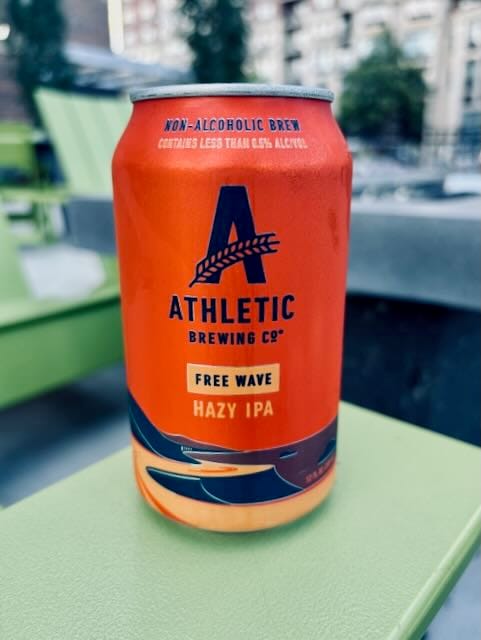
    This one’s a Free Wave Hazy IPA from Athletic Brewing Company. Non-alcoholic, but every bit as satisfying as the real deal. Bright. Citrusy. Complex. It hits all the right notes—just without the mental fog or emotional whiplash.

    These days, before I drink anything alcoholic, I pause. I check in with myself. And I ask a question that’s become surprisingly important:
    Why do I want this?
    Is it for the taste? To unwind? Or… am I trying to dull something I don’t want to feel?

    When Grief Shatters

    After Dempsey passed in the summer of 2022, something in me broke.

    Not just cracked—shattered.

    He wasn’t just a dog. He was my service dog. My companion. My lifeline. Dempsey was the one creature on this earth I could trust completely. I trusted him with my safety and with my disability. I relied on him with the quiet parts of me that don’t always have words.

    Grief wasn’t kind. It wasn’t poetic. It was heavy and raw and relentless. And in the middle of it, I found myself craving alcohol. It wasn’t to celebrate or relax, but to feel less.

    Less pain.
    Less loss.
    Less of that deep, marrow-level heartbreak that doesn’t let up just because the world keeps spinning.

    But I knew that craving. I knew its edges. And I knew where it could lead.

    Because I come from a family with a history of alcohol misuse. Even though the people I love found their way to sobriety, those patterns still echo. That kind of history doesn’t disappear. Instead, it lingers in the background. It shapes how you respond to stress, grief, and loss. Even if you never pick up a bottle, you still inherit the instincts.

    So when I felt that whisper—Just one drink. Just take the edge off—I recognized it. Not just as a moment of grief, but as part of a longer story. A story I want to write differently.

    Choosing Wisely: The Power of Options

    That’s where drinks like this come in. That’s why I sing the praises of Athletic Brewing like they’re saving lives. Sometimes, having a non-alcoholic option helps me stay sober in spirit. It is not just about alcohol content. It helps me stay grounded. Stay honest.

    And let’s be clear: I’m not anti-alcohol. I’ll still have a drink now and then. But the rule I’ve made for myself is simple—if there’s even a fraction of hesitation, even a 0.00001% chance that I’m reaching for it to numb instead of enjoy, I choose something else.

    That isn’t weakness. That’s wisdom. That’s clarity. That’s care.

    Even now, Surley is by my side. My mental health is better supported. There is more stability and joy woven into my days. Still, those urges whisper sometimes. That itch still sneaks in.
    And when it does, I don’t shame it. I meet it with honesty.
    I ask the question again. Why do I want this?
    And if I’m not sure, I choose the option that keeps me rooted.

    My Choices, My Rules

    You might think all this sounds excessive. Or overly cautious. Or dramatic.

    That’s okay.

    You’re not living my grief. You’re not carrying my history. You’re not holding my DNA or my memories or my triggers. I am.

    These are my choices. My rules. My safety nets. Built not just to keep me upright, but to keep me honest with myself.

    So tonight, I raise a glass—a cold one, sure, but one that supports the life I want. The healing I’ve worked for. The clarity I’ve chosen.

    Cheers. 🧡🍻
    To grief. To growth. To generational healing.


    If you’ve been affected by grief, loss, or struggles with alcohol, you’re not alone. Feel free to share your story or thoughts in the comments below. Let’s support each other with compassion and understanding.


  • Always Becoming

    Always Becoming

    A Pride Month Reflection

    I had written the meat of this post over a month ago but hadn’t published it yet. The reason I’ve been sitting on it is simple.

    I was nervous.

    I know I’ve shared a lot of my life here. However, there are some things I’m still working through with my therapist. Even at my age, I’m learning there’s always more to discover about yourself.

    Pride Month is nearing its end. The Twin Cities Pride Festival is upon us. It feels like the right time to share. Pride is often associated with the LGBTQ+ community. However, I believe it’s for anyone who has ever struggled to find themselves. It is also for those who now live in their authenticity.

    Pride isn’t just about rainbows, parades, or a single community. It’s about the courage it takes to live authentically, no matter how long the journey. It’s about the quiet moments of realization. It’s about the words we finally find for ourselves. It’s about the love we give and receive along the way.

    Whether you’re part of the LGBTQ+ community or simply someone learning to live more fully as yourself your story matters. You matter. And I hope, like me, you’ll keep becoming.

    A Journey Through Identity, Writing, and Self-Discovery

    In the recent months I’ve learned more about myself than I expected. Therapy has helped me feel more comfortable exploring who I am. Having family and friends who listen without judgment has made a huge difference.

    Writing has opened the door even further. It’s allowed me to think about things on a deeper level, to connect dots I hadn’t known were there. And through that process, I’ve started to see myself more clearly.

    Childhood & Disability

    As a child growing up in a small Minnesota hometown, I quickly learned that I didn’t quite fit. Disability was rarely visible, and the world around me wasn’t designed for bodies like mine. Navigating that space taught me resilience and adaptability. I became skilled at adjusting—at molding myself to fit into places that hadn’t anticipated my presence. I bent without breaking.

    But I wasn’t just molding to fit into the world—I was also molding to meet my family’s expectations. I performed the version of myself that felt safe and acceptable. That pressure, though quieter, was heavier. It was about survival. And sometimes, it came at the cost of my authenticity.

    What I didn’t realize at the time was how deeply these early experiences would shape my understanding of self. Learning to adapt to a world that wasn’t built for me didn’t stop with disability it became a pattern.

    That same instinct to “pass,” to suppress discomfort, followed me into every part of who I was becoming. Into how I loved. How I moved through gender. How I showed up—or didn’t—in my full identity.

    I’d spent my childhood learning how to bend myself to fit into other people’s definitions. It would take me years to learn how to define myself on my own terms.

    Coming Out, and Coming Into Myself

    At a young age the early signs of queerness began to surface even if I didn’t notice. I remember a relative who adored New Kids On The Block. I must’ve been five or six when I casually mentioned liking Danny from the band. At the time, it felt natural, but looking back, it was a small rebellion. A quiet truth surfacing.

    At a similar age, starting in kindergarten, there was always a girl, or girls, I liked. I never thought girls were “yucky;” I just knew there was something about them that drew me in.

    In fifth or sixth grade, there was a boy in Sunday school. He gave me the same fluttery feeling in my stomach that I’d felt around certain girls. In my early teens, I attended summer camp. That was the first time I truly felt something deeper for another boy my age. Still, I could not fully say the word “gay” to myself until high school. Even then, it felt more like a question than an answer.

    In high school, I wrote a paper on same-sex marriage. It stirred up a lot of conversation first among classmates, then with some family members. Questions about my own sexuality began to surface. I deflected by saying I had a lesbian aunt, which was true, but also conveniently deflected the spotlight. It gave me a way to speak up without fully stepping out. A shield wrapped in truth.

    I didn’t come out to most of my family until college. It wasn’t a big, cinematic moment. There were no joyful embraces or heartfelt cheers. There were tears, but not the kind that come with relief. It was raw and complicated, tangled in confusion and unspoken expectations.

    At first, identifying as gay gave me something solid to hold onto a label, a sense of belonging. But as time went on, I realized that label didn’t always fit. While others seemed to find a home in their identities, mine kept shifting, stretching in different directions.

    I’ve felt attraction to people of different genders and across age differences. Some connections were romantic or sexual, others weren’t. There were also times I felt no sexual attraction at all. Those patterns gently opened the door to the asexual spectrum. They showed me there was more room to explore than I’d once believed.

    Gender, Clothes, and the Words I Didn’t Have

    As a teenager, I remember my sister had a pair of maroon faux leather pants. I thought they were the coolest thing. I wished boys could wear something like that without question. It wasn’t just about fashion—it was about the freedom that came with it.

    In college, I found myself drawn to musicians like Ani DiFranco, Ellis Delaney, and especially Melissa Etheridge. Her look leather jacket, worn jeans, quiet confidence hit a nerve.

    I did a drag performance as Etheridge in college. When I stepped into that outfit, and out onto the stage it didn’t feel like a costume. It felt like stepping into something honest. Something that had been waiting to be seen.

    In my mid-twenties, I started questioning my relationship with gender. I felt discomfort in my body and wondered if I was transgender. I’m thankful I had a therapist who, though not an expert in gender dysphoria, helped me work through those feelings. Through deep conversation, I realized that I was mostly comfortable in my body. There were parts I didn’t love, like body hair or the physical complications of being in a wheelchair.

    I wasn’t seeking to transition from one binary to the other. I was seeking something outside the binary entirely. At the time, term non-binary wasn’t yet in the common language within the queer community.

    When it became common to share pronouns in bios or intros, I hesitated. He/him didn’t feel right. They/them felt a little closer, but still not quite it. I didn’t feel like a he or a they—I just felt like me. Just Levi. And for a long time, that made me feel like an outsider. But slowly, I began to understand that being just Levi was enough.

    As pronouns became more common, the concept became clearer. Friends came out as non-binary. It was like a crack in the door I didn’t realize I needed to walk through.

    The Mirror of Writing

    Writing has always been a mirror. A way to show myself back to myself. Characters with ADHD tendencies, with anxiety, trying to figure out where they fit in the LGBTQIA spectrum. Characters who are hesitant, loyal, or unsure of where they belong. They’re all extensions of me. These characters emerged from my subconscious before I ever had the words to describe those parts of myself.

    These stories have helped me process, understand, and articulate feelings that were once nebulous. Through storytelling, I’ve found a deeper clarity and a quiet acceptance. I’ve realized I don’t need to chase a destination. I only need to keep chasing the road.

    Becoming

    I’m not sharing this as a final declaration. I am not sharing this as another coming out. I’m sharing it as a snapshot. A step in the process. A truth for today. Because identity isn’t fixed it evolves. It deepens. It grows with us.

    I’ve never had one label that felt like home. Maybe I was never meant to be defined by a single word.

    Maybe I’m not a noun.
    Maybe I’m a verb.

    Always becoming.

    You’re Not Alone: LGBTQ+ and Mental Health Resources

    If you’re navigating identity, struggling with mental health, or just looking for community—these resources can help:

    Image Disclaimer:
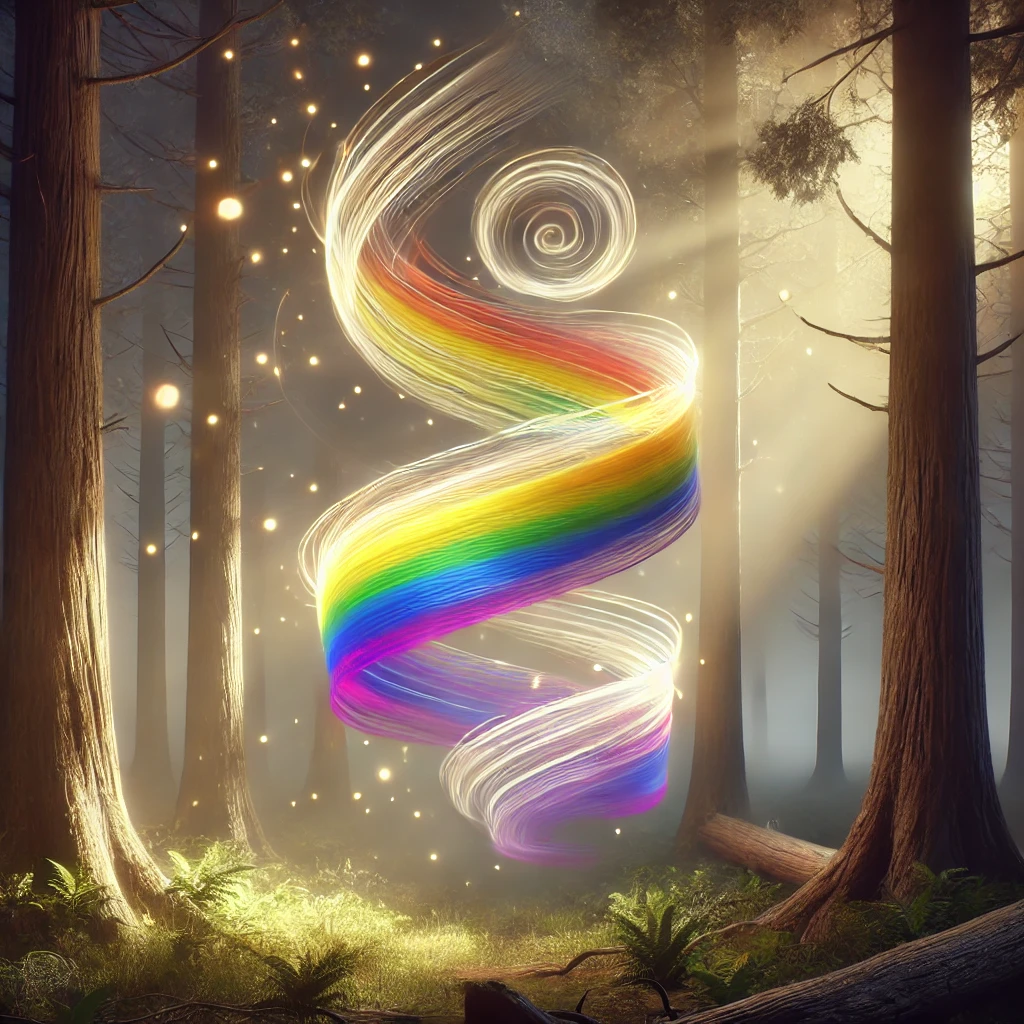
    The featured image was created using DALL·E. It is OpenAI’s legacy image generation model. ChatGPT provided conceptual guidance and design direction for this collaboration.

  • When the Beat Doesn’t Match the Burden: Situational Anxiety, Disability, and the Song That Hits Too Close

    When the Beat Doesn’t Match the Burden: Situational Anxiety, Disability, and the Song That Hits Too Close

    Disclaimer:

    Songs, like stories, can mean different things to different people. The way I interpret Anxiety by Doechii may not be how you hear it and that’s okay.

    In this post, I’m sharing my personal reaction and reflections based on my own lived experience with anxiety and disability.

    If this song resonates with you differently, feel free to share your thoughts in the comments. We’d love to engage in conversation rooted in empathy and curiosity.

    You might be struggling with anxiety or your mental health. Know that you are not alone. Support is available. Please check out my previous post from Mental Health Awareness Month. It contains additional thoughts and resources.

    When the Beat Doesn’t Match the Burden

    Lately, I’ve seen a surge of reels using Doechii’s Anxiety. Catchy. Rhythmic. Visually clever. And also, unintentionally, a little unsettling. There’s a growing trend. Creators use the song in a way that feels like it makes light of a real, raw experience.

    That experience? Living with anxiety.

    Anxiety doesn’t always look like shaking hands or visible panic attacks. For me, it’s more often quiet. Slow-burning. And always lurking.

    What Anxiety Really Looks Like…for Me

    Social media loves a dramatized version of anxiety: loud, obvious, and aesthetic.
    But real anxiety, the kind I live with? It’s quieter. Heavier. Trickier to explain. To me, anxiety looks like this:

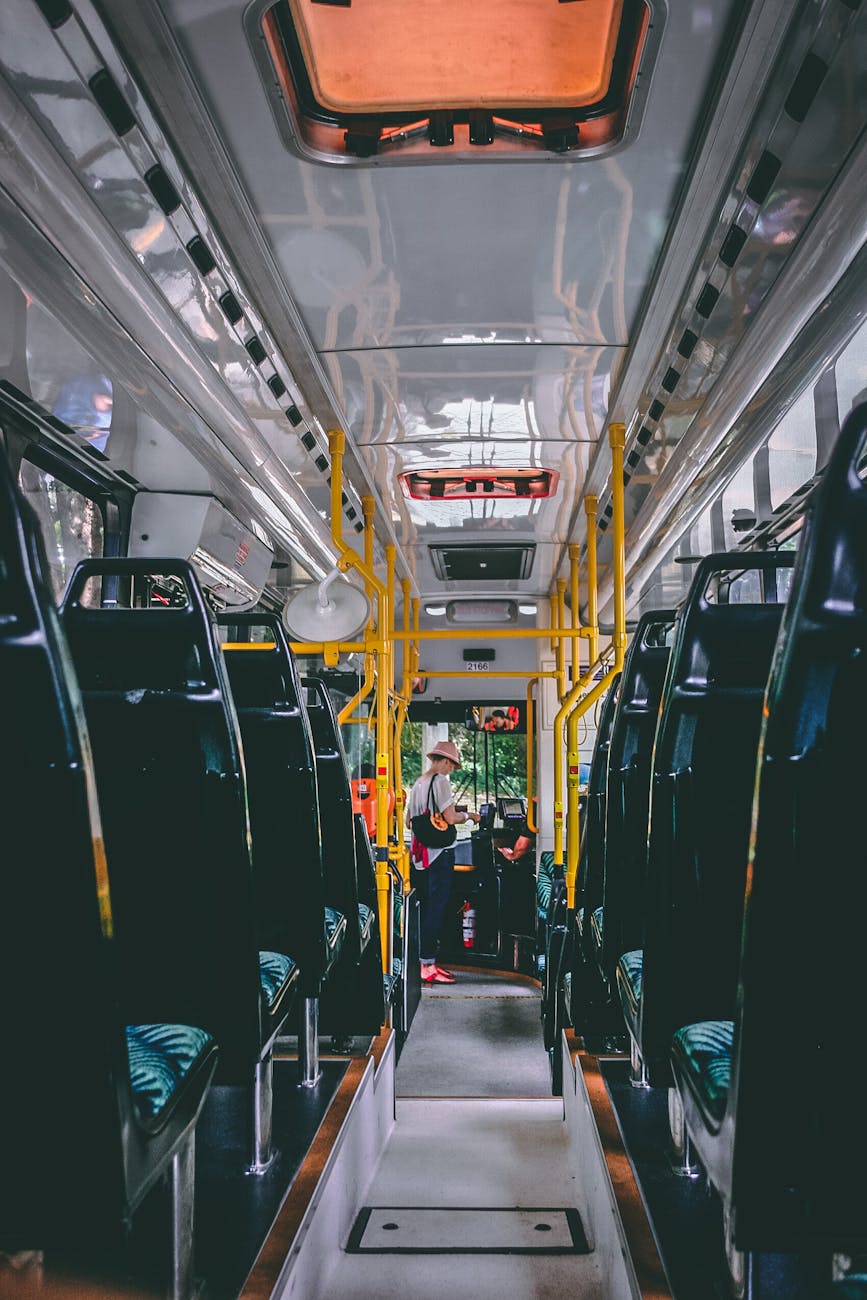
    • It’s that feeling in the pit of my stomach as I wait for the bus. Will it come? Will it pass me by because I’m in a wheelchair?
    • It’s wondering. I went to the bathroom two times before leaving the house. I still worry if I’ll have an accident while I’m out.
    • It’s walking my service dog through the mall, worrying: he hasn’t pooped yet today. Will I miss his signal? Will he have an accident indoors? What will people think?
    • It’s questioning my friendships: Do they really want to help me? Or do they pity me?
    • It’s the constant churn: Will I ever stop worrying about money? Will I ever find a job that sees me for who I am? Will they view me beyond just being “that guy in the wheelchair with the dog?”
    • And yes, weekly if not daily, it’s the gnawing fear: What if my power wheelchair breaks down? Will I be stranded? Will someone help? How will I get home?

    This is situational anxiety. It doesn’t come from nowhere it comes from real, lived experience. From systems and barriers and histories that teach disabled folks like me that help isn’t guaranteed. That our presence is often inconvenient. That our independence is fragile.

    The Weight of Situational Anxiety

    Situational anxiety is the kind that grows out of lived experience. It’s not imagined. It’s not abstract. It’s knowing your support system might not show up. It’s remembering every time it hasn’t.

    It doesn’t always manifest in panic attacks or spiraling thoughts.

    Sometimes, it’s a list of backup plans running on loop. It’s scanning for exits, double-checking elevators, hoping that someone nearby will care enough to help if something goes wrong.

    It’s the subtle, exhausting labor of planning for a world that often overlooks you.

    And still, it gets minimized.

    People hear “anxiety” and think inconvenience. Nerves. A personality quirk.
    Your basic safety or dignity depends on systems. These systems frequently fail you, creating a pressure cooker situation.

    Beyond the Filters and Feeds

    So when I hear Doechii sing:

    “It’s my anxiety / Can’t shake it off of me…”

    I don’t hear a vibe. I hear a mirror.

    And when that same song is used to make light of anxious experiences, it hurts.
    Because I know how hard it is to speak up about these things to name them.
    I know the courage it takes to share the ugly parts, the raw parts, the unphotogenic parts of mental health.

    So when a song like Anxiety is reduced to a joke or aesthetic, it’s not just careless.
    It’s a silencing act. It says: your pain is only valid if it’s entertaining. Your story only matters if it’s edited down to something easy to consume.

    We can do better than that.

    What the Song Gets Right

    Doechii sings:

    “Anxiety, keep on tryin’ me / I feel it quietly / Tryin’ to silence me.”

    Yes. That. Right there.

    Anxiety is not always loud. Sometimes it’s a hush that follows you into every room. A voice that questions every decision. A hand that rests just a little too heavy on your shoulder.

    Later, she sings:

    “I get this tightness in my chest / Like an elephant is standing on me / And I just let it take over.”

    It’s visceral. Real. A truth we don’t always see captured in public conversations about mental health—especially those involving disabled bodies and disabled minds.

    This Song Isn’t Just a Soundbite

    This post isn’t about gatekeeping art. I’m not here to tell anyone to stop using the song.

    But I am inviting us to pause. It’s about honoring the people who see themselves in it.To consider that behind the beat is a person who wrote those lyrics from a place of pain. And behind the screens watching your reels? There might be people who live those lyrics every day.

    If you’re someone who hears Doechii’s Anxiety, and you feel it in your chest instead of your content calendar, this is for you.

    Your anxiety, whether clinical or situational or both, is valid. Your fears, rooted in real-world experiences, deserve to be named without shame. You deserve space not just on the feed, but in the conversation.

    So the next time you hear that chorus play, pause for a second.
    Listen. Really listen. And if you can, hold space for those of us who can’t just shake it off.

    Because for us, Anxiety isn’t a trend. It’s the background noise of daily life. And we’re doing our best to live above the volume.

    Let’s use music as a bridge, not a punchline.

    Let’s honor art by honoring the realities it comes from.

    And let’s talk more about what anxiety really looks like.

    Because it keeps on trying us.

    And we keep on trying back.

    If you’d like to share how Anxiety by Doechii resonates with you, I’d love to hear your perspective. This could be whether it resonates the same, differently, or not at all.

  • Thoughts in the Woods

    Thoughts in the Woods

    This morning, I started to pack up my camping gear. My friends were still sleeping. I found myself pausing…grateful. I’ve been camping with this same crew of friends for almost four years now.

    From Bare Bones to Built Up

    When I started, I had nothing but a sleeping bag. And honestly? That was intentional. If I had an accident in the night, I wanted my bag to get wet. I didn’t want someone else’s borrowed gear to be affected. Everything else I used back then was borrowed.

    Fast forward to 2025, and now I’ve got a full kit of my own. I’ve grown. I’ve built something. And I’ve done it with the support of some really incredible people.

    The Kind of People You Want Around a Campfire

    You never know how folks will respond when someone needs a little extra help. It might be setting up camp or tearing it down. It could involve navigating uneven ground or just figuring out the best way to sleep without pain.

    This group?

    They’ve been nothing short of amazing. I don’t think I could ask for better camping buddies. If anything, they yell at me for not asking for more help. And every year, I get a little better at asking. I’m a Midwesterner at heart stubborn by nature. But with time, I’m learning.

    Maybe by the end of this life, I’ll ask for help without hesitation. Maybe.

    A Place for Me, A Place for Him

    They’ve also been incredible when it comes to my service dogs.

    I remember the first trip I took with Dempsey. My friends made sure I had the right setup for him. A couple of them brought their dogs too, so we had a three-way dog party around the fire. I’ll never forget that trip. It wasn’t just because the raccoons stole Dempsey’s food. It was also because my friends jumped in without missing a beat. They shared their dogs’ leftover kibble and scrambled extra eggs for breakfast so D wouldn’t go hungry.

    Surley is a bit different. I brought him last spring and it went well, even with some rain though he’s not much for storms.

    This trip, I needed some time away. He spent the weekend with the folks who helped train him to become the incredible service dog he is today. I think it was a good thing for both of us. There will be camping trips where he joins me, and others where he stays behind. But what I know for certain is: when he does come along, this crew will have my back, and his.

    Where Comfort Meets the Campground

    One of my friends, who also uses a manual wheelchair, was in the market for a tent. Naturally, I sang the praises of my Big Agnes Blacktail 3 Hotel Bikepack tent. Fancy name, but it’s been an absolute game-changer. It fits everything I need. I’ve got a picnic blanket on the floor for extra cushion and dog-paw protection. There’s a twin-sized air mattress, room for a Labrador, and my duffel bag. A vestibule comfortably stores a cooler and my chair.

    It’s basically the Cadillac of tents. Imagine if the Cadillac was waterproof and collapsible, designed by someone who truly understands functional camping for disabled folks.

    Anyway, my friend ended up buying the exact same one! Before we packed up camp this morning, I managed to snap a picture of our matching tents. I think we’re officially a tent gang now. Matching vests next?

    Tent twins, engage! Big Agnes buddies for life.

    I’m not sure how many camping trips I’ll squeeze in this year. I’d love to try a solo trip (just me, the tent, and some food), and there are friends I haven’t camped with in over a year that I’d love to reconnect with. Maybe that’ll happen. Maybe not. Life is an adventure. I’m just along for the ride, and I’m lucky to have some amazing people joining me along the way.

  • Without A Phone: A Morning, a Coffee, and a Thoughtful Disconnection

    Without A Phone: A Morning, a Coffee, and a Thoughtful Disconnection

    Author’s note: I didn’t intend to write a digital detox think piece. Sometimes remembering how much we rely on our phones only requires forgetting them.

    Yesterday I met a friend for coffee. I was so focused on making sure I had everything we needed. I didn’t even realize I left my phone at home on the charger.

    It’s the second time in less than a week I have done it.

    The funny thing is I didn’t even realize I had done it yet again. I only noticed when I was three blocks away. I got a notification on my Apple Watch. It said, “Your phone has been left behind.”

    Classic.

    For a second, I considered turning around. There was the part of me who knew if I did, we were going to be late. Also it wasn’t like I didn’t have a way to get reach emergency services should there be an emergency.

    My Apple Watch has built-in cellular service. Thanks, sister, for insisting that I get it. All I would have to do is press a button on the watch, and it would immediately call 911.

    Still, it felt weird… like I was missing a limb.

    As I walked to the train, it hit me how deeply enmeshed phones are in our lives. In 2025, they’re no longer just for calling people.

    Actually, I can’t recall when I last had a full phone conversation. It was not with a doctor’s office or customer service. These days, we text, DM, post, scroll.

    Our phones are our GPS, music libraries, cameras, credit cards, and even IDs. They’re an extension of us, but maybe too much so.

    Life Before

    I’m old enough to remember a time before the regular use of cell phones. My parents got their first one in the mid-90’s. My aunt got one too, mostly because she was caring for my grandma and needed to stay reachable. Back then, minutes were a precious commodity. You didn’t just use your phone. You rationed it.

    I didn’t get my own phone until I was graduating high school. My mom joked about calling me during graduation to make sure my diploma was legit. I have forgotten what my number was back then. It’s somewhere in the ether with my high school locker combo.

    My First “Smart” Phone

    My first smartphone was an AT&T (HTC) Tilt—Windows Mobile, baby. I think got it on sale with a two contract, mostly for the novelty of “the internet” in my pocket. The iPhone had just launched, but it wasn’t in my budget.

    Fast forward a few years, and now I’m Team Apple for life.

    Rewired Society

    Don’t get me wrong smartphones are useful. I love being capable of writing blog posts like this one on the go. I can stream music and podcasts without juggling devices. I look up trivia mid-conversation like a know-it-all wizard. It’s convenience in my pocket.

    But… they’ve also rewired us. We’re always reachable, always plugged in. Our downtime is filled with a never-ending scroll of reels, tweets, memes, and 24/7 news updates.

    I’m as guilty as anyone. Give me five minutes. I’ll lose them to Facebook stories or Instagram reels I didn’t even mean to tap on.

    A Few Stats That Might Surprise You:

    Phone use is up—way up.

    According to Pew Research Center in 2024, 98% of Americans now own a cellphone. Over 91% of teens use theirs just to pass the time.

    Smartphone “addiction” is real.

    • 57% of Americans consider themselves addicted to their phones.
    • 3 in 4 feel uncomfortable without them.
    • 1 in 6 sleep with their phones.
    • Nearly half panic when the battery drops below 20%.

    We’re glued to our screens.

    Americans check their phones 144 times per day and spend an average of 4.5 hours daily on them; that’s up over 50% from just two years ago.

    And yet, they’re our lifeline.

    From music to maps, IDs to emergency access, they’re not just helpful they’ve become essential. For better or worse.

    Freeing Feeling

    Still, something about leaving my phone behind felt… freeing.

    For once, I was here in the moment. I noticed more. The way the early sun reflected off windows as I walked towards the train. The rustle of leaves. The quiet murmur of the city on a Saturday. 

    Sure, I had a few anxious thoughts. What if there’s an emergency? What if Lassie can’t text me that Timmy fell in the well?! But the world didn’t end.

    My Apple Watch, though less feature-packed, has my back. I can still get directions to the café. I can make a quick phone call if needed I check messages from people who matter. I even pay for coffee if I really wanted to. (Though using it for payments is still more awkward than helpful for me.)

    I’m not about to go full off-the-grid minimalist. But next time I forget my phone? I just might let it be. Sometimes, it’s worth being disconnected to reconnect with the world, with others, and with yourself.

    My challenge to you

    Try it. Leave your phone at home on purpose. Just once. Feel what it’s like to not have that constant pull in your pocket. You might be surprised at what you notice. And you’ll definitely survive.

    (Lassie, I trust, will find another way to reach you.)

  • Every Day, Not Just May: A Reflection on Mental Health Awareness

    Every Day, Not Just May: A Reflection on Mental Health Awareness

    Why We Need More Than a Month

    May is Mental Health Awareness Month. It’s a time when you’ll see posts, ribbons, infographics, and campaigns reminding us to check in on ourselves and others. And don’t get me wrong—that’s important. But mental health isn’t something we should only be aware of one month a year.

    It’s something we should acknowledge, support, and talk about every single day.

    My Mental Health Journey

    Mental health struggles don’t come with a calendar notification. They don’t wait until May to make themselves known. For some of us, they’re lifelong companions—sometimes silent, sometimes loud, sometimes manageable, sometimes utterly overwhelming.

    I’ve been living with anxiety and depression for as long as I can remember. But for years, I didn’t have a name for what I was feeling. I didn’t know that the heaviness, the racing thoughts, and the sudden and intense emotional dips weren’t just “personality quirks.” They were not something to tough out. I finally received the right diagnosis when I became an adult and sought professional help. More importantly, I got the right support. Medication and counseling made a world of difference for me. But even with treatment, mental health isn’t something that just gets “fixed.” It’s something I continue to manage, day by day.

    You Can’t Always See It

    Here’s the thing: you can’t always see it.

    People with mental health challenges often look “fine” on the outside. Smiling. Working. Cracking jokes. Showing up. We become masters of masking. We hide the pain, the fear, and the spiral. Society hasn’t always been kind to people who show those things. But just because someone looks okay doesn’t mean they are.

    Some days, I genuinely feel good. I feel steady, grounded, even joyful. Other days, something as small as a smell can affect me. A song or an old photo may send me down a dark tunnel I wasn’t expecting. It can take everything I have to claw my way back out.

    Coping Isn’t Always Healthy

    And let’s talk about coping mechanisms. I joke about my “coffee addiction”—and yes, my relationship with caffeine is a little… complicated. But beyond the laughs, I’ve also had a much more serious struggle with alcohol. For a while, I used it to cope. To numb. To silence the noise. But through therapy and intentional choices, I’ve worked hard to build a healthier relationship with alcohol. (Still working on the coffee one, though. Baby steps.)

    Why I’m Sharing This

    I’m not sharing this for pity. I’m sharing this because mental health is still so misunderstood, so stigmatized, and so often invisible. I want to be part of normalizing the conversation. Because the more we talk about it, the more we make space for people to feel less alone.

    So if you’re struggling right now—silently or not—please know you’re not alone. You matter. You deserve support. And there’s absolutely no shame in seeking help.

    Mental health awareness doesn’t end when May does.

    It’s an everyday thing. Let’s keep talking.

    Mental Health Resources

    If you or someone you love is struggling with mental health, please know that help is available. You are not alone.

    Emergency Help (24/7):

    • 988 Suicide & Crisis Lifeline: Call or text 988 or chat at 988lifeline.org Free, confidential support for people in emotional distress or crisis.
    • Crisis Text Line: Text HELLO to 741741 Trained crisis counselors available anytime, anywhere in the U.S.
    • National Domestic Violence Hotline: Call 1-800-799-7233 or text START to 88788 thehotline.org

    Support for Specific Communities:

    Ongoing Mental Health Support: