
Month: August 2026

  • Apartment Hunting While Disabled: The Real Barriers

    Apartment Hunting While Disabled: The Real Barriers

    Where It Started

    I’ve lived in my current apartment for over 17 years now, the longest I’ve ever stayed anywhere. When I first moved in, I knew right away it was the place for me: big, spacious rooms and a huge window I fell in love with. But the truth is, this place didn’t come from careful searching and comparing options. It just happened to fall in my lap at the right time. And that’s not always how it goes.

    That’s the part I want to talk about, because it’s something a lot of people never have to think about: apartment hunting while disabled is a completely different process.

    The Missing Checkbox

    When you’re searching listings, there’s no checkbox or toggle switch that says “wheelchair accessible.” Some buildings will advertise “wheelchair access,” but that phrase can mean almost anything. It might mean you can get into the building. It might mean you can get into a unit. It doesn’t tell you whether that specific unit is actually accessible: whether it has a roll-in shower, whether the counters are low enough to roll under, whether the doorways are wide enough for your chair to fit through at all.

    You don’t find any of that out from a listing. You find it out by calling. By asking. By hoping whoever answers actually knows the details of the unit and isn’t just guessing. That’s the struggle I run into, and one I know a lot of other wheelchair users and people who use mobility aids run into too. It’s a lot of extra legwork for something that’s simple and easy for people without mobility issues. They can filter by price and location and move-in date and be done with it. We have to build in an entire extra layer of research just to find out if a place is livable for us at all.

    Why We’re Still Here

    That reality is a big part of why I’ve stayed put for 17 years even as my current apartment has started to show its age. Right now, as I’m writing this, it’s 81° in here and 77° outside. Every year around lease renewal time, I think about looking for somewhere new. And every year, I come up empty, because I haven’t found anywhere else that checks all the boxes this place does: wide doorways, a roll-in shower, room to get under the kitchen counter. Those aren’t extras for me. They’re the baseline for whether a place is even usable.

    Add cost on top of that. Our rent with utilities runs somewhere between the high $1,500s and low $1,600s, and accessible units aren’t exactly common at that price point, or at any price point, really. So even when I do work up the will to look, the pool of options I’m choosing from is tiny compared to what a non-disabled renter would see for the same budget and the same city.

    Location Isn’t Just a Preference

    Beyond accessibility inside the unit itself, there’s the question of where that unit sits. For us, location isn’t just a nice-to-have, it’s practically its own accessibility issue.

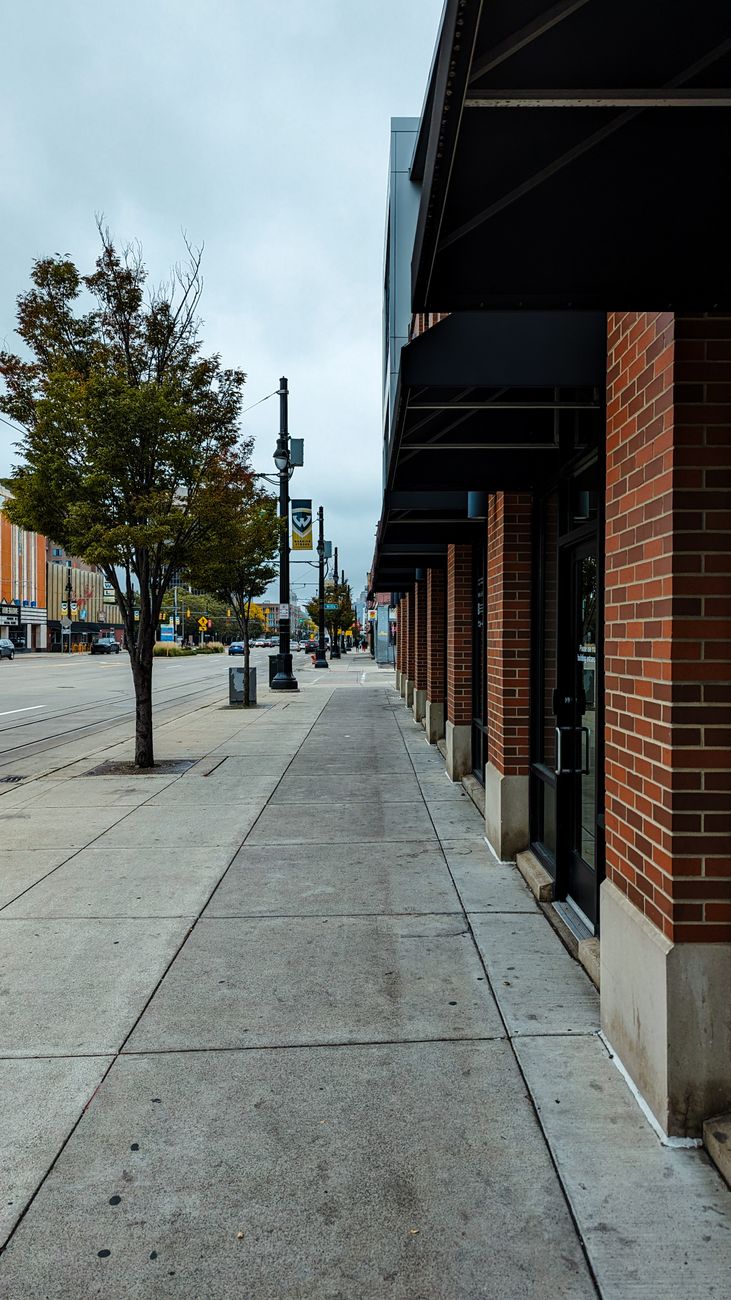
    I work in downtown St. Paul, so an easy commute matters a lot to me. It matters just as much for Jason, who is deaf and has low vision. Living downtown means he can navigate the community easily, with everything he needs close and reachable. If we moved further out toward the edges of Minneapolis, ease of getting around could become a real problem for both of us.

    One thing I don’t think about often enough until winter hits: downtown is mostly businesses and apartment buildings, and snow removal here is prompt. That’s not always true further out, where clearing sidewalks often falls on individual residents who have jobs and lives of their own and aren’t always quick about it. For someone using a wheelchair, an unshoveled sidewalk isn’t an inconvenience. It’s a wall.

    Jason has told me that moving out to the suburbs or the outskirts of Minneapolis would likely leave him feeling isolated, since there just isn’t much around to access on his own. He’d also probably have to give up his job at U.S. Bank Stadium since the commute and the late-night hours would be too hard to manage. Right now, when either of us works a shift there, it’s a six block walk. Simple, manageable, doable in almost any weather. Move away from the downtown core, and that gets a lot harder for both of us. Honestly, if we left downtown, I’d almost certainly give up that job myself, though since I only work it once every three or four months, that loss would sting a lot less for me than it would for him.

    Looking Ahead: Driving and Parking

    There’s one more piece to this that’s been on my mind lately, and it’s a little different from everything above because it’s not about moving. It’s about staying and what needs to change if I do.

    I’m currently in the process of getting my driver’s license, and down the road, I’m looking at getting a wheelchair accessible van. That’s exciting, but it’s also made me start paying a lot closer attention to something I hadn’t thought much about before: parking.

    At my current building, I’ve noticed people parking in the access aisle, the striped-off space next to an accessible spot that’s supposed to stay clear so a wheelchair user has room to load and unload. Every so often, someone parks in the handicap spot itself without a permit. Right now that’s an annoyance. Once I actually own an accessible van, it stops being an annoyance and becomes a real problem, because that access aisle is the difference between being able to get my chair in and out of the vehicle or not.

    I honestly don’t know yet what the parking garage situation looks like for accessible spots, how many there are, how they’re monitored, or how seriously it’s enforced. As far as I can tell, the garage doesn’t actually have any handicap parking at all, which means that’s a separate conversation I’ll need to have with management.

    I have already brought up the access aisle issue with management, and I haven’t heard back. It’s still happening. Cars parked in the aisle, no response, no fix. That’s frustrating on its own, and it doesn’t exactly build confidence about how a future conversation about garage accessibility would go. This has genuinely become a factor in the “stay or go” decision, right alongside accessibility, cost, and location.

    It also ties back into the location question from earlier. If we ended up moving to the outer ring of Minneapolis or out to the suburbs, I’d likely become a lot more reliant on driving myself and on Jason driving, instead of being able to walk or roll most places the way we do now. Which means parking access, both at home and everywhere else we’d need to go, would matter even more than it already does.

    Necessities vs. Nice-to-Haves

    There’s another layer to all of this that I keep turning over in my head: the difference between what I need and what I want.

    Wheelchair accessibility isn’t negotiable. That one’s not up for debate. But beyond that baseline, I have a whole list of “would be nice” items. A second bedroom. A washer and dryer in the unit instead of a shared laundry room. A balcony or a patio. Those are perks, not necessities, and I know it.

    The problem is that most wheelchair accessible units aren’t going to check all of those boxes. Accessible units are already a small slice of what’s out there, so once you start layering on extra wants, that slice gets even smaller. Which raises a real question: would I be willing to give up some of those nice-to-haves for the sake of finding something that’s actually wheelchair accessible? Almost certainly, yes.

    But it also raises a harder question, one I don’t love sitting with: would I be willing to compromise on some of the necessities instead? Would I settle for a unit that’s only partially accessible if it meant I finally got a balcony or an in-unit washer? I don’t think I have an answer to that yet, and honestly, I’m not sure I want to find out the hard way.

    Lots of Questions, Not Many Answers

    So we’re kind of stuck. I think what we need to do is head into winter and really sit down to figure things out. Do we actually want to move? Can we afford to? If we did move, where would we even go, and what would we be looking for? Would we be willing to give up some of the roughly 750 square feet we have now for a better location or better features?

    I don’t have this figured out yet. But I do know that whatever we decide, the search itself is going to take a lot more calls, a lot more questions, and a lot more patience than it would for most people. For us, “accessible” and “livable” and “close to everything” all have to line up at once, and that’s a much smaller circle than most renters ever have to think about.

    Have You Been Through This?

    I’d love to know I’m not the only one wrestling with this. If you use a wheelchair or another mobility aid, how did you go about finding your current place? Did you have a system for vetting units before wasting time on a tour that turned out to be a dead end? Are there resources, websites, or local organizations that actually helped you cut through the guesswork?

    I know accessible housing resources exist out there, but I haven’t found one yet that felt built for someone in my exact situation, balancing accessibility, affordability, and location all at once. If you’ve found something that worked for you, or if you’re in the middle of this same search right now, I’d genuinely like to hear about it. Drop a comment or reach out. Let’s compare notes.
  • The Rain That Wouldn’t Stop

    The Rain That Wouldn’t Stop

    August 18 has come again.

    For some people, that is just a date on the calendar. For me, it is the moment my world changed. This post lives honestly in the space of grief, so if that’s not where you are today, save it for another time. No pressure.

    You would think that after four years of him no longer physically being here, the pain of his passing would lessen or diminish. You’d be somewhat right. Not every day hurts. Not every moment hurts like it did in the beginning. But there are moments, and there are days, like today, where it is extremely painful, almost impossible, to get through.

    I look at his pictures everywhere, and that hole in my heart where he was starts bleeding anew with pain. I find myself almost unable to breathe with the amount of heartache that I feel.

    The day of his passing is one I will never forget, no matter how much I wish. It is a vivid memory in my brain. It’s funny, and it’s not, how the most painful moments in your life become the most vivid ones. You can picture where you were. You can picture what you were doing. You can almost picture in your mind what you were thinking and what you were feeling.

    The Phone Call

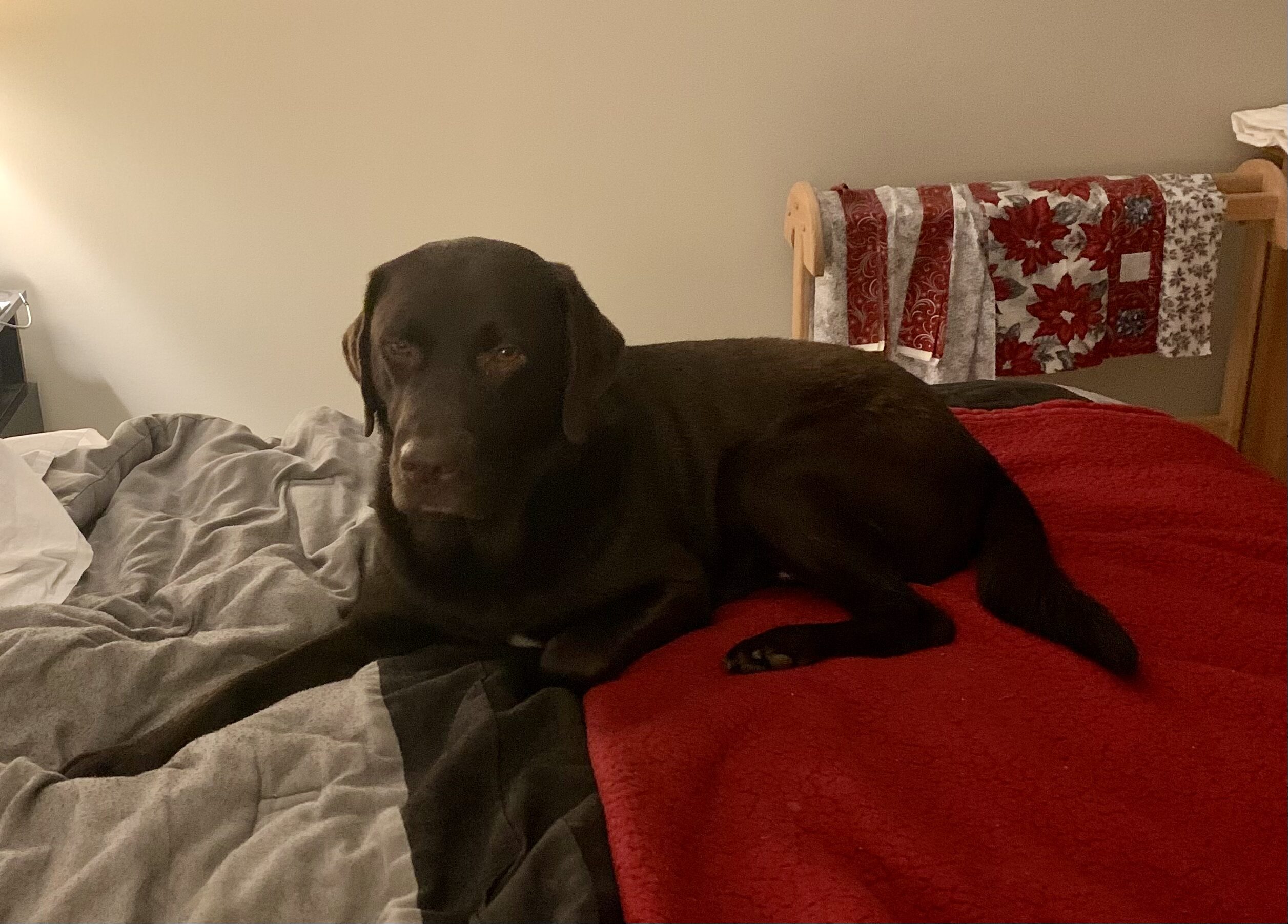
    I was going camping with a group of friends. Dempsey was staying back with other friends, because where we were camping there could possibly be bears, and I didn’t know how the bears would react to Dempsey, or how Dempsey would react to the bears. So I thought it was best that Dempsey stay in the Twin Cities, where I knew he was safe.

    That day was cloudy and rainy. As we drove north, it seemed like the rain would never stop.

    As we were getting close to the campsite, I got a call. It was from my aunt. I found it a little odd that she was calling me. I vaguely remember that phone call. Over the last few years, she’s filled in the blanks a little bit.

    I do remember not believing her. He couldn’t be gone. He was only six years old. He’d had surgery a little over a year before to install a pacemaker, and the doctor had assured me he would have as normal and happy a life as you could have with a pacemaker. There were no symptoms, no signs, that he was in pain or distress. He was one of those dogs that just kept going, just kept moving, despite everything life threw at him. He was one of those dogs that, I guess, was just gonna go until he couldn’t anymore.

    I remember getting off the phone, and my friend who was driving looked at me and could tell something was wrong. I told them. We made it to the campsite. The rain stopped just long enough for my friend to get out and meet up with our other friends, and they told everyone what happened. I sat in the car by myself and took that moment to cry. To scream.

    When my friend came back, I took a deep breath. I wiped my eyes and got out of the car. Most of our crew had already shown up, and we gathered under an awning because it was sprinkling. We chatted. Then, matter-of-factly, we told them Dempsey had died. Straight to the point: no sugarcoating, no emotion, just that he had died.

    The Weekend I Couldn’t Stay

    I didn’t know what I wanted to do. I was four hours from home. My friends helped me put up my tent, but I didn’t have the heart to set it up like I normally did, so it was bare — just my air mattress and my sleeping bag.

    I didn’t even know if I wanted to stay the whole weekend. My mind was whirling in a hundred different directions. Do I stay? Do I go? My friends completely understood whatever decision I made, and they told me they’d support me however they could.

    I don’t remember much from that night. I remember talking. I remember being tired and just wanting to go to bed. I got in my tent and laid there, and I quietly cried, quietly let my breaking heart bleed out onto the floor of my tent.

    I couldn’t stay. I needed to go home.

    Thankfully, my friend who was watching Dempsey had taken him to the University of Minnesota, even though there was nothing they could do to help him — he had already passed. They offered to store his remains until I could come in and figure out next steps. My friend told me I had time, that I didn’t need to go right away, but that I should go soon, because as time goes on, bodies break down no matter how well they’re stored. That’s when I decided to go home.

    I texted my aunt, who texted one of my other friends, and the three of us coordinated. My friend agreed to get up early the next morning, drive the four hours to pick me up, and then drive the four hours back to the Twin Cities.

    You’d think I would’ve slept. I didn’t — not a wink. I was up all night, my head spinning, my heart breaking. I tried. I just couldn’t.

    The next morning it was still raining. I don’t know if it had never stopped, or if it had started up again. My camping friends are amazing. They helped me break down my wet tent, and we stuffed it into a bag.

    My friend showed up, we loaded everything into the car, and we drove. I don’t remember what was said. I don’t remember the conversation. I don’t even remember if we stopped for breakfast, though I don’t think we did. Rain, all the way back to the Twin Cities. Got home. Dropped off my stuff.

    Saying Goodbye

    I’d been in touch with another friend, Dempsey’s former trainer, and she offered to drive me to the University of Minnesota so I could see Dempsey and make proper arrangements. She pulled up, and it was still raining.

    We drove. In the rain.

    Again, like every other conversation that weekend, I don’t remember what was said.

    We got to the university. I told them who I was and why I was there. I’m thankful they had a room for us to sit in. They brought Dempsey in on a wagon, covered up to his head with a blanket. Seeing him lying there, my heart broke all over again.

    I paused for a minute. Some part of me wondered if he was just sleeping, if he was going to wake up and this would turn out to be a cruel joke. We sat there in silence. I touched his head. It was cold. He wasn’t coming back. I reached under the blanket and held his paw.

    Four Years Later

    I don’t tell this story to make you cry. Heck, I don’t tell it to make myself cry, even though that’s what I’m doing as I write this.

    I write it as a kind of catharsis — a way to get feelings out that I’ve held onto these past four years. Often, when a loved one, or a loved pet, passes, it feels hard to tell others what you’re feeling or how you felt in that moment, especially once time has passed and everyone else has “moved on.” But you still live in that grief, in those moments, on the days when it’s fresh. When that wound opens back up, you’re in it, even while others aren’t.

    Don’t feel sorry for me. Don’t feel sorry for Dempsey. Know that he was loved beyond measure, and that I tell these stories and share these memories so that he lives on. I’m a strong believer that as long as someone is remembered, as long as someone is talked about, as long as their name is still spoken, they are never, ever truly gone. They stay a part of you, and a part of everyone who knew them, or who’s only ever heard the stories.

    I strongly believe that 10 years, 25 years, heck, maybe even 50 years down the road, someone will have a moment, and they’ll remember Dempsey, and they’ll smile.

    I had Janis Ian’s “Days Like These” on repeat while I wrote this. It’s a song about waiting on rain that won’t come, about the toll certain years take on a person, and about choosing, in the end, to make peace with the hard days rather than be undone by them. It felt like the right song for today. Maybe it always will be.


    If you want the fuller picture of who Dempsey was, Dempsey: Where It All Began is where that story starts. And if this stirred up something tender, Wondering Who Would They Be sits in that same space.

    Resources

    If you’re navigating grief and could use some support, a few places to start:

    • Association for Pet Loss and Bereavement: Online support groups and resources specifically for people grieving the loss of a pet, including scheduled chat support groups.
    • Pet Loss Support Page: A long-running online community with support resources, memorial pages, and a Monday evening chat group for those in grief.
    • SAMHSA National Helpline: Free, confidential mental health and emotional distress support, available 24 hours a day, 7 days a week.

    Have you ever lost someone or something suddenly, without warning? I’d love to hear about it in the comments, if you’re up for sharing.

  • An Adventure in Getting Home

    An Adventure in Getting Home

    The commute home was an adventure, and it started before I even left work.

    Paper Over the Button

    Just this morning, my office installed an automatic door, so all I have to do is push a button to get in and out. Well, almost. When they installed it, they told me that for now I’d have to push the button and turn the handle, because the button isn’t set up to work with our security lock yet. The door won’t unlatch automatically, so I have to trigger the latch manually.

    I don’t know what happened, but on my way out I discovered someone had put a piece of paper over the button no note, no explanation. That made it extremely difficult for Surley to push it, so I had to do it myself. If it’s still there tomorrow morning, I’m taking a picture and sending it to my supervisor and our ADA specialist to investigate.

    A Good Conversation at the Bus Stop

    While I was waiting for the bus, I had a nice chat with a gentleman who trained service dogs while he was in prison. Can Do Canines, the organization I got my service dogs through, has used prisons in both Minnesota and Wisconsin to train their dogs. He didn’t say where he trained or which dogs, but it was great to hear about a formerly incarcerated person having a life-altering experience working with service dogs.

    The Stroller in the ADA Seating

    The bus was a little crowded when we got on, and there was a stroller parked in the ADA seating across from me. Unfortunately, Metro Transit allows this instead of asking the parent to fold up the stroller and hold their child. I truly believe this is a disservice to everyone who needs those dedicated spaces. Being a mother doesn’t make you more special or more deserving of seating specifically designated for people with disabilities or limited mobility.

    The wheelchair seating on Metro Transit buses is a little cramped, and Surley is a larger dog, so keeping him fully inside the designated ADA area is sometimes a challenge. He’ll often lie in the aisle, and I move him as needed when people have to get through. Usually this is not a big deal. This time, though, the mom across from me was throwing a hissy fit because she thought Surley was bumping into her stroller. I did everything I could to keep him away from it, and from where I sat he may have been brushing the stroller, but he was clearly not bumping it. She was getting loud and upset, and I was thankful we were getting off at the next stop because if she had laid a hand on him, I would have immediately called the police. In the state of Minnesota, it is a crime to harm a service dog or interfere with its ability to do its job (Minn. Stat. § 343.21, subd. 8a) — and depending on the harm done, it can be charged as a felony.

    The Walk Home

    The adventure continued on the walk home from the bus stop. Surley had to poop, and he has a talent for picking the wrong time and place — this time, right in front of a nearby apartment building’s parking garage entrance. I try to be a good dog owner and clean up after him, but as I was picking it up, a car pulled up trying to get into the garage. I moved out of the way, and then a second car came out of the garage and ran right over the poop. Oh well. I tried to be a good person.

    We were just feet from our building when a man came down the sidewalk with his dog — WITHOUT a leash. I pulled Surley to the edge of the sidewalk and put myself between him and the other dog. Even frazzled from the events of the walk home, I kept my calm and informed the man that his dog needed to be on a leash. He didn’t seem to care. But I knew that if his dog came after Surley, I was going to run it over with all 400 pounds of my wheelchair. And Minnesota law is on my side here: if you let your dog run uncontrolled and it harms a service animal, that’s a crime (Minn. Stat. § 609.226, subd. 4) — and the court must order you to pay restitution covering not just the vet bills, but the handler’s lost income, transportation, temporary replacement services, and even the cost of replacing or retraining the dog.

    The rest of the evening, thankfully, was uneventful.

    Your Turn

    Service dog handlers: have you ever had to defend your dog’s space — on the bus, on the sidewalk, or anywhere else? And if you don’t use a service dog, did you know these protections existed? Tell me about it in the comments — I’d love to hear how you’ve handled these moments.