Month: November 2025

  • A Thanksgiving Day’s Journey

    A Thanksgiving Day’s Journey

    The Thanksgiving day is winding down. The last traces of warmth linger in my home. I find myself reflecting on everything today held. There’s a special kind of quiet at the end of a holiday. It is the soft exhale after the cooking, the conversations, the memories, and the moments of stillness. And in that quiet, gratitude has a way of rising to the surface.

    Today felt like another stretch of my journey. It was another few miles traveled down a road. I’m still learning to appreciate its twists and turns. I’ve always believed that life is a path we walk or, in my case, wheel down without a perfect map. We discover the route only as we go. Sometimes we glide forward with ease, and other times, the road tests us. Detours appear when we least expect them—some difficult, some joyful, all of them meaningful.

    And today, as I look back, I’m reminded of just how much I have to be grateful for. This journey has been winding and unpredictable.

    This morning began with Jason, whose presence is one of my greatest blessings. His support and companionship anchor me, especially on the days when the road feels uneven. I’m thankful for him every single day, but today I felt that gratitude a little deeper.

    Surley, my incredible service dog, was by my side as always—calm, loyal, and wonderfully intuitive. He doesn’t just help me navigate the world; he shares the journey with me. Watching him relax today between tasks reminded me of how much trust and love we share.

    I cooked a simple Thanksgiving dinner, and even in its simplicity, it felt like an accomplishment worth celebrating. There was something comforting in preparing food for myself and Jason, something grounding in the warmth of the kitchen. It reminded me that gratitude lives in small things just as much as grand ones.

    I sat in my apartment. It’s the same building I’ve been fortunate to call home for more than 15 years. I felt an immense wave of appreciation for the stability and familiarity around me. Home isn’t just a place; it’s a feeling, a continuity in a world that is always shifting.

    Throughout the day, I found myself thinking of my friends and family. We may not always see each other or talk as often as my heart wishes. However, the connection is still there. It is steady and meaningful. Gratitude doesn’t ask for perfection; it asks for presence, even if that presence comes in quiet ways.

    And today, I was especially thankful for my health. I appreciate the good days. I am grateful for the privilege of having access to doctors and care when the days are harder. It’s something I never take for granted.

    Most of all, as the day draws to a close, I’m grateful. I am thankful for the opportunity to continue living my true, authentic life. This journey has taken me through smooth stretches and sharp detours alike, but each moment has shaped me. Every day teaches me something new—about myself, about others, about what it means to grow.

    We don’t know how long our road is or where it ultimately leads. But today reminded me to treasure each mile. To honor the people and companions who travel beside me. To appreciate the stillness and the chaos, the clarity and the confusion. To celebrate every moment I’m lucky enough to live authentically and fully.

    And tonight, I’m grateful that you are here—sharing a part of this journey with me.

    Happy Thanksgiving.

    May the road ahead bring you gratitude, warmth, and the quiet magic of unfolding possibilities.
  • When the Season Shifts

    When the Season Shifts

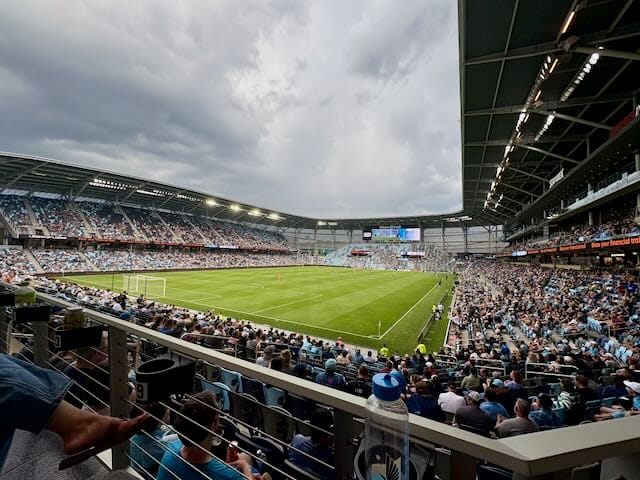
    When I first became a soccer fan, I never thought much about the weather. It was just part of the experience. The game and I have evolved. I’ve started thinking about how changing seasons shape what accessibility really means for fans like me. Changing bodies also influences this meaning.

    I’ve been reading about Major League Soccer’s proposed move to a fall–spring schedule. I understand the reasoning behind it. Still, I can’t help but think about how it will change the fan experience. This is especially true for those of us who feel the seasons differently than we used to.

    When I first became a fan back in 2015, the cold didn’t bother me. I was just excited to be there to feel part of something alive and electric. I remember going to a game one chilly October and bringing one of my aunts along. She thought I “looked cold,” even though I swore I was fine. By halftime, she’d bought me a hot chocolate, a hat, and maybe even a sweatshirt.

    I still remember that small act of care. The steam rose from the cup. Her laughter cut through the cold air. I didn’t think much of it then. Yet, looking back, I realize it was one of those simple, human moments that stay with you.

    A couple of years later, at our first home game in MLS, the weather turned on us fast. Heavy snow fell throughout the match, thick, wet flakes that clung to your eyelashes and soaked your gloves. The snow was coming down so fast that they had to use leaf blowers to clear the lines.

    My toes went numb halfway through, but it didn’t matter. The atmosphere was electric, the crowd united in equal parts misery and joy. We were there together, and that was enough.

    Those were different times. I was a different person. I was more willing to push through the discomfort just to be part of the moment.

    These days, I’ve noticed that the same weather affects me differently. I attend fewer matches as temperatures drop, and this year I didn’t opt in for playoff tickets at all. It’s not that my passion for the team has faded far from it. It’s just that Minnesota’s fall weather is unpredictable. This unpredictability makes it hard to plan. I find it difficult to feel confident that I’ll be comfortable or safe. The wind cuts a little deeper now. The cold lingers a little longer.

    Supporting a team with an outdoor stadium like Allianz Field comes with that territory. Still, it’s made me think more about what “accessibility” really means. We often talk about it in physical terms, ramps, seating, transportation, and those things matter deeply.

    Accessibility can also mean something softer, more personal: being capable of participating fully without discomfort, fear, or exhaustion. Weather affects this aspect, particularly for fans with mobility challenges. It impacts those with chronic pain or other health conditions, making the cold more than just an inconvenience.

    For some fans, colder games are part of the charm. They enjoy layers of scarves and hands wrapped around coffee cups. There is a sense of endurance that becomes almost a badge of honor. But for others, it’s not that simple. The cold can turn joy into endurance, and that can change the whole experience.

    As I’ve grown and my needs have shifted, I’ve noticed some changes. I’ve started to see how sports, something built on togetherness, can sometimes overlook the quiet ways inclusion matters.

    The fan experience isn’t just about ticket sales. It isn’t solely about crowd energy either. It’s about whether everyone can share in those moments equally. That’s true for people of all kinds.

    This includes those experiencing changes due to age. It also includes people with disabilities, sensory needs, or simply changing bodies who experience the world differently than before. Accessibility isn’t one-size-fits-all, and weather adds another layer to that reality.

    I still love this sport, this team, and the community it builds. Soccer has been a steady thread through so many seasons of my life, literally and figuratively. But my relationship to it has evolved as I have. The same stands that once made me feel unstoppable now remind me to listen to my body. To respect its limits. To show up in ways that make sense for where I am now.

    If MLS does move to a fall–spring schedule, I hope clubs and stadiums will think creatively. They should consider what that means for all fans.

    Maybe that looks like expanding covered seating in some venues. It could also mean improving heat access. Or it could simply involve offering more understanding around accessibility options in cold weather. Sometimes inclusion begins with small acts. It could be a staff member who notices. It might be a space to warm up. Or it could be the willingness to ask, “What do you need to feel comfortable here?”

    For many of us, being a fan isn’t about braving the elements anymore. It’s about connection: to the game, to the people around us, and to ourselves. It’s about finding warmth in community, even when the temperature drops.

    Seasons shift, people change, and that’s okay. What matters most is finding warmth in the stands. We need warmth in the community. It is essential in the spaces that still make us feel like we belong.

  • Thirty-Three Years Later

    Thirty-Three Years Later

    Disclaimer: What follows in this post contains my thoughts and my recollection of childhood memories. They are 33 years old and may not be the full truth, but they are my truth.

    I have written about death and loss before. Grief can reshape us. It can bring love and pain together in unexpected ways.

    This reflection feels different. This isn’t just about loss. It’s about understanding what that first loss meant. It’s also about how my relationship with it has changed over time.

    Thirty-three years ago, I lost my first grandparent. My grandpa, Garfield Dokken, passed away suddenly. It’s interesting how distinctly I remember that life event. Maybe it’s because it was my first experience with death as a child. Maybe it’s because of other reasons.

    The Day I Learned About Death

    November 3, 1992

    That night is etched in my mind.

    I had undergone a selective dorsal rhizotomy a surgery meant to help reduce the tightness in my legs. It was an intense surgery, and I was still sore, tired, and trying to heal.

    I remember the phone ringing. My mom was staying with me at the hospital so my mom answered it. My mom was talking on the phone. I don’t recall who she was speaking to. I remember her face when she hung up. She turned to me and told me that my grandpa had passed away.

    I don’t remember what I said after she told me.

    My parents asked the doctors if I could go home for the funeral, but they strongly advised against it. I was still recovering.

    My parents suggested that I write him a note something my dad could tuck into his pocket. So I did.

    When you’re young, you don’t really understand death. You don’t grasp what it means when someone won’t walk through the door again or call you on the phone. I didn’t know what it truly meant that he was gone.

    After grandpa passed this picture was above my hospital bed.

    “When I was a child, I spoke like a child, I thought like a child, I reasoned like a child.
    When I became a man, I gave up childish ways.”

    1 Corinthians 13:11

    Growing into Grief

    As I was writing this I thought of the verse from 1 Corinthians. As a child, I grieved as a child. For a long time, I carried his passing in a unique way. I saw it through the eyes of the boy in that hospital bed.

    That chapter of my life always felt unfinished, the story incomplete. There was a recording of the funeral service that exists. Still, I don’t believe I have ever sat down to watch the whole thing. I don’t know if I would even want to watch it.

    It took decades to realize that I needed to grieve differently, not to forget, but to forgive.

    To forgive the child who couldn’t yet understand.

    After years of therapy and reflection, I’ve learned to process loss with more compassion especially toward my younger self.

    I’m not perfect at it, but I’m getting better everyday.

    Writing Allows Grief to Evolve

    In, “Passengers on the Journey”, I wrote about how the people we love are like fellow travelers. Some ride with us longer than others, but all leave an imprint on our path. My grandpa was one of my first fellow travelers to step off the bus early in my life. I didn’t understand it then, but he helped me see that love and loss are part of the same journey.

    In “Holding Onto Love”, I wrote about how love doesn’t disappear when someone dies. It transforms. It changes shape. I think that’s what I’ve come to understand now, too. My love for my grandpa has transformed. It’s quieter, steadier, woven into who I am rather than something I reach for.

    Questions Without Answers

    Now, as an adult, I find myself wondering:
    What would he think of the person I’ve become?
    What would he think of the life I am leading?
    What would he think of my hair, my name, my humor?

    Growing up, I often heard that question used as a moral compass:

    “What would your grandpa think if they saw that report card?”

    “What would he say about your behavior?”

    It’s something people say to motivate, to guide, or to remind us to be our best. But sometimes, it can have the opposite effect.

    Instead of inspiring, it can carry shame. This is especially true when it’s tied to someone we loved deeply and would never want to disappoint.

    I don’t believe those words are spoken with bad intentions.

    Still, they overlook something important: the people we invoke in those moments aren’t here to speak for themselves.

    We can’t know what they would think. We can’t know how they might have grown. We can’t know how their love for us might have changed over time.

    Love evolves. People do too. Love remains after loss. It deserves to be carried forward. It should not be used as a measure of guilt or worth.

    Closing Reflections

    Thirty-three years have passed since that night in the hospital. Yet, in some ways, I’m still that child learning what it means to say goodbye. The difference now is that I can hold both the pain and the gratitude together. I can look back and see how that moment shaped me, not just in loss, but in love.

    In Passengers on the Journey, I wrote about the people we love. They travel alongside us for a time. They leave their imprint even after they’ve stepped off the bus. And in Holding Onto Love, I reflected on how love doesn’t fade when someone dies. It changes shape. It becomes part of who we are.

    That’s what I feel now. My grandpa is no longer a passenger beside me, but his love remains part of the path beneath my wheels. His laughter, his kindness, his presence—they continue to move with me in quiet, unseen ways.

    Grief shows up differently for all of us. Sometimes loud and raw, sometimes quiet and unseen. It doesn’t leave us; it transforms. It teaches us to carry memories with gentleness. It teaches us to live in a way that honors those who came before us.

    So on this anniversary, I don’t just remember his passing. I remember his life, his laughter, and the lessons that continue to guide me.

    And in that remembering, I find peace.

  • Today

    Today

    There are moments when words come quietly, unexpectedly. This piece came to me on a day when I was reflecting on loss.

    I thought about those who have loved me. I also thought about those I’ve loved and lost. Grief is never something we finish; it becomes a part of who we are. But within that grief, there’s also growth.

    Each day, I try to hold space for both. I miss those who are gone. I become a little stronger, a little more grounded, and a little more myself.

    Today

    Today, I grieve the passing of those who have loved me and I them.

    Today, I grow into a better person through growth and understanding.

    Today, I rise to greet the dawn.

    Today, I am stronger than I was yesterday.

    Each of us has our own version of today—a place where remembrance meets renewal. I invite you to take a moment to reflect: what does today mean for you?