Month: October 2025

  • Embracing Change, Creativity, and Consistency: A Personal Reflection

    Embracing Change, Creativity, and Consistency: A Personal Reflection

    Ever take one of those personality quizzes and think, “Huh…that’s oddly precise”? 

    I recently did. It got me thinking about how I tick. It also made me ponder on how I work, collaborate, and navigate change.

    Turns out, I thrive on new ideas and variety. Give me a fresh challenge or a different way of doing something, and I’m all in. I like having a plan, sure, but I also know when it’s time to pivot and go with the flow. That balance between structure and spontaneity is what keeps projects moving without killing the fun.

    I’m a private person by nature, loyal to a fault once someone earns my trust. I try to be flexible and cooperative, but I’ll stand my ground when something really matters. Being consistent and reliable has helped me stay steady. This steadiness persists even when everything around me feels chaotic. It is especially helpful when change affects others more.

    One big takeaway?

    Not everyone moves at my pace when it comes to change—and that’s okay.

    My job, whether in a team or leading a project, is to help others see the bigger picture. I support them through transitions. I also think about what works and what doesn’t. Reflection is the secret sauce that turns lessons into growth.

    At the end of the day, knowing yourself isn’t just a buzzword it’s a roadmap.

    For me, it means staying curious, dependable, and reflective. I use those traits to make work, and life, a little smoother for myself and the people around me.

  • What If Columbus Never Found America?

    What If Columbus Never Found America?

    Reflecting on imagination, history, and the worlds that might have been.

    Today is Columbus Day or, as many now call it, Indigenous Peoples’ Day. Every year, this day reminds me how much history depends on who’s telling the story. It also makes me think about which voices have been left out.

    As a writer, I find myself wondering: what if Columbus had never “discovered” America? What if the Europeans had never crossed the ocean at all? How would North America appear in 2025 if it were still solely inhabited by the Indigenous peoples? These people lived here for millennia. How would Europe appear if it had never gone west?

    I imagine a North America. Ancient trade routes and alliances evolved into something like modern nations. They were guided by very different values. Forests might still stand where highways now run. Rivers might remain clean and central to community life. Cities, if they existed, might be built around natural cycles. They would be shaped by harmony with the land rather than dominance over it. Technology could exist. It might be woven from a different kind of intelligence. This intelligence values balance over speed. It prioritizes sustainability over conquest.

    And Europe? Maybe it would have turned inward instead of outward. Without the wealth and resources drawn from colonization, kingdoms might have fallen or transformed sooner. The Renaissance might have taken a different shape. Europe’s hunger for expansion could have redirected east. This change might have led to deeper ties or conflicts with Asia and Africa. Industrialization might have come later, or not at all. My ancestors from Norway and Sweden might have stayed as farmers. They might have tended the same land for generations. They might have not ventured west to settle Minnesota.

    It’s all speculation, of course — a story that can’t be told without imagination. But as fascinating as these possibilities are, I have to remind myself: this isn’t my story to tell alone. I’m descended from the people who came here, not from those who were already here. The truth and texture of that alternate America would belong to its original storytellers.

    Maybe those stories already exist. If they do, I’d love to read them — and if anyone knows of them, please share in the comments. And if they don’t, maybe it’s not my place to start them. I wouldn’t know where or how to begin without the voices that truly know what might have been.

    Still, I’d love to hear what others think. How do you think North America might look today if Columbus had never made that voyage? What changes do you imagine for Europe? What kind of world do you picture?

    Until then, I’ll keep that question close. It serves not as a fantasy, but as a reminder of how one voyage reshaped the world. It also reflects on how different it all might have been if the winds had blown another way.

  • The Name Between the Lines

    The Name Between the Lines

    Becoming Myself, One Letter at a Time

    There’s a strange gravity in a name.

    It’s the first thing we’re given, often before we take our first breath. Names come with stories, family histories, hopes, even inside jokes. They can be reminders of who we come from, or quiet promises of who someone hoped we’d become.

    Sometimes, we grow into them. Sometimes, we grow around them. And sometimes, if we’re really lucky, we realize we need a name that fits where we’ve been. If we’re really brave, we choose a name that fits where we’re going.

    That’s what this post is about.

    I’ve always liked my middle name.

    Allen. It’s simple, unassuming, it’s always felt right. It carries a softness, a steadiness that felt like home.

    It’s not loud or dramatic. Allen felt like a foundation, something I can rest on. And in ways I couldn’t fully name at the time, it felt like me.

    I’ve realized something interesting. I’m not the only one in my family who felt this pull toward a middle name. My grandpa Garfield was not actually born Garfield at all. His given name was Oscar Garfield Dokken.

    From what I’ve pieced together in conversations with family, he chose to go by Garfield. He already had an uncle named Oscar and probably did not want the two of them to be confused.

    That makes perfect sense. When I was a kid, I had a friend named Levi. When our families got together, there were two Levis in the same space. Every time someone called out “Levi,” there was that moment of uncertainty: which one? Looking back, I think that would’ve been a perfect time for me to lean into Allen.

    Maybe Grandpa understood something I’m only just beginning to. Sometimes a name is about more than identity. It’s about clarity, belonging, and creating space for yourself.

    That’s how I landed on Alyn. I know it’s a different spelling from my true middle name. Then again, I am a little different, so my name should be too.

    It’s not a world apart from who I’ve been it’s just… closer to who I am. A little softer around the edges. A little more neutral, a little more fluid. It’s Allen with a twist. It lets me breathe.

    I haven’t decided yet if I’ll change it legally. For now, this isn’t about paperwork or government forms it’s about alignment. About answering to something that feels a little more like me. About hearing a name and not flinching because it doesn’t quite match the reflection I see in my mind.

    Of course, it’s not that simple.

    Names carry meaning, not just for us, but for the people who gave them to us. For family, it isn’t just a label it’s something they chose with care. It could be tied to memory, a legacy and love.

    I understand that. I honor that. Part of me worries that in choosing something new, I’ll seem ungrateful, or like I’m rejecting something sacred.

    But here’s what I want those people to know: I’m not erasing anything. I’m not undoing the name I was given. I’m just building on it. Adding a chapter. Letting myself evolve.

    I’m still me. Still your kid. Still your friend. Still your cousin, your sibling, your grandchild. Just… more me-shaped now.

    Trying on Allyn, Becoming Alyn

    I started experimenting with a small change spelling Allen with a y. “Allyn.” It looked different, felt different. Like trying on a jacket that just fits better.

    At first, it was just between me and my therapist, then a small circle of friends. The more I used it, the more it felt like breathing freely.

    Later, I tried another variation: Alyn.

    I started using it with the same small group of friends. It became a place where I could test the waters. I could hear “Alyn” out loud or in text. I felt how it settled into my bones.

    Now, I’m taking that step into the light with this name. Like coming out in the LGBTQIA+ community, this takes a great amount of courage. To come out in this way, in a public setting, takes an even greater amount of courage.

    Some people will adjust quickly. Some might need time. And that’s okay. I’m still getting used to it too. Every time someone uses it, it feels like a little internal click, a quiet “yes.”

    And when people still call me Levi, I understand. That name still holds truth, too. This isn’t about perfection. It’s about becoming.

    When the Name Comes Out Before You Do

    Like I said earlier, I was only sharing it with a small group of people. I was changing it on my streaming platform profiles seeing how it looked to me. I wasn’t ready to share it beyond my small circle just yet. Then, about a few days ago, that changed.

    I recently made a small change on my iPhone. I updated my contact information to show the name I’d been trying on. What I didn’t realize was that Apple shares those changes with anyone in my contacts who also has an iPhone. Suddenly, my new name was in front of friends and family I hadn’t told yet.

    The questions came quickly: “Who’s Alyn?”

    In that instant, I was outed in a way I hadn’t planned. But maybe that’s the thing about names — sometimes they refuse to stay hidden. Sometimes they insist on being seen, even before we’re ready. And maybe that’s okay. Maybe a name knows the right time better than we do.

    A Name Doesn’t Have to Be Legal to Be Real

    There’s this idea that identity only counts when it comes with documentation. That it only matters once you’ve filled out a form, paid a fee, stood in line. But I don’t believe that.

    My name is real the moment I say, “this is what I want to be called.”

    It’s real the first time someone uses it gently. The first time someone says, “Hi Alyn.” The first time I say it in the mirror and smile.

    There’s power in naming yourself. Quiet, grounded, liberating power. And you don’t need permission to do it.

    If You’re Struggling With This…It’s Okay

    If you’re reading this and feeling a little unsettled, I see you. Maybe you’re someone who’s known me as Levi for a long time. Maybe you’re trying to make sense of how this fits with the person you thought you knew.

    I am still the person you know. I haven’t changed all that much from the person I was the last time we talked. I am just finally deciding how best to live my true authentic self.

    You don’t have to get it all at once. You don’t have to understand everything to respect it. You don’t have to stop loving who I was to also love who I’m becoming.

    Just keep showing up. Keep asking if you have questions. If you call me Levi, I won’t get upset. I’ll just gently remind you if you forget.

    For Me, For Now

    I don’t know exactly what’s ahead. Maybe I’ll legally change it someday like grandpa Garfield did. Then again maybe I won’t.

    What I do know is this: I get to choose. I get to be honest. And I get to love myself enough to ask for something that fits.

    So…hi. I’m Alyn.

    It’s nice to meet you (again).
  • Forever United: Reflections at Season’s End

    Forever United: Reflections at Season’s End

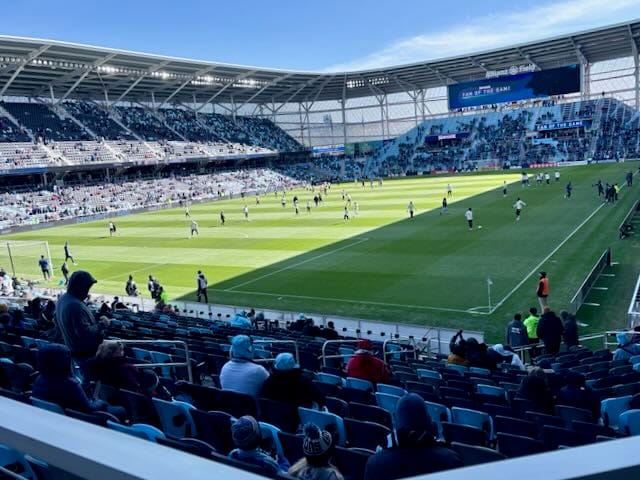
    As I write this, it’s the day after the final regular season home game. As the final whistle blew under the bright lights of Allianz Field, I felt that familiar mix of gratitude. I also felt nostalgia and quiet pride. The last regular season home game always carries a special weight. It’s more than just a match. It’s a celebration of everything we’ve shared over the months.

    Even though Minnesota United made it to the playoffs, I’ve decided not to get playoff tickets this year. The main reason is cost. I already struggle to afford the regular season. I am already making payments on my season tickets for the 2026 season. As much as I’d love to be there, I just couldn’t justify the extra expense.

    The other reason is the unpredictable Minnesota weather. As the years go on, I find myself less tolerant of the cold. We’ve been blessed with a warmer-than-usual fall. Still, there’s no guarantee it will stay that way. Sometimes practicality wins out, even when the heart wants otherwise.

    The Heart of the Game

    Soccer has always been more than just a game to me. It’s community, connection, and pure emotion wrapped into ninety minutes. Every season brings new stories, new faces, and new memories that stick with you long after the final whistle. This year was no different. I didn’t make it to as many matches as I’d hoped. Yet, the moments I did experience reminded me why I fell in love with this team. Those moments showed me what made this team special in the first place.

    Sometimes life has other plans. Sometimes disability makes things harder than they should be. There are days when energy fades, when logistics get tricky, when even passion has to wait its turn. But that’s okay. We do the best we can with what we’re given, and that’s something to be proud of too.

    The games I did make it to were nothing short of incredible. The roar of the crowd excites me. The rhythm of the chants energizes me. The pulse of the drums reminds me every time why I love this sport. There’s something almost sacred about being part of a crowd that breathes in unison. Hearts beat for the same goal. Voices rise together under a canopy of light.

    Surley’s Season

    Surley didn’t make it to as many games this year either — for a wide variety of reasons. There were days that were simply too cold, and others that were far too hot. Then there were nights like the last game, when they launched pyrotechnics. We’ve made a lot of progress on his fear of fireworks, and I didn’t want to risk a setback. Still, there were plenty of good moments. On a bright note, Surley did make an appearance on the jumbo screen this season. It was akin to what Dempsey did back in the day. A proud moment for both of us.

    Forever United

    Even when I can’t be there, my connection to this team doesn’t fade. It simply finds new ways to shine. Whether I’m watching from home, the love remains constant. It stays strong when I’m checking updates on my phone. I carry their spirit in my heart, unwavering.

    Because love for the game isn’t measured in seats filled or screens watched. It’s found in the stories we tell, the memories that linger, and the quiet hope that refuses to fade.

    It lives in the roar of the crowd that still echoes in your mind. You hear it in the rhythm of the chants you can’t help but hum. You feel the pride that stays with you long after the lights go out.

    Minnesota United is more than a soccer team. It’s a community and a shared heartbeat. It serves as a reminder that belonging can take many forms.

    Whether in the stands, at home, or cheering from the heart, I’ll always carry that unity with me.

    Go Minnesota United. Forever United. 💙🖤⚽

  • Government Shutdowns: Why Ordinary Americans Pay the Price While Congress Gets Paid

    Government Shutdowns: Why Ordinary Americans Pay the Price While Congress Gets Paid

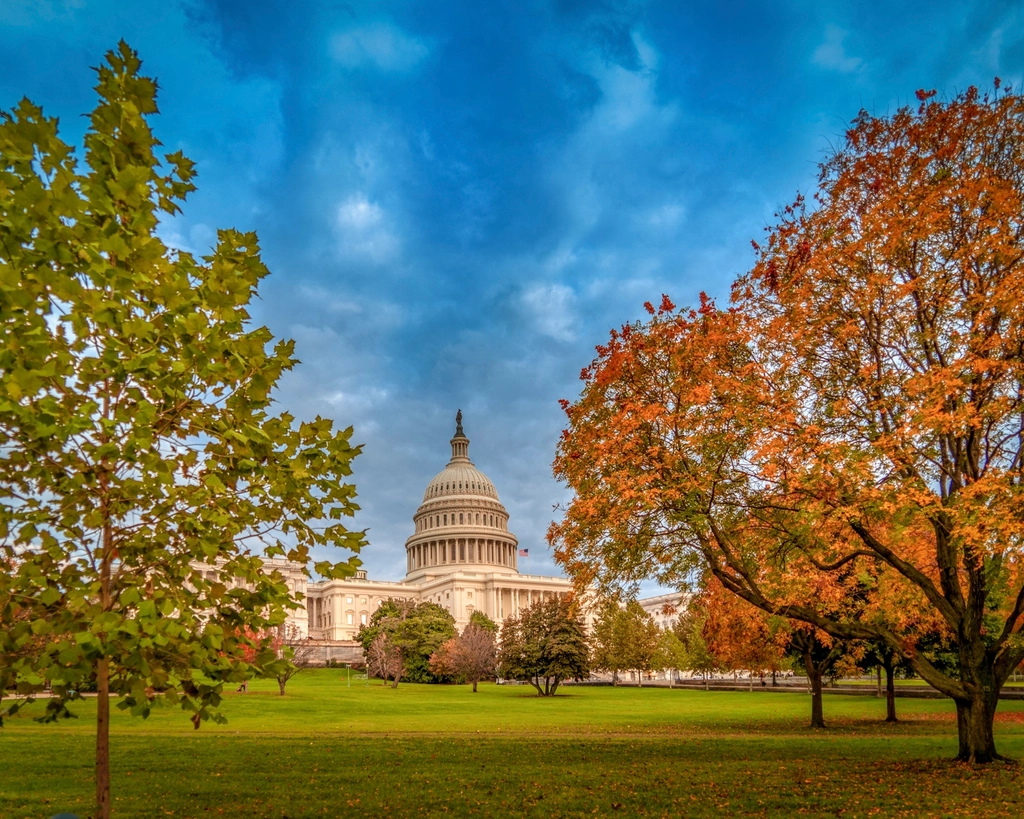
    The United States government has shut down. Again.

    This isn’t just political theater happening in Washington. When the government shuts down, real people suffer. Federal workers are furloughed without pay. Others are forced to show up and work for free, waiting and hoping that back pay eventually comes. Contractors may never see the money they lose. Families who rely on government programs are left with uncertainty.

    Meanwhile, Congress just shrugs and keeps collecting their paychecks.

    Here’s what gets me: if I don’t pay my rent, I lose my apartment. If I don’t pay the electric bill, the lights go out. But when Congress doesn’t pay the government’s bills? They get to stay in their cushy offices while the rest of the country pays the price.


    The Duct Tape of Democracy: What a Continuing Resolution Is

    When Congress can’t pass an actual budget, they often slap on a Continuing Resolution (CR). Think of it like duct tape: it keeps the machine running for a little while, but it’s no long-term fix.

    A CR basically says: “We’ll just keep spending at last year’s levels.” That means agencies can’t start new projects. They can’t adjust to new needs. They just sit in limbo, waiting for Congress to stop bickering. Sometimes multiple CRs get passed in a single year — kicking the can further down the road.

    And when even a CR doesn’t pass? That’s when the shutdown slams into place.

    A Quick History Lesson on Shutdowns

    Shutdowns weren’t always the rule. Before 1980, if Congress blew the deadline, agencies kept operating. That changed after Attorney General Benjamin Civiletti ruled that under the Antideficiency Act, funding gaps legally required shutdowns. Since then, they’ve become a recurring disaster.

    Some of the biggest shutdowns:

    • 1995–96 (Clinton vs. Gingrich): Lasted 21 days. About 800,000 workers furloughed. A standoff over spending cuts.
    • 2013 (Obama): Sixteen days. Sparked by the fight over the Affordable Care Act. Cost the economy an estimated $24 billion.
    • 2018–19 (Trump): The record-holder at 35 days. Caused by the border wall funding battle. About 800,000 workers went without pay; countless contractors never got their money back.
    • 2025 (Right Now): Once again, Congress blew the deadline. Here we are, living the same old nightmare.

    Every shutdown looks different. The fallout is predictable. Families end up at food banks because paychecks stopped. Veterans wait longer for benefits. Disability services are disrupted. Medical research is stalled. Parks are shuttered. Small businesses near federal facilities take losses they can’t recover.

    Who Gets Hurt the Most

    Shutdowns don’t hit everyone equally.

    Disabled people often feel the blow first. There are delays in Social Security claims. There are disruptions to medical research. Federal grants that keep vital services running can be paused.

    Veterans face delayed benefits. Families who rely on nutrition programs like WIC find themselves in limbo.

    For federal employees who live paycheck to paycheck, a missed paycheck can have serious consequences. Many of these employees are veterans or disabled. It can mean bills pile up, rent becomes overdue, or prescriptions are skipped. It’s not just numbers on a ledger. It’s human lives destabilized by political games.

    Why This Keeps Happening

    Here’s the kicker: shutdowns aren’t about money. The U.S. has the credit to pay its bills. Shutdowns are about politics — leaders holding the budget hostage to force fights over unrelated issues.

    It’s brinkmanship at the expense of ordinary people.

    A Better Way Forward

    It doesn’t have to be this way.

    Look at Minnesota. Our state legislature is required to pass a budget by the end of session. Is it always pretty? No. But the government doesn’t shut down every time lawmakers disagree. There’s a built-in deadline that forces people to do the job.

    Why can’t Congress do the same?

    Maybe we need rules that make shutdowns impossible. No budget? No recess. No budget? No pay. No budget? No office.

    If I don’t pay my rent, I get evicted. If I don’t pay my bills, I lose my lights. Maybe it’s time Congress faced the same reality.

    Conclusion

    What do you think? I’d love to hear your thoughts, but let’s keep it civil. No name-calling, no bashing, no personal attacks. This is about ideas, not insults.

    And let me be perfectly clear: I am not laying the blame on one party alone. Both Republicans and Democrats share responsibility for this mess. My goal isn’t to pick sides. I aim to highlight a broken system that keeps hurting real people. I also want to suggest a better way forward.